

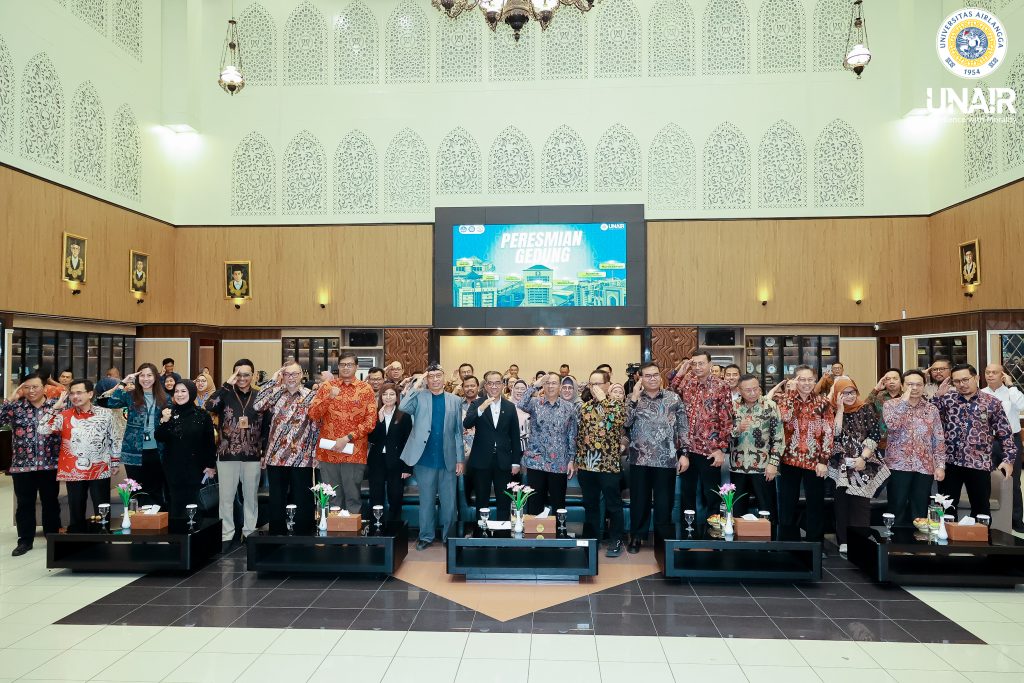
UNAIR NEWS – Universitas Airlangga (UNAIR) marked a new chapter in its infrastructure expansion with the inauguration of seven new buildings. The ceremony took place on Thursday (Sept. 25, 2025) at the Management Building Hall, 1st floor, on UNAIR’s MERR-C Campus.
The event was attended by Minister of Higher Education, Science, and Technology, Prof. Brian Yuliarto, PhD, underscoring the institution’s independence and progress. In his remarks, UNAIR Rector Prof. Dr. Muhammad Madyan, SE, MSi, MFin, stressed that the inauguration not only broadens the university’s facilities but also strengthens its foundation as a world-class institution.
“Once again, I express my gratitude that the seven buildings inaugurated today by the Minister were financed without using the state budget (APBN). The funding came entirely from Universitas Airlangga’s own resources and community support, ensuring no burden on the government,” he said.
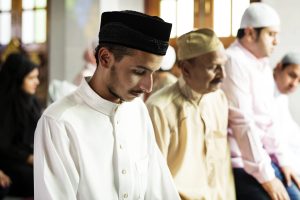
The facilities inaugurated include four buildings on UNAIR’s MERR-C Campus and three on its Dharmawangsa-B Campus. They are the Nano Building, the Nani Building, the Dormitory, the Workshop Building, the A.G. Pringgodigdo Building, the Soetandyo Building, and the Nuruzzaman Mosque.
Model for other campuses
In his address, Prof. Brian Yuliarto praised UNAIR’s financial independence, noting that such progress should serve as a model for other universities, both public and private.
“Universitas Airlangga clearly demonstrates what it means to be a center of excellence. Universities should not rely solely on tuition fees, especially from undergraduates. There are many opportunities for campuses to grow independently,” he said.
He also encouraged stronger collaboration between universities and industry to support national resilience and economic growth. “Universities must act as engines for Indonesia’s economic revival. They can contribute to sectors such as agriculture, food security, health, and beyond,” he added.
Effective use of resources
Former UNAIR Rector (2015–2025) Prof. Dr. Mohammad Nasih, SE, MT, Ak, reflected on the decade-long journey of campus development during his leadership. He credited the success of funding these projects without government support to effective and productive budget management.
“And once again, this is not about me, not about the rector. We have always emphasized that this achievement was not merely about saving costs or efficiency, but about how effectively we allocated limited resources,” he explained.
Author: Mohammad Adif Albarado
Editor: Khefti Al Mawalia