

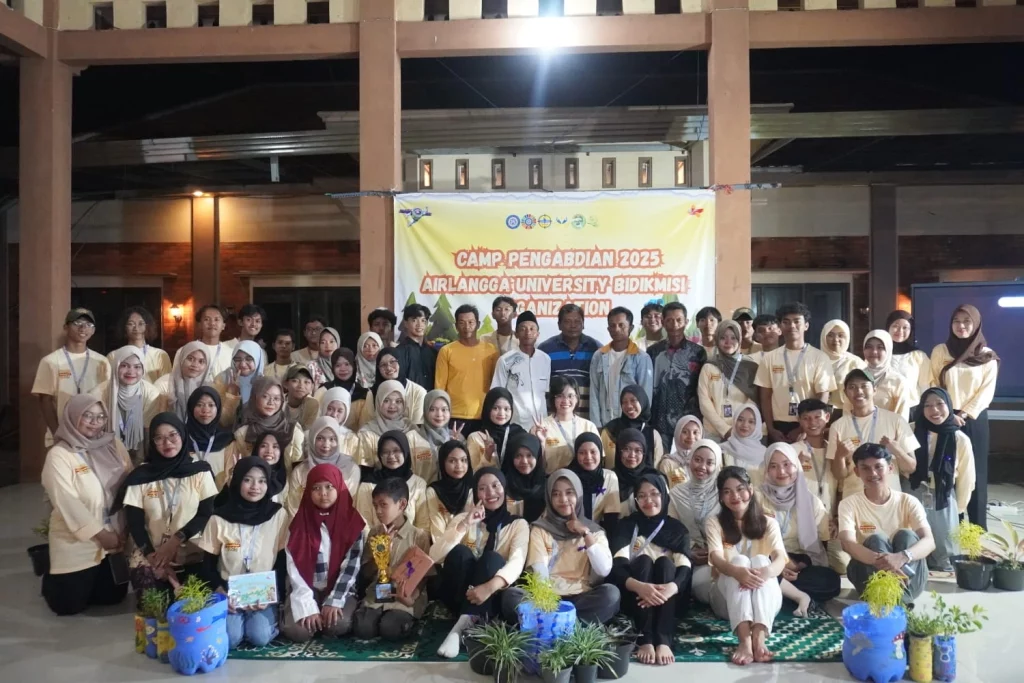
UNAIR NEWS – The shortage of clean water in Sumberjati Village, Jatirejo Subdistrict, Mojokerto Regency has motivated students of Universitas Airlangga (UNAIR) to take concrete action. Through the Airlangga University Bidikmisi Organization (AUBMO), students initiated the reconstruction of a clean water storage facility, an effort aimed at easing the ongoing water crisis in the surrounding area.
The Community Service Camp is a core program of the AUBMO Ministry of Community Service, carried out over a nine-day period in Sumberjati Village, Jatirejo Subdistrict, Mojokerto Regency. The initiative involved 63 KIP-K scholarship recipients from a wide range of academic backgrounds who volunteered their time and skills in service of the local community.
Clean water storage reconstruction as key solution
Azzahra Wahidatul Fauzia, a student from the Faculty of Vocational Studies and the chief coordinator of the Community Service Camp, explained that the program was divided into several service clusters, including education, health, environment, agriculture, and infrastructure. “The main objective of the Community Service Camp is to demonstrate the real contributions of KIP-K scholarship recipients to society, while also providing a learning space to apply academic knowledge directly within the community,” Fauzia said.
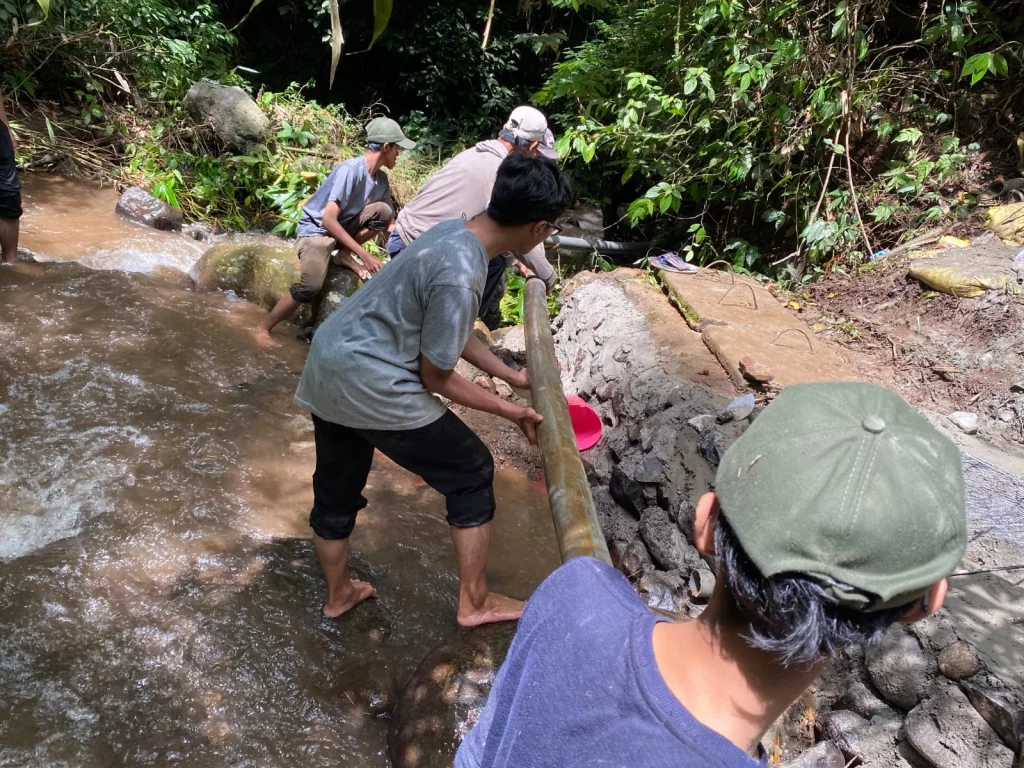
One of the camp’s flagship initiatives was the reconstruction of the village’s clean water storage facility. Fauzia noted that the program stemmed from long-standing difficulties faced by residents in accessing clean water. Preparatory stages included on-site observations, cleaning the existing reservoir, and reorganizing the water distribution system.
“This issue remains a fundamental problem that needs to be resolved. We also hope that this program can help provide clean, filtered water for the three hamlets in Sumberjati Village,” she emphasized.
Rainy season as challenge for the community service camp
Fauzia added that while no major obstacles emerged during the implementation of the program, the rainy season and technical field conditions presented certain challenges. “Our flagship project was initially planned to be completed within two days. However, unfavorable weather and field conditions forced us to extend the work to three days,” she explained.
She expressed hope that the completed program would continue to deliver benefits to the community long after the camp concluded. Fauzia also highlighted the strong support from village officials and local residents throughout the program. “This activity serves as proof that KIP-K scholarship recipients can actively contribute to social development. We also hope that the programs we have implemented will provide lasting value for the community,” she said.
In closing, Fauzia encouraged students interested in community service not to hesitate to engage directly with local communities. According to her, such involvement helps build awareness of real community needs. “Community service programs cannot be designed solely based on our own ideas. We must learn to communicate and interact effectively so our initiatives are accepted and truly beneficial,” Fauzia concluded.
Author: Muhammad Nabil Fawaid
Editor: Ragil Kukuh Imanto