


UNAIR NEWS – The Covid-19 pandemic that lasted almost two years made most people more aware of maintaining and protecting themselves. One of the efforts is to vaccinate. However, it must be known that some groups are very vulnerable even though vaccinations have been carried out, such as the elderly group.
Generally, the elderly take herbal supplements or traditional herbs to maintain endurance. Departing from that, the research team of the Faculty of Public Health (FKM) Universitas Airlangga (UNAIR), in collaboration with Rumah Inovasi Natura, successfully developed a fermented garlic formula.
“Unlike others, this fermented garlic has distinctive characteristics and is different from fermented garlic on the market. After going through a long and measurable process by applying a good way of food production,” Wizara Salisa explained as one of the members on Thursday, December 30, 2021.
She continued that garlic (Allium sativum L.) has been used worldwide as a traditional medicine for more than 4000 years to treat various diseases. There are two types of garlic, namely single garlic, and double garlic. The antioxidant activity contained in single garlic is higher than that of ordinary garlic.
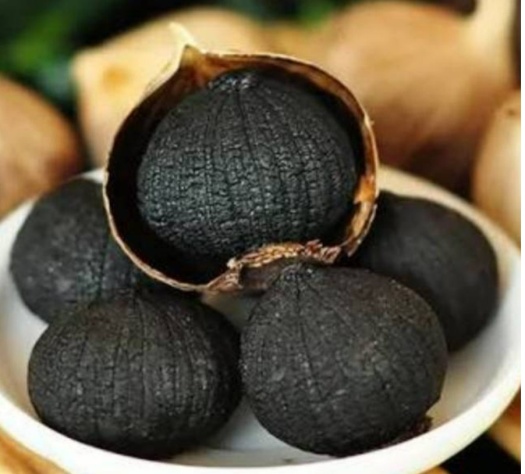
The public usually knows single garlic as ‘herbal medicine’. This single garlic can be processed into fermented garlic to get better quality.
Fermented garlic has been shown to have four to eight times more biological activity potential than single garlic. Fermented garlic is also reported to be richer in antioxidants,” she explained.
The content of antioxidant compounds in fermented garlic is more stable than in garlic, namely S-allyl Cysteine (SAC). Fermented garlic has various benefits, especially for health, including reducing blood sugar, lowering cholesterol, stabilizing blood pressure, and preventing cancer.

Because of its chewy texture with a mixture of sweet, sour, and slightly bitter, fermented garlic is very suitable for the elderly whose swallowing function decreases (dyspepsia) to guarantee safety when consuming it.
Creation process
Wizara said that making fermented garlic is very easy. Starting with sorting quality single garlic, then compiling the tools used in the magic com that has been provided, consisting of paper towels and bamboo mats. Next is the fermentation process.
“The single garlic that has been arranged in magic com is fermented by turning on the magic com in a warm condition. Fermentation is carried out for several days, and everyday garlic must be monitored related to the temperature, namely warm temperature, which is the optimal temperature of garlic fermentation. The fermentation process is carried out until single garlic changes color to black and has the right texture and taste,” the 2018 class student explained.
Conducting experiment
For the research team, she said, in making fermented garlic, the formulation of the best formula is the main focus. To get the best formula, the research team has conducted various product development trials that include processing techniques, temperature, and the length of the fermentation process.
In addition, organoleptic tests were also carried out to determine the best formula preferred by the community, especially adults and the elderly. In this organoleptic test, several fermented garlic formulas with differences in the time (number of days) of fermentation are prepared.
“As a result, the formula most preferred by the elderly is the second formula, garlic fermented for several days. The result of the best panelist assessment is fermented garlic which has characteristics including good taste with the right combination of sweet and sour taste and chewy texture,” she revealed.
With the development of fermented garlic, the FKM UNAIR research team hopes that fermented garlic will become a variety of products preferred by the elderly. It can also meet the needs of the elderly and align with their physiological conditions. In addition to increasing good receiving in terms of good taste, fermented garlic is also good for the health of the elderly. (*)
Author: Asthesia Dhea Cantika
Editor: Binti Q. Masruroh