

UNAIR NEWS – Ranked 287th globally in the QS World University Rankings, Universitas Airlangga (UNAIR) remains committed to expanding its global partnerships through its faculty, academic programs, and institutional collaborations. These international engagements not only reinforce UNAIR’s global reputation but also serve to elevate the quality of its Three Pillars of Higher Education (Tri Dharma Perguruan Tinggi). As part of this initiative, the Faculty of Advanced Technology and Multidiscipline (FTMM) sent two delegates—Vice Dean III Prof. Dr. Ir. Retna Apsari, M.Si., IPM, and lecturer Dr. Tahta Amrillah, M.Si.—to the University of Santo Tomas (UST) in Manila, Philippines, on June 25–26, to explore and expand academic collaboration in Asia.
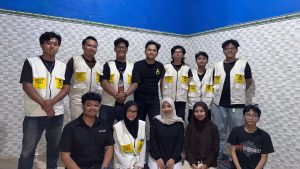
The first stop was UST’s Faculty of Engineering. The visit also included 13 undergraduate students from FTMM, representing five academic programs: Nanotechnology Engineering, Data Science and Technology, Electrical Engineering, Industrial Engineering, and Robotics and Artificial Intelligence Engineering.
Exploring collaborative opportunities
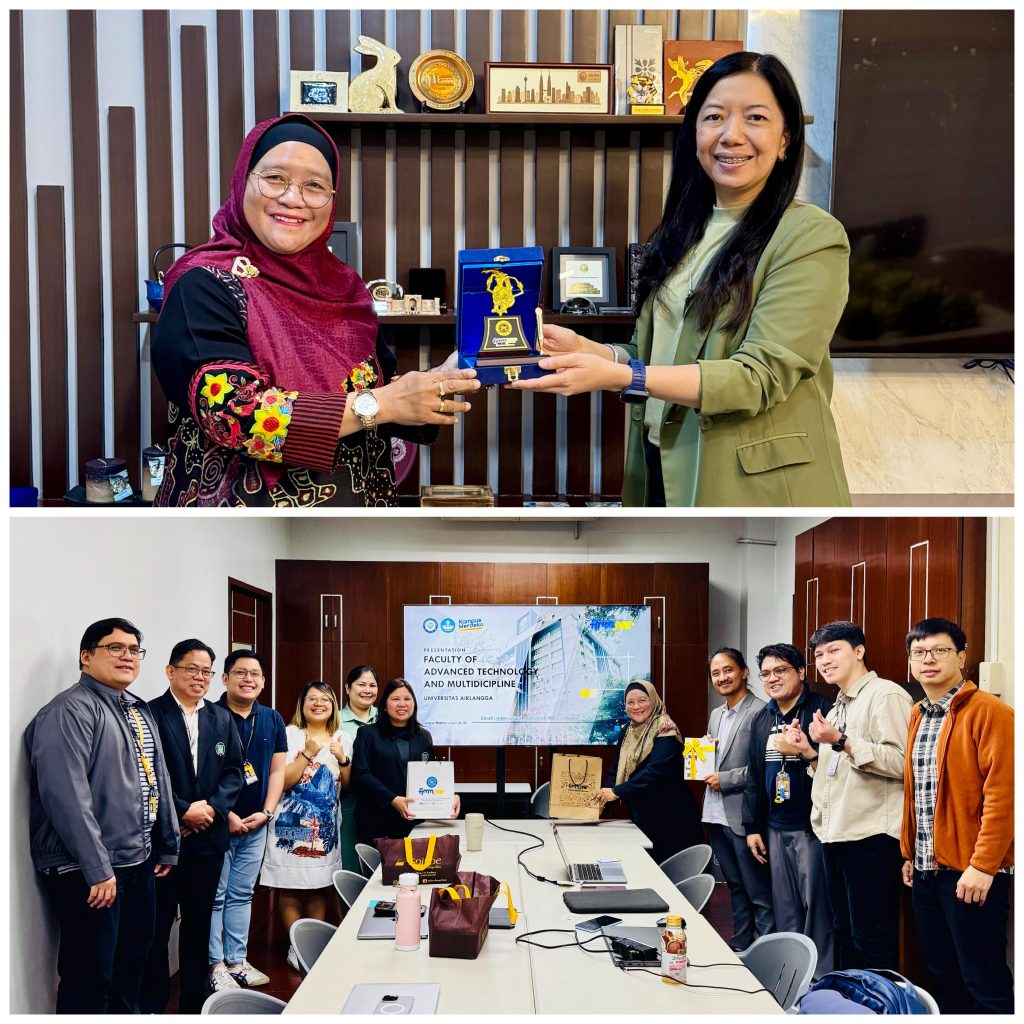
The first day of the student and faculty outbound program began with a warm welcome from UST’s Faculty of Engineering, led by Assoc. Prof. Cristine E. Tiangcoa, Ph.D., along with the heads of the Electrical and Electronics Engineering departments and several faculty members. The session continued with a strategic discussion on institutional cooperation, starting with a presentation by Cristine Jin Estrada, Ph.D., Head of UST’s International Office. Prof. Retna Apsari followed with an overview of FTMM UNAIR and outlined possible areas of collaboration, including academic lectures, research seminars, joint classes, student and staff exchange programs, adjunct professorships, and joint research and publication opportunities.
Prof. Apsari stated that concrete collaboration could begin in 2025. “We especially welcome joint classes and UST’s participation in our summer program, Sustainable Energy and Green Technology Application (SEGTA), planned for August 2025,” she said.
She elaborated that SEGTA is one of FTMM’s key international initiatives that integrates global community service, academic courses, workshops, educational outreach, and cultural performances. The two universities shared experiences and strategies for advancing internationalization in both scale and impact through an open and engaging dialogue.
The discussion yielded several collaborative models that aim to enhance research and education at both institutions. “We had a productive discussion on student and staff exchange programs, as well as the possibility of enrolling Indonesian graduate students in master’s and doctoral programs at UST. We hope to see these realized in the near future,” added Dr. Tahta Amrillah. Both institutions agreed to renew their Memorandum of Understanding (MoU) and establish a new Memorandum of Agreement (MoA) between FTMM and UST’s Faculty of Engineering, with final terms to be settled in an online meeting.
“We also discussed research on materials like chitosan and bioplastics. It turns out our research focus aligns closely with that of FTMM,” said Dr. Cristine Jin D.S. Estrada of UST. She also noted, “The FTMM students brought enthusiasm and positive energy. We’re excited to build this new relationship.” Dr. Estrada sees strong potential for collaboration and praised UNAIR’s research infrastructure—even at the undergraduate level—as a solid foundation for future interdisciplinary projects.
Potential collaboration
While faculty members were engaged in strategic discussions, FTMM students participated in a separate session with student organizations from UST’s Faculty of Engineering. The students exchanged ideas on cross-campus project opportunities and joint activities. “It was a lively session. Despite meeting for the first time, the students connected quickly. Activities included introductions, collaborative problem-solving, and cultural sharing,” said Dr. Tahta Amrillah.
Afterward, the UNAIR delegation toured various UST engineering laboratories, including those for biomedical, chemical, mechanical, physics, civil, and electrical engineering. Moch Arif Wahyu, an Electrical Engineering student, shared his impressions: “The equipment in the Electrical Engineering lab was incredibly complete. The visit inspired me and strengthened my drive to innovate at UNAIR.”
The first day concluded with a campus tour, which proved especially fascinating, as UST is not only a university but also a historical heritage site in Manila, with a legacy spanning nearly 400 years. The campus is home to many historic buildings that captivated the FTMM students, who eagerly listened to stories shared by UST’s official tour guides.
Author: FTMM correspondent