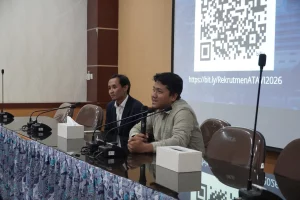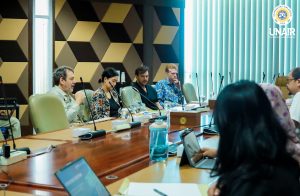


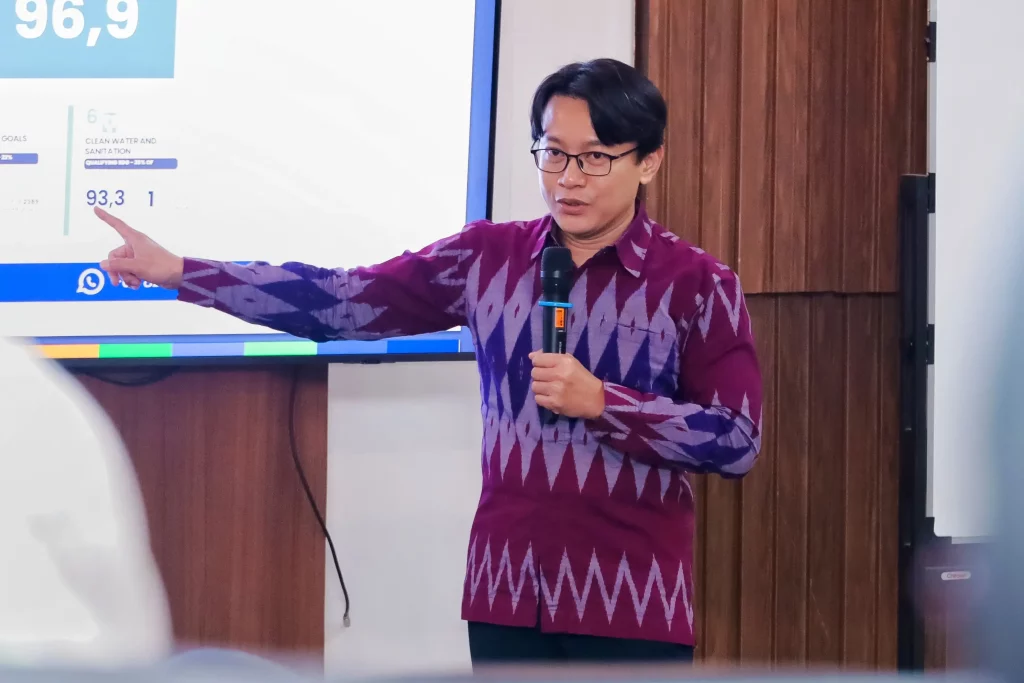
UNAIR NEWS – Universitas Airlangga (UNAIR), through its SDGs Center, continues to expand its contributions toward achieving the Sustainable Development Goals (SDGs). One of its latest efforts is the SDGs Training of Trainers (ToT) program, held on Monday (July 21, 2025) in the Kinara Bayu Room, 2nd floor of the ACC Building at UNAIR’s MERR-C Campus.
The event is part of the AIRSCOPES (Airlangga Strategic Capacity for Outreach and Public Engagement) program, designed to empower UNAIR’s academic community with the technical knowledge and skills necessary to support SDG implementation both locally and globally. This session featured the National SDGs Secretariat from the Ministry of National Development Planning (Bappenas) as the primary speaker.

UNAIR active role
Ahmad Safril Mubah, Ph.D., Coordinator of UNAIR’s SDGs Center, noted that UNAIR ranks ninth globally in the 2024 Times Higher Education (THE) Impact Rankings. This recognition also places UNAIR first nationally and second in Asia.
To maintain and build upon this achievement, UNAIR’s SDGs Center actively involves students in research and community service projects. Students are encouraged to form their own teams and propose initiatives such as water sanitation, MSME training, or coastal community empowerment. These projects receive funding and direct mentorship from the SDGs Center.
“We’re currently compiling a publication based on these research and service initiatives, which will be launched during the UNAIR SDGs Festival. The book aims to serve as a reference and a collaborative documentation platform. It will highlight real-world practices that can inspire similar programs,” he explained.
SDGs policy in Indonesia
Rachman Kurniawan, Manager of the Environmental Development Pillar at Bappenas’ SDGs Secretariat, explained that Indonesia’s SDG strategy is grounded in inclusive principles and emphasizes the importance of localizing the goals.
“SDGs are a shared global agenda—not limited to developing nations. Developed countries are equally responsible because we all share one planet. If only some participate, others will fall behind,” he emphasized.
Kurniawan also pointed out key differences between the SDGs and their predecessor, the Millennium Development Goals (MDGs). While the MDGs aimed to cut problems in half, the SDGs strive for full resolution—commonly referred to as “zero goals.”
Emphasizing the principle of no one left behind, Kurniawan encouraged UNAIR’s academic community to support local governments by participating in regional action planning, defining localized indicators, and contributing to data-driven reporting.
Author: Fania Tiara Berliana Marsyanda
Editor: Ragil Kukuh Imanto