

UNAIR NEWS – Universitas Airlangga (UNAIR) continues to advance innovation across multiple fields, particularly in healthcare. One of its latest breakthroughs is a Modified Chest Plate developed by Prof. Dr. dr. Med. Puruhito, SpB, SpBTKV, Subsp. VE (K) from the Faculty of Medicine (FK), which has now been officially patented.
Prof. Puruhito said the patented design was developed to offer a more affordable and accessible treatment option for patients with sunken chest (Pectus Excavatum). Until now, the procedure commonly used by thoracic and cardiovascular surgeons, the Nuss procedure, has been known for its high cost.
“I am very proud of this innovation because it can significantly reduce the cost of surgery for sunken chest patients, which is typically extremely expensive. This technique is also planned for use in patients with pectus carinatum,” he said.

Modified chest plate
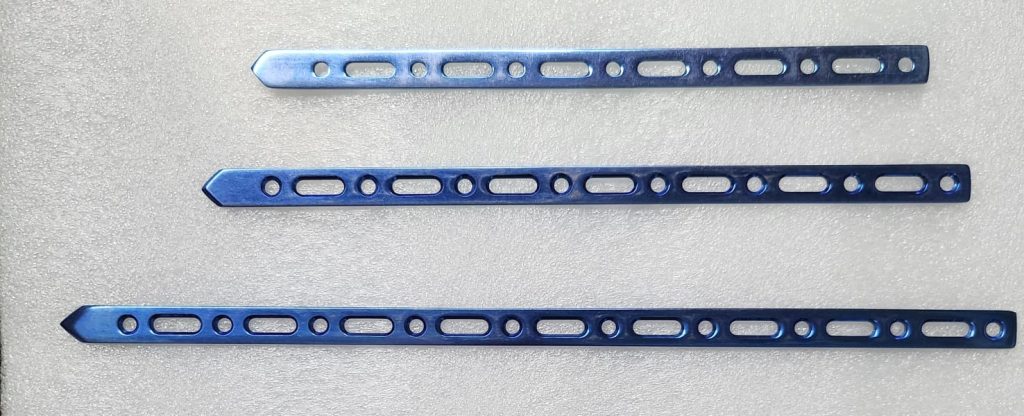
The chest plate innovation is adapted from the Willithal–Hegemann technique, developed by his mentor in Germany, which itself evolved from the Ravitch procedure. Known as the Puruhito Modified Chest Plate (PDMP), the device is made of titanium, a material chosen for its strength and superior curvature properties.
“The PDMP includes perforations that make it easy to shape while preventing it from straightening. This makes implantation easier for thoracic and cardiovascular surgeons compared with the Willithal–Hegemann plate, which is 1.5 millimeters thick. The PDMP is thinner, just 1.0 millimeter, and more flexible because it is made of titanium,” he explained.
Prof. Puruhito added that the innovation is currently awaiting marketing approval from BPOM, Indonesia’s drug and food regulatory authority. Once approved, he plans to introduce both the technique and the plate in four different sizes, tailored to patients’ body proportions, through presentations and workshops for thoracic and cardiovascular surgeons.
“My hope is that this plate can be routinely used by fellow thoracic and cardiovascular surgeons to treat Pectus Excavatum at an estimated cost of only IDR 1–1.5 million, compared with the Nuss procedure, which can cost up to IDR 40 million. Ultimately, this could lead to more affordable and accessible surgical options for people across Indonesia,” he said.
Author: Rifki Sunarsis Ari Adi
Editor: Khefti Al Mawalia