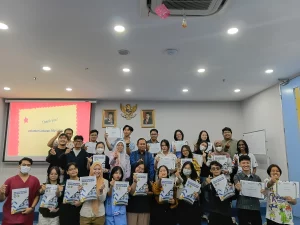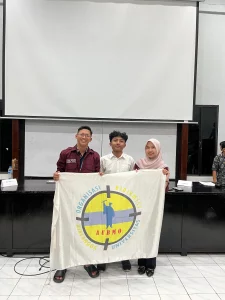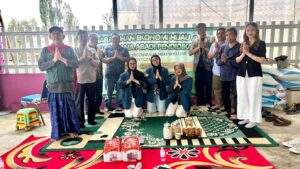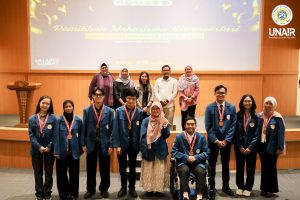


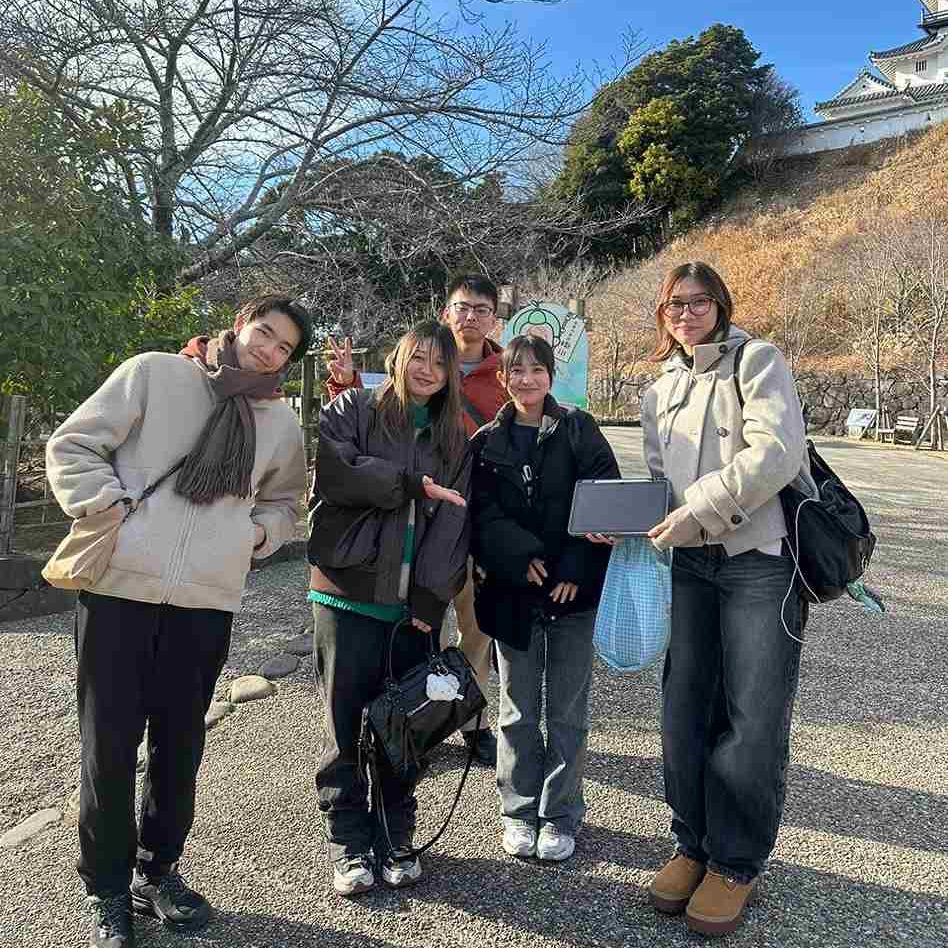
UNAIR NEWS – Universitas Airlangga (UNAIR), through the BBK 7 International program, conducted a disaster preparedness survey in Shizuoka Prefecture, Japan. The activity took place from January 31 to February 2, 2026, from Saturday to Monday. The survey was conducted in three cities: Yaizu City, Fuji City, and Kakegawa City.
The activity aimed to enhance cross-cultural understanding between Indonesia and Japan while exchanging information on disaster mitigation. Shizuoka is known as an area prone to earthquakes and tsunamis. Through the survey, students described the level of public awareness and preparedness toward potential natural disasters.
Preparedness behavior of pet owners
BBK 7 International UNAIR Group 2 was divided into two subgroups with different focuses. Group 2A examined the preparedness behavior of pet owners, while Group 2B investigated household emergency supply preparation for disaster prevention.
Representing Group 2A, Kyandra Kano explained the background behind the topic selection. “We observed that many residents in Shizuoka carry out daily activities with their pets, so preparedness concerns not only humans but also animals,” Kano said. The group also aimed to understand how well pet owners were aware of official evacuation procedures during disasters.
According to Kano, pets in Japan are often considered part of the family. However, owners’ preparedness in emergency situations may not be evenly distributed. “This survey helped us identify whether there is a gap between mitigation guidelines and actual practices in the field,” Kano explained.
The findings were considered relevant for Indonesia, which is also prone to disasters. In Indonesia, mitigation efforts still tend to focus primarily on human safety. Studies on pet preparedness may provide valuable insights for developing more inclusive mitigation strategies.
Household emergency kits
Meanwhile, group 2B representative Muhammad Syamil highlighted the importance of household emergency kits. “The presence of emergency supplies in every home is a key factor in reducing risks when disasters occur,” Syamil said. He added that Indonesia’s experience shows that aid does not always immediately meet primary needs when major disasters happen.
During the survey, the students conducted direct interviews in public spaces. On the first day, they faced language barriers and several refusals from respondents. The team then conducted an evaluation by preparing interview scripts in Japanese and applying a more persuasive communication approach.
The improved strategy yielded better results on the second day. The data collection process ran more smoothly, and residents showed a more open attitude. “We learned that cultural sensitivity and proper communication greatly influence the success of field activities,” Syamil said.
Through this activity, the students not only collected data but also gained insights into the disaster preparedness culture of Japanese society. The survey results are expected to serve as shared learning material for Indonesia and Japan in strengthening community-based disaster mitigation. The experience also reinforced the role of UNAIR students in supporting the creation of more disaster-resilient communities at the global level.
Author: Rizma Elyza
Editor: Yulia Rohmawati