

UNAIR NEWS – As Surabaya continues to position itself as a global city, tourism has emerged as a key sector for development. Recognizing this potential, a group of students from Universitas Airlangga’s Faculty of Social and Political Sciences (FISIP) conducted a study examining the impact of urban tourism in Tunjungan area on the local economy and cultural identity. Their research received funding from Indonesia’s Ministry of Higher Education, Science, and Technology through the 2025 Student Creativity Program (PKM).
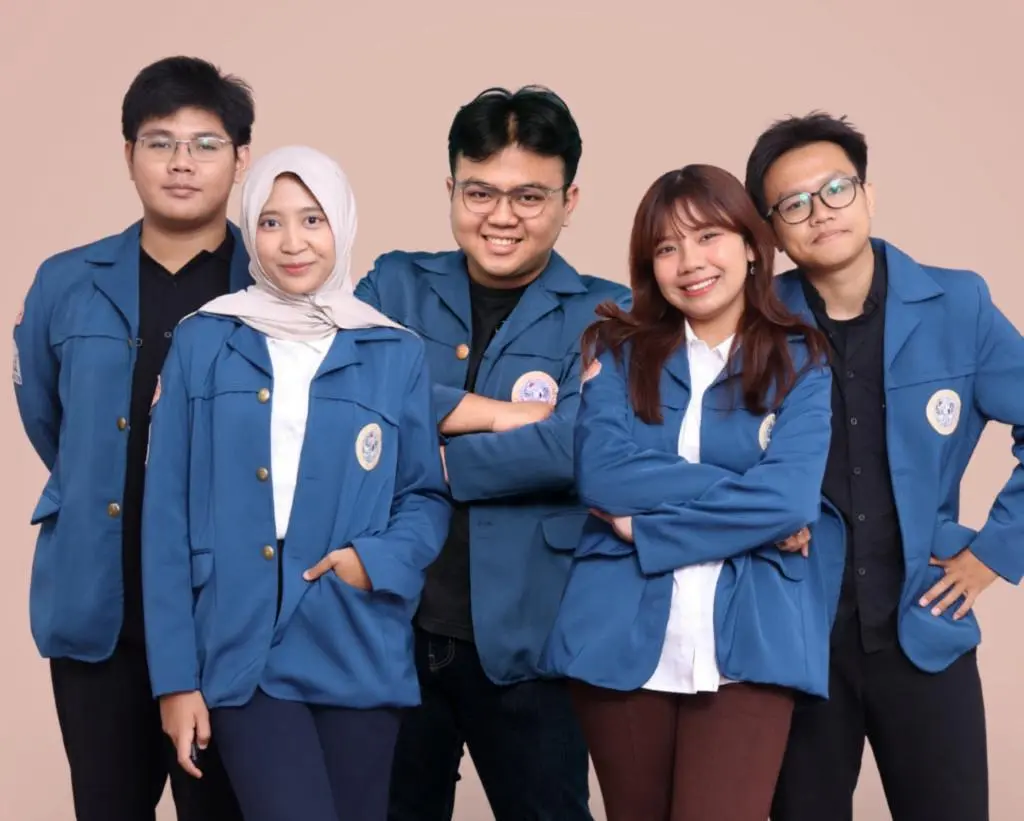
PKM is a national academic competition for university students across Indonesia, culminating in the National Student Science Week (PIMNAS). The UNAIR team, led by Arvian Ijlal Adhipratama, competed under the Social Humanities Research (PKM-RSH) category.
Joining Adhipratama on the team were Nabila Aisyah Putri, Putu Sridhani Dewika Putri, M. Rizky Hanafi Tarigan, and Michael Anggi Hutauruk. Their project, titled “The Implications of Urban Tourism in Tunjungan on Surabaya’s Economy and Cultural Identity as a Global City in Achieving SDGs 8 and 11,” was supervised by Dr. Sarah Anabarja, a lecturer in the International Relations Department at FISIP UNAIR.
Urban tourism, global city, and SDGs
The team’s research was motivated by Tunjungan’s potential as a tourism destination, economic engine, and symbol of the city’s cultural heritage. Still, the team acknowledged that this form of development also carries certain risks.
“We observed commercial expansion that may be threatening local cultural heritage. That’s why we chose to study how urban tourism in Tunjungan impacts both the economy and cultural identity, specifically in relation to SDGs 8 and 11,” Adhipratama explained.
SDG 8 promotes inclusive economic growth and decent work, while SDG 11 focuses on creating sustainable cities and communities.
Preliminary findings and contributions
The team employed an exploratory qualitative method, using an interdisciplinary lens that combined international relations and cultural anthropology. Their data collection included purposive interviews with academics, industry professionals, tourists, local residents, and policymakers, as well as participatory observation and literature review.
Preliminary findings revealed that Surabaya attracted 18 million tourists in 2024. However, the sector contributed only 14.7% to the city’s Regional Original Revenue (PAD)—a shortfall the researchers attributed to inefficient retribution systems and weak coordination between the government and local stakeholders.
“Urban tourism in Tunjungan reflects a glocalization process, where global and local elements merge. Surabaya’s identity is showcased through the restoration of colonial buildings, local festivals, and historical storytelling, all combined with modern branding. However, the growing scale of tourism also brings the risk of cultural homogenization,” Adhipratama said.
He noted that one of the team’s biggest challenges was navigating the diverse perspectives of interviewees and balancing different experiences among team members. They addressed this through a collaborative work environment based on knowledge sharing and clearly defined roles.
“We hope this study can inform policy recommendations to promote sustainable tourism and inclusive economic development in Surabaya, in line with SDGs 8 and 11. We also aspire for our findings to inspire other regions in Indonesia to integrate tourism, culture, and sustainable development in a balanced and meaningful way,” he concluded.
Author: Ameyliarti Bunga Lestari
Editor: Yulia Rohmawati