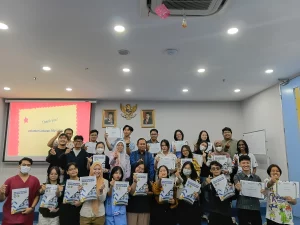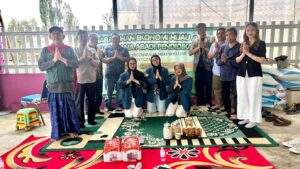


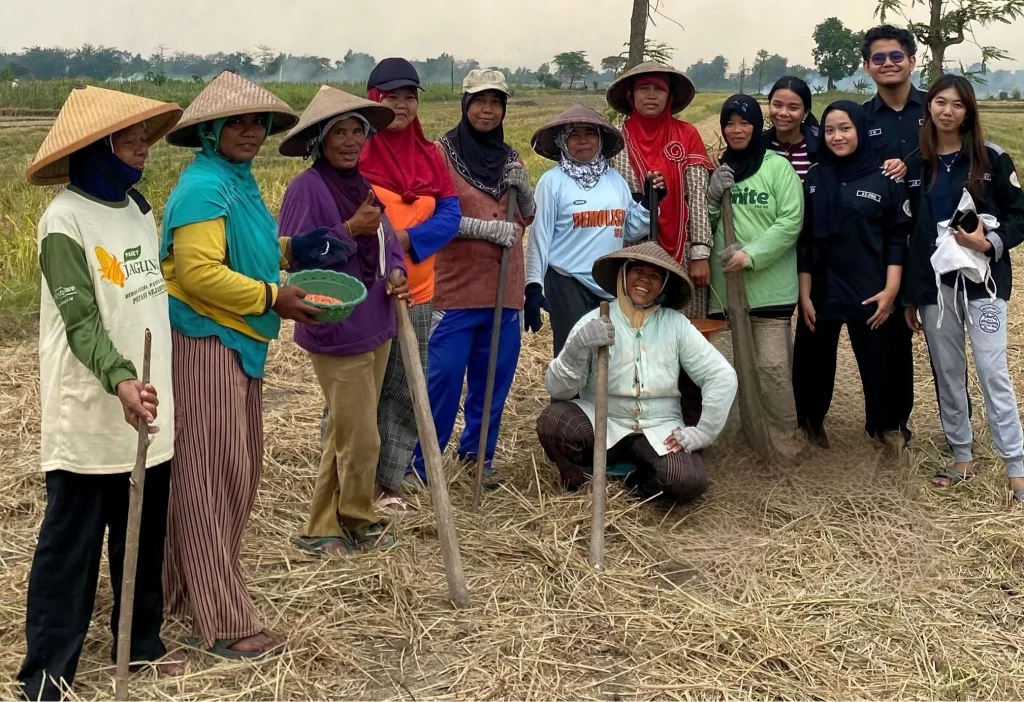
UNAIR NEWS – The Electrical Engineering Student Association (IME) of Universitas Airlangga (UNAIR) conducted a community service project in Wangkal Kepuh Village, Jombang Regency, on Friday (July 4, 2025). The initiative involved installing a solar-powered post-harvest drying system, named Solar Harvest, as a solution to limited sunlight during drying periods. The project was part of the 2025 Call for Pengmas by UNAIR’s SDGs Center and included 15 student volunteers collaborating with local farmers.
Technological solution for low-sunlight farming areas
The one-day service project included a joint harvesting session with residents and the installation of a student-designed solar dryer. According to IME’s Head of Community Engagement, Alfananda Ardiansyah, the village was chosen because it is primarily a farming community that often struggles with drying due to unfavorable weather.
“It’s difficult to get consistent sunlight there—it rains frequently. Most of the residents are farmers, so we hope this tool can help resolve their rice husk drying issues,” said Ardiansyah.
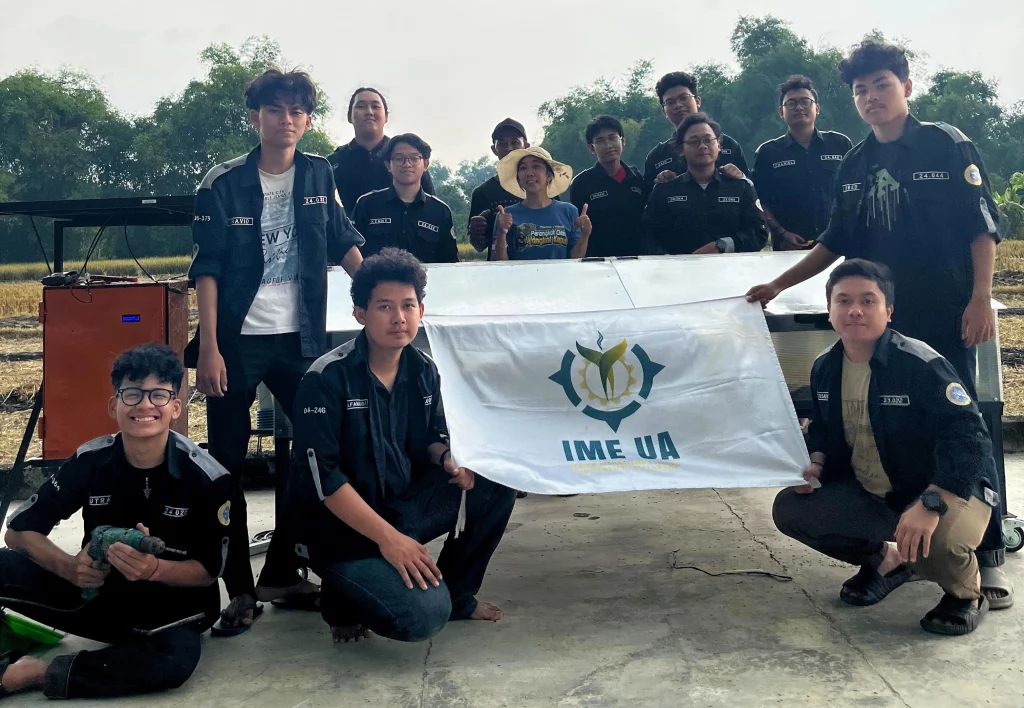
Solar Harvest operates by enhancing the greenhouse effect, using a built-in heater and fan-based air circulation system. This design allows it to dry rice even under cloudy conditions. “It can still dry rice husks effectively. The unit is tightly sealed, retains heat longer, and uses a heater to supply warmth and a fan to extract moist air,” he added.
Strong community reception and scalable potential
Unlike typical service projects, this initiative stood out by delivering a practical, student-engineered technological solution. “We developed this tool entirely ourselves. It’s not just about assisting with the harvest—we’re offering a real solution,” said Ardiansyah.
The project supports SDG 7: Affordable and Clean Energy and SDG 9: Industry, Innovation, and Infrastructure, as it uses low-cost renewable energy and can be locally assembled. Community members responded positively, reflecting the impact of the IME UNAIR initiative.
“This tool is incredibly helpful, especially during the rainy season. Now we don’t have to worry about spoiled crops—the drying process is faster and cleaner. And since it’s solar-powered, it saves electricity,” said Wangkal Kepuh Village official, Susatyo.
IME UNAIR hopes that Solar Harvest can be adopted in other agricultural regions across Indonesia, with the goal of accelerating affordable, efficient, and locally tailored post-harvest processing technologies.
Author: Samudra Luhur
Editor: Yulia Rohmawati