

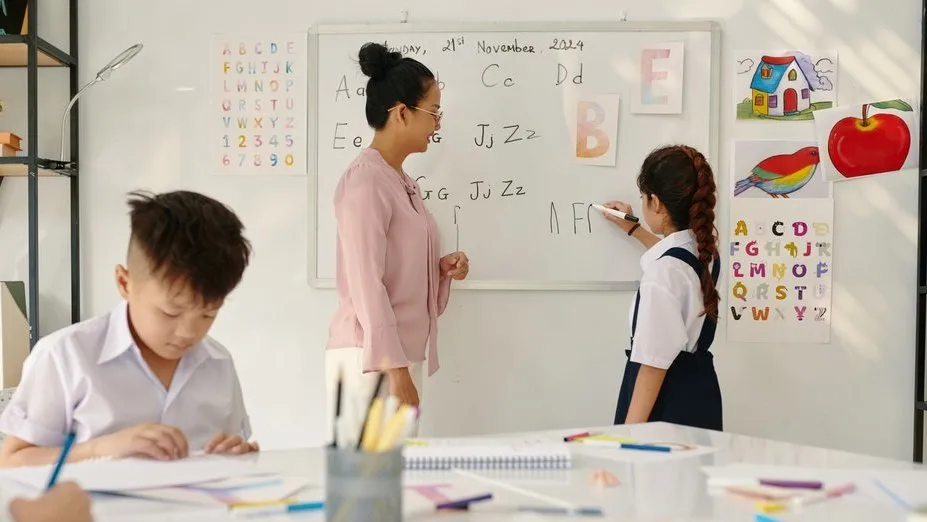
There are times when a teacher stands at the front of the class, enthusiastically delivering a lesson, yet the students are busy scrolling through TikTok, posting snide comments in WhatsApp groups, or even daring to shout back. This is no longer merely a horror story from viral news reports, but a bitter reality that is becoming increasingly rampant in our schools. The latest case of pupils bullying a teacher in Purwakarta serves as a stark reminder of our concerns.
Pupils’s respect for their teachers, which once formed the cornerstone of Indonesian education, now seems to have reached an all-time low—a tragic state of affairs that breaks the heart. As a nation that takes pride in the noble value of ‘teachers as God’s representatives on earth’, why have we allowed this culture of respect to fade away? This article is not merely a lament, but an urgent call for reflection: what has gone wrong, and how can we turn things around?
Let us examine the root of the problem. The data does not lie. A 2024 survey by the Ministry of Education, Culture, Research and Technology (Kemdikbudristek) revealed a startling fact: 62% of secondary school teachers in East Java reported an increase in cases of pupils showing a lack of respect towards teachers, a rise of 25% from 2022. At the national level, the 2025 report by the Directorate General of Early Childhood, Primary and Secondary Education (Paud Dikdasmen) recorded 1,247 incidents of verbal and physical violence by students against teachers throughout 2024, with 40% of these taking the form of insults on social media. Compare this with a similar survey from 2019, which recorded just 678 cases. This surge is no coincidence; it reflects a systemic erosion of manners.

One of the main culprits is the explosion in the influence of social media. Generations Z and Alpha, born in the smartphone era, have grown up with a norm of ‘free expression’ that often leads to toxic behaviour. A 2025 study by the Centre for Digital Society at UGM found that 78% of secondary school students in Surabaya spend more than five hours a day on TikTok and Instagram, where content such as ‘roasting teachers’ or ‘teacher-shouting challenges’ has gone viral with millions of views. A real-life example: the 2024 viral case at State High School 5 in Surabaya, where a video of students mocking a teacher with abusive language was viewed 2.5 million times, sparking a new norm that insulting authority figures is “cool”. Child psychologist Dr Rina Wijayanti from Airlangga University, in her 2025 journal article, analysed that exposure to such content reduces students’ empathy by up to 35%, as the platform’s algorithms prioritise drama to boost engagement.
It doesn’t stop there; family factors also play a major role. The COVID-19 pandemic has accelerated this decline. A 2024 report by UNICEF Indonesia states that 45% of parents in major cities such as Surabaya have failed to teach their children to respect their teachers, as priorities have shifted towards gadgets acting as carers. The result? Pupils return home from school and immediately ‘report’ to their parents via chat, often exaggerating the teachers’ mistakes. Data from the Central Statistics Agency (BPS) for 2025 shows that the family welfare index for teachers has fallen by 18% since 2020, making pupils’ parents feel economically ‘superior’, so that traditional courtesies such as the ‘teacher’s greeting’ are being abandoned. In the villages of East Java, this tradition remains strong—only 22% of cases of breaches of etiquette are reported, in contrast to 68% in urban areas.
Formal education has also gone astray. The Merdeka Curriculum, launched in 2022, was intended to be flexible, but without a strong emphasis on character education (PPK), it has instead created a situation where pupils ‘lecture’ their teachers. The results of the OECD’s 2022 Programme for International Student Assessment (PISA) for Indonesia: the score for respect and cooperation among students was only 412 points, below the global average of 480. Further analysis from PISA 2025 adds that 55% of Indonesian students view “teachers as peers”, rather than authoritative figures—an attitude that actually undermines academic discipline. Compare this with Singapore, where the PISA respect score reached 550, thanks to the mandatory ‘Respect for Teachers’ programme starting from primary school.
The consequences? It is not just teachers who suffer, but the entire education ecosystem that is collapsing. A study by the Education Research Centre of the Ministry of Education and Culture’s Research and Development Agency (Balitbang Kemdikbud) in 2025 found that schools with high levels of misconduct saw a 28% decline in academic performance, due to teacher burnout—72% of secondary school teachers reported chronic stress caused by a lack of respect. Nationally, teacher turnover stands at 15% per year, the highest in ASEAN. Imagine: students who do not respect their teachers will struggle to respect themselves, let alone their nation. This is a low point that threatens SDG 4 (quality education) and SDG 16 (peace and justice).
But don’t be too quick to despair. There is a way forward, and we can start right now. Firstly, schools must undergo a revolution through ‘Digital Etiquette Classes’. A pilot programme run by the Education Department in 2025 at 50 senior secondary schools in East Java successfully reduced incidents by 40% within six months, through weekly workshops on social media etiquette and simulations of respectful dialogue. Teachers were trained to act as facilitators of empathy, not as authoritarian figures.
Secondly, involve parents on a large scale. The Ministry of Education and Culture’s “Teachers Are Family Heroes” campaign could be expanded via apps such as “Orami Guru”, where parents can monitor their children’s progress whilst learning about proper conduct. Success data from Malaysia shows that a similar programme has reduced misconduct by 52% since 2023.
Thirdly, the government must be firm yet wise. Law No. 14 of 2005 on Teachers and Lecturers requires amendment to include progressive sanctions for breaches of etiquette, ranging from counselling to social media suspension. Furthermore, the PPK budget should be increased by 30% in the 2026 State Budget, focusing on the “3S” culture: Greetings, Affection, and Gratitude towards teachers.
Fourthly, the role of the community. Influencers and communities such as the ‘Gerakan Guru Mulia’ on TikTok can turn the narrative around: positive content about inspiring teachers’ stories, with a target of 10 million views. In Surabaya, the local ethnobotany community—which I have observed as a researcher—has successfully integrated the values of etiquette into traditional nature education, and could serve as a model.
Finally, let us reflect. Etiquette is not outdated, but the foundation of civilisation. Like the banyan tree in Surabaya’s town square with its deep roots, respecting teachers is the root of our education. If this low point is left unchecked, future generations will lose their way. But if we act now, we can create a renaissance of etiquette—classrooms filled with respect, high-achieving students, and enthusiastic teachers.
Be part of the solution. Start with a morning greeting to your teacher tomorrow. For, as Ki Hajar Dewantara said, “Ing ngarsa sung tuladha, ing madya mangun karso, tut wuri handayani”—the teacher leads by example, inspires in the midst, and offers encouragement from behind. It is time we put this into practice once more.
Writer: Hery Purnobasuki, Professor at the Faculty of Science and Technology, Universitas Airlangga