



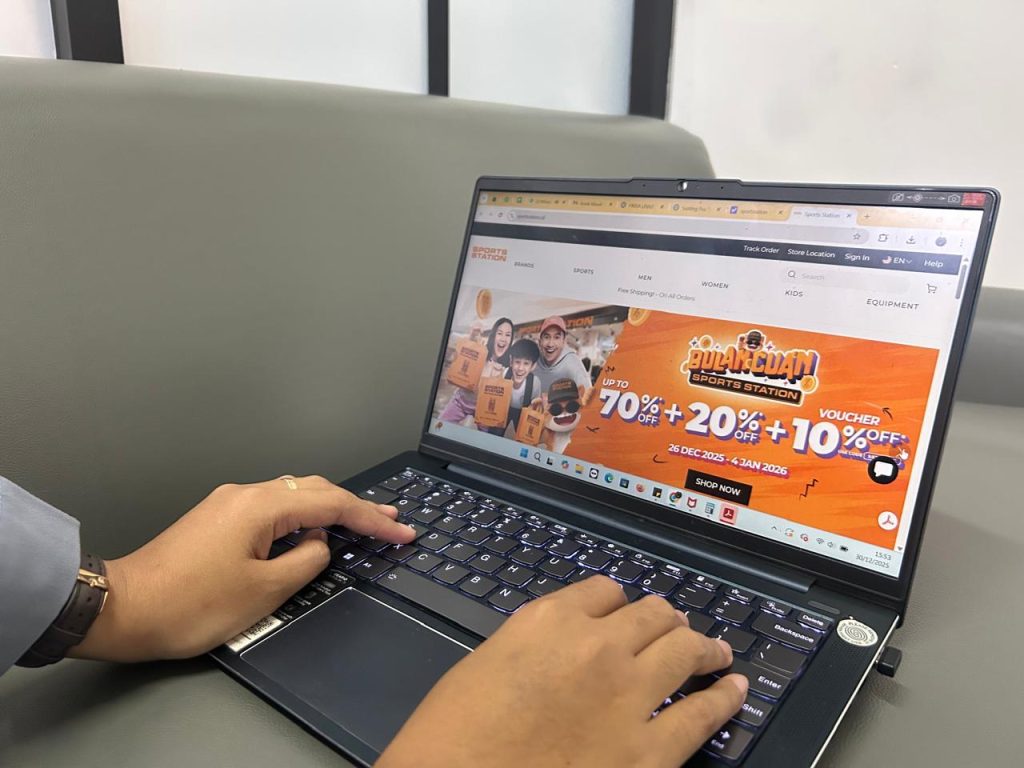
UNAIR NEWS – The year-end holiday period is among the most eagerly awaited moments of the year, offering a welcome opportunity to relax and refresh the mind. Yet behind the festive mood, aggressive discount campaigns and social media trends often fuel excessive spending driven by Fear of Missing Out (FOMO).
Addressing this issue, the Dean of the Faculty of Economics and Business (FEB) Universitas Airlangga (UNAIR), Prof. Dr. Rudi Purwono, SE, MSE, shared insights and practical guidance to help people stay financially sound while still enjoying their holidays.
Watch out for the discount illusion and FOMO
Prof. Purwono explained that overspending during the holidays is frequently rooted in psychological factors rather than purely weak financial literacy. Discounts, he said, often create an “illusion of saving” that pushes consumers to make impulsive purchases with little real value.
In the digital age, social pressure to display holiday experiences on social media further distorts rational decision-making. “Spending is often driven by short-term desire rather than careful consideration of actual needs,” Prof. Purwono noted.
Follow 20–30 percent rule
To prevent financial stress after the holidays, Prof. Purwono underscored the importance of disciplined budgeting. He recommended a simple and practical formula for managing monthly income or allowances.
“One straightforward approach is to allocate no more than 20 to 30 percent of monthly funds for leisure and entertainment during the holiday season,” he said. The remainder should continue to be reserved for essential expenses and savings. This limit functions as a “psychological guardrail,” helping people avoid being swept away by eye-catching discounts.

Steer clear of paylater trap
Another major concern raised by the FEB UNAIR dean is the growing popularity of Buy Now, Pay Later (BNPL) services. Prof. Purwono emphasized that paylater options are essentially short-term debt that can impose heavy future burdens through interest charges or penalties.
He warned against relying on credit simply for social status or to keep up with holiday trends. “The principle is simple: without a stable income, do not fund your lifestyle with debt,” he stressed.
Meaningful holidays don’t have to be costly
Prof. Purwono also reminded the public that the true purpose of a holiday is to recharge, not necessarily to travel far or spend lavishly. Even with limited funds, people can still enjoy meaningful breaks through hobbies, family time, or activities that build personal skills.
He further highlighted the need for financial readiness ahead of the new academic semester, cautioning that post-holiday financial strain could undermine students’ focus and learning.
“In the end, financial freedom is not defined by how much money we have, but by how wisely we use it,” he concluded.
Author: Ahmad Abid Zhahiruddin
Editor: Khefti Al Mawalia