

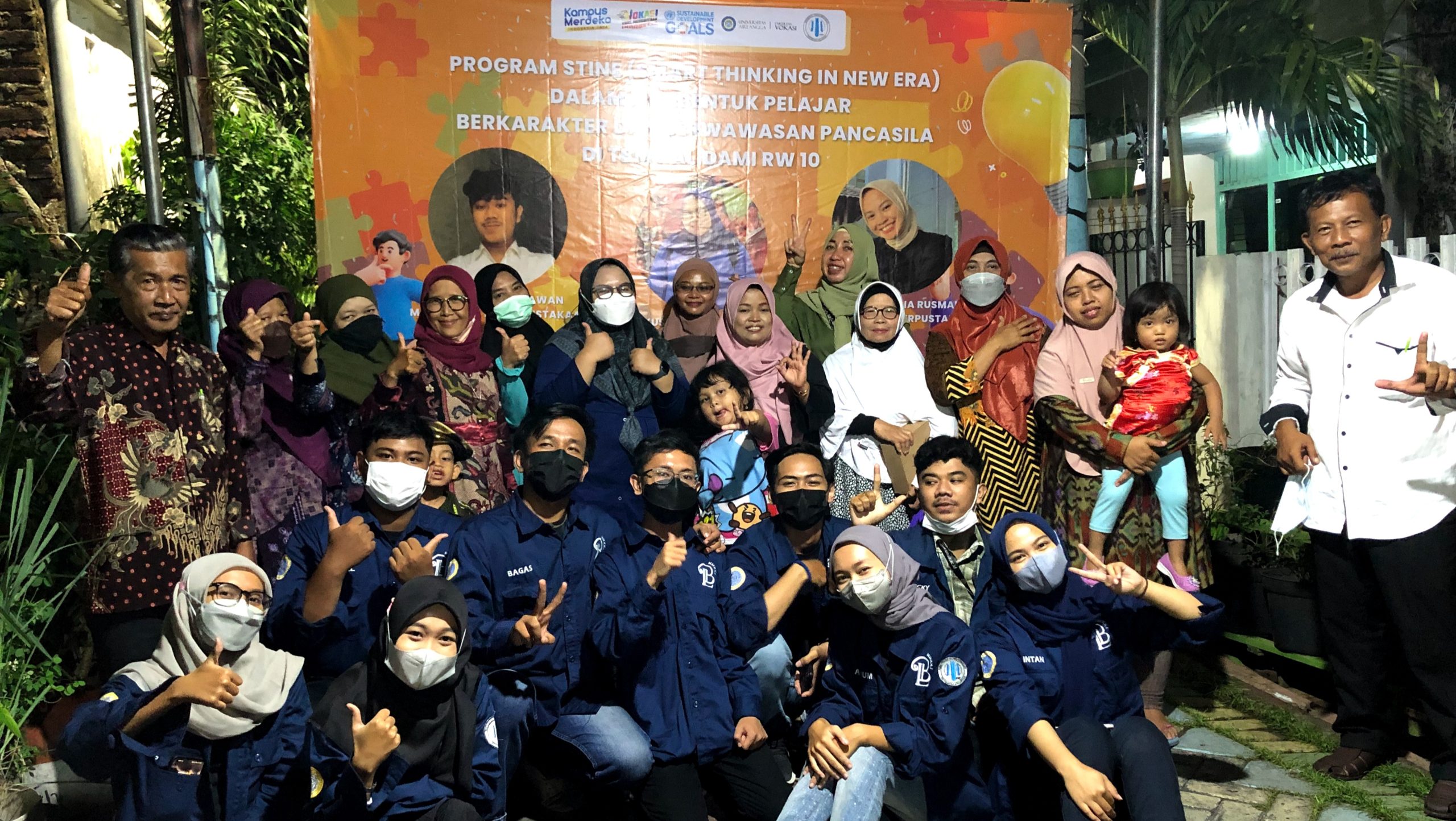
UNAIR NEWS – UNAIR Faculty of Vocational Studies Library Study Program held a workshop on Information Guidance or how to correctly process information in the new era. The event was held offline at TBM Kalidami, RW 10 Surabaya on Sunday, November 6, 2022.
The workshop was held as the closing event of the Community Service program of P2MD STINE team, Faculty of Vocational Studies, UNAIR. In this activity, Tiara Kusumaningtyas SHum MHum as the speaker explained how to correctly process information in the current era to residents.
Tiara explained that people could take advantage of digital literacy methods to find information. Meanwhile, the application of digital literacy can make people much wiser in using and accessing technology to filter information accurately in today’s sophisticated era.
Tiara explained that someone is considered to have good digital literacy skills if that person can read and process information from various media on the internet, such as WhatsApp, smartphone applications, and all media connected to the internet.
Tiara explained to residents how to process information correctly. The first way is to know the right way to search, including using Google’s online media.
Then, the next step is understanding how to use the information sources. Then, the public needs to evaluate the information by ensuring the source is credible or trustworthy.
“For example, when we look for recipes from credible or trustworthy sources, such as magazines or news media, these sources have been evaluated by editors. So not necessarily all information or writing can be posted,” said Tiara.
The author also determines the nature of the credibility of an article or distributed information. “So when someone is digitally literate, someone will not immediately believe and share information they receive because now everyone can make information,” explained the Library study program lecturer.
Then the next step, after successful evaluation, readers or receivers of the information can share it with a note that it must be credible. It is also to prevent the spread of fake news.
Tiara also reminded the residents about ethics in the digital world. “It’s better to hold back, do not just write comments on social media, you can be sued for digital ethics cases,” continued Tiara.
The public should also consider digital security, such as when granting access permissions, the public needs to avoid giving permission easily and be careful in providing personal information.
Author: Jihan Aura
Editor: Khefti Al Mawalia