UNAIR NEWS – Indonesia’s participation in the 2009 G20 Summit in Pittsburgh and COP-15 marked the beginning of its commitment to a green economy. Under President Susilo Bambang Yudhoyono, the country pledged to reduce greenhouse gas emissions through a National Action Plan and Greenhouse Gas (GHG) inventory. This initiative continued under President Joko Widodo, who included the green economy in the 2020–2024 National Medium-Term Development Plan (RPJMN). President Prabowo has since carried the vision forward through the 2025–2045 National Long-Term Development Plan (RPJPN), known as “Golden Indonesia.”
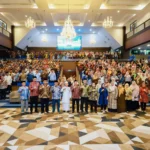
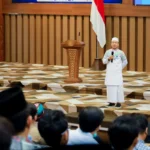
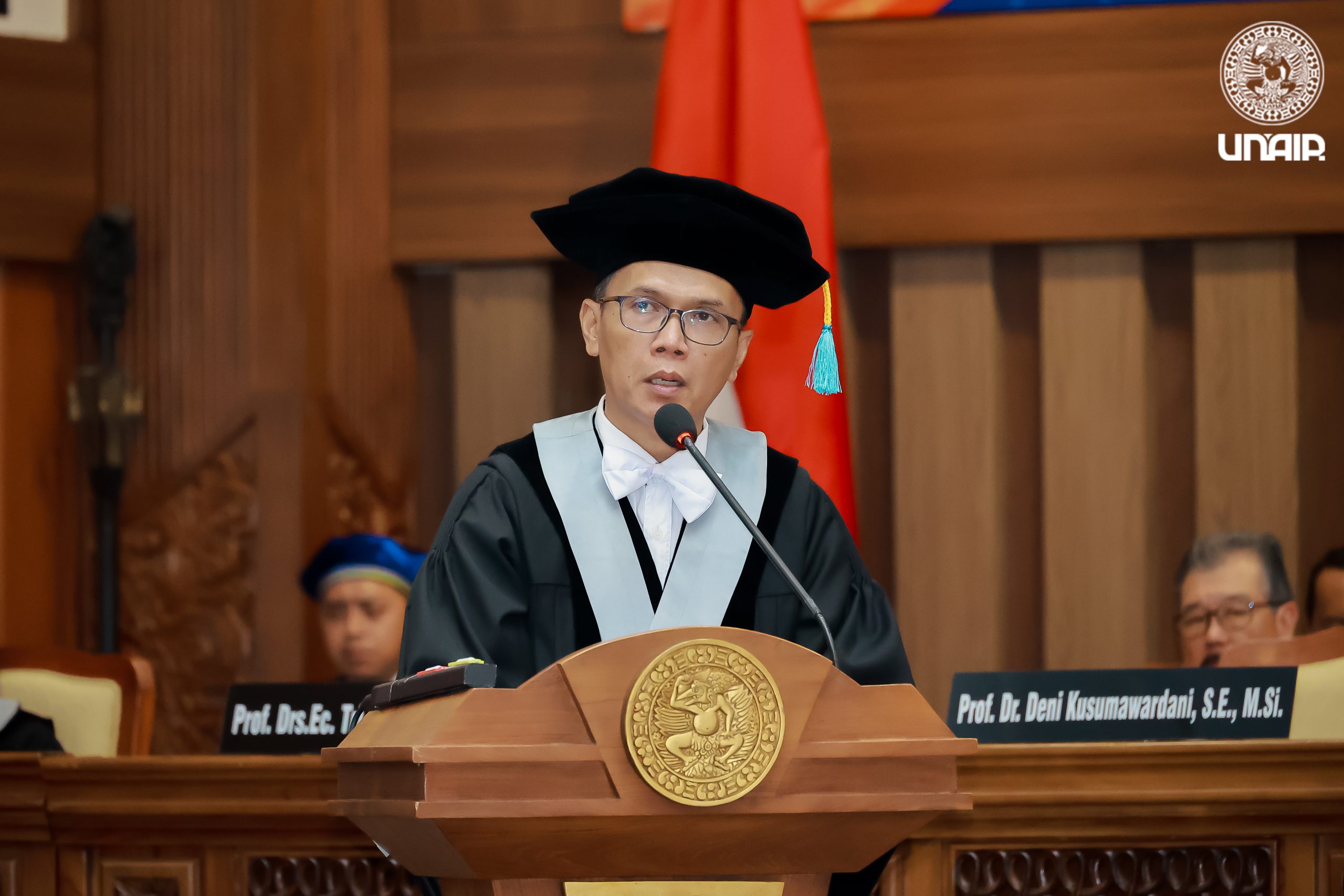
This ongoing commitment led Prof. Dr. Deni Kusumawardani, S.E., M.Si., to present his scientific oration on the green economy at his inauguration as a full professor at Universitas Airlangga (UNAIR) on Wednesday (May 28, 2025), held at the Garuda Mukti Hall, UNAIR MERR-C Campus.
Prof. Kusumawardani emphasized that embracing a green economy is not just strategic—it is a constitutional imperative. Indonesian law mandates that economic development be both sustainable and environmentally conscious. “Second, our environmental condition is deeply concerning. In 2023, Indonesia ranked among the world’s top ten carbon emitters and was fourth in global deforestation rates,” he added.
Global, national, and regional outlook
Prof. Kusumawardani noted that Indonesia’s performance in green economic development remains moderate on a global scale. According to the 2020 Green Growth Index, Indonesia scored 57.08, placing it ninth in Asia.
“In the ASEAN region, we rank below Thailand, the Philippines, Singapore, and Vietnam,” he stated.
Indonesia’s progress in achieving the Sustainable Development Goals (SDGs) earned a score of 69.4 in 2024, falling under the “limited progress” category. “Although the score exceeds the global average, we are still trailing behind several ASEAN countries,” he explained. The strongest indicators for Indonesia are in the social sector, while environmental indicators remain the weakest.
At the national level, Prof. Kusumawardani reported a positive trend in green economic growth. Indonesia’s Green Economy Index improved from 47.20 in 2011 to 59.17 in 2020. “This reflects an average annual increase of 2.5 percent. Still, the score is below the ‘excellent’ threshold of 75,” he said. As with the SDGs, Indonesia’s highest national scores lie in social and economic aspects, with environmental performance needing further attention.
From a regional perspective, the 2022 Sustainable Regional Competitiveness Index (IDSDB) shows an average score of 56.34, still within the moderate range. Despite the improvements, the distribution of progress remains uneven, with top-scoring cities and districts mostly concentrated in western and central Indonesia, such as Java and Bali.
Path toward Greener Indonesia
Reflecting on the data, Prof. Kusumawardani acknowledged that Indonesia still faces a long journey toward achieving its green development goals. “Indonesia has made encouraging strides, from political commitments to improved performance. Yet, environmental outcomes continue to fall short, both nationally and locally,” said the Professor of Environmental and Development Economics.
He emphasized the need for more aggressive action, including increased investment in clean energy and enhanced collaboration among government, private industry, and civil society. “Only through collective effort can Indonesia achieve a future that is both economically prosperous and environmentally resilient,” he concluded.
Author: Febriana Putri Nur Aziizah
Editor : Khefti Al Mawalia