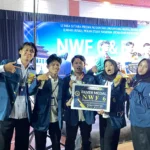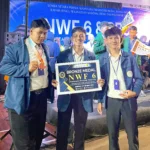
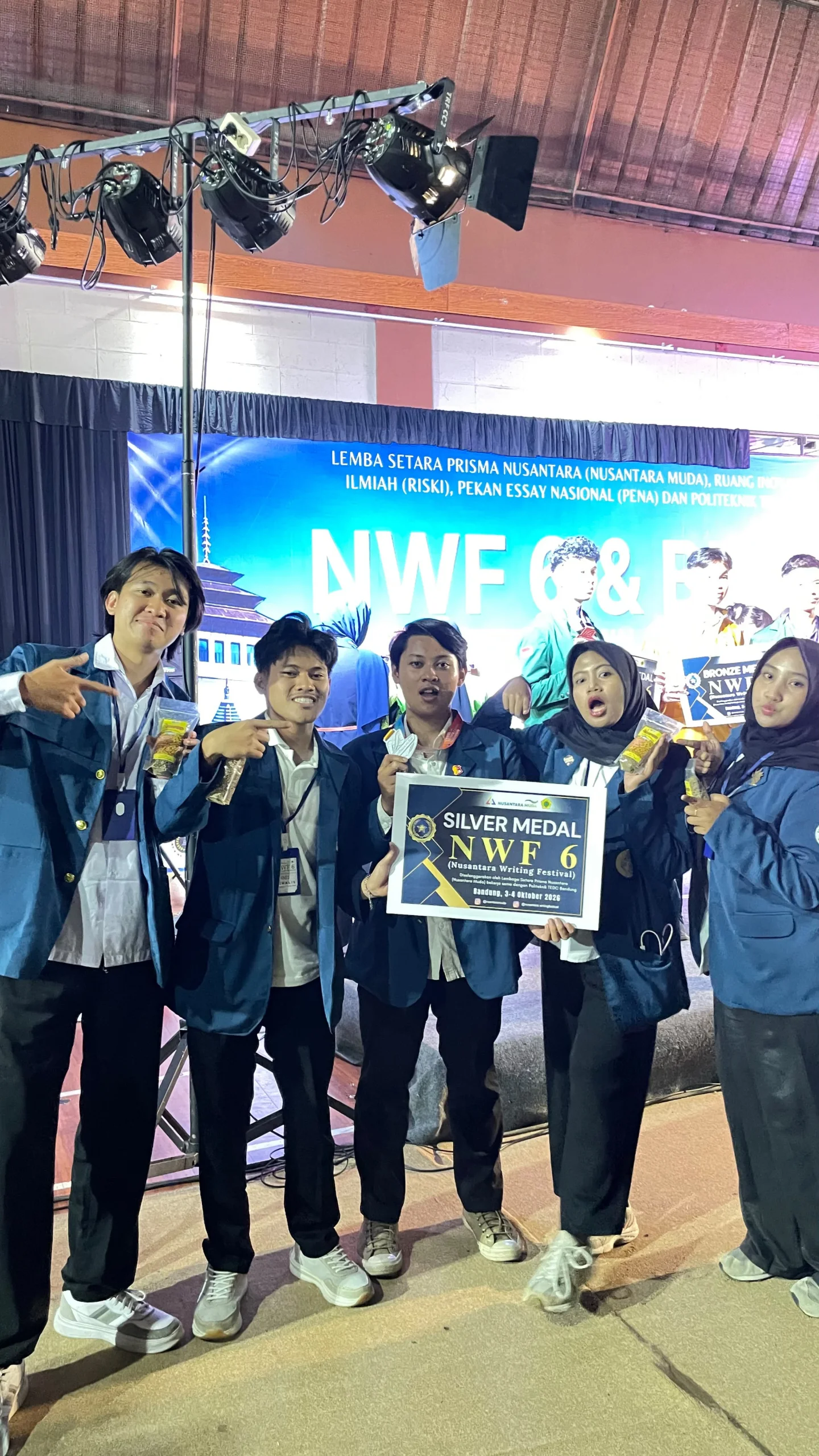
UNAIR NEWS – The EcoFeed innovation based on Black Soldier Fly (BSF) maggots and Lactobacillus, brought five UNAIR students to achieve an award at the Nusantara Writing Festival (NWF). In this competition, they won a silver medal in the environmental category on Saturday-Sunday (October 3-4, 2026). These students are Moch Birr Bik Maylandry, Aurel Meita Permata, Abdan Fawwazut Thariq, Delvano Tegar Putra, and Mohian Nadya M Dyah, all of them are students of the Faculty of Fisheries and Marine Sciences (FPK).
Through EcoFeed, they developed a concept which utilized food waste as a medium for maggot cultivation, which then processed into sinking fish feed. This concept combines organic waste management with the requirement of feed in fish farming.
Turn food waste into animal feed
Dyah explained that the team selected BSF maggots to reduce food waste while also creating an alternative feed source. Maggots are able to convert organic waste into biomass rich in protein before it is processed into maggot flour.
“We want to reduce food waste by utilizing BSF maggots as a bioconversion material. These maggots are then processed into flour to be used as a feed ingredient,” Dyah explained.
According to her, the utilization of maggots also aimed to reduce dependence on fish flour which is one of the main ingredients in fish feed. The team designed a plan to partially substitute fish flour with maggot flour so that the feed’s nutritional requirements would still be met.
Adding Lactobacillus
EcoFeed is not only relying on maggot flour, the UNAIR FPK team also incorporated Lactobacillus probiotics through a 72 hours fermentation process to produce functional feed with improved nutrient digestibility.
Dyah said that the product her team brought to the competition was just still a prototype. The team used commercially available maggot flour to design an initial version of the product before conducting further testing.
“This prototype is still in the early stages. In the future, we would like to re-evaluate the entire process from the ingredients, bacteria, until the fermentation method,” said Dyah.
In the development concept, the maggots can be harvested after around 15-20 days, then rinsed, dried, and grounded into flour. This material then mixed with the other feed ingredients and enriched with Lactobacillus before being formed into pellets.
Preparing EcoFeed development
The team believed EcoFeed has growth potential because it integrates food waste management and farming feed requirements. This waste-to-aquafeed concept is also aimed at improving resource efficiency and opening up waste-based business development.
Dyah shared that the achievement in the 6th NWF has motivated the team to continue developing the product. “It would be a shame if this idea ended with the competition. We want to review and re-evaluate this product, then we want to participate in higher-level competition to raise our product’s profile,” she said.
The UNAIR FPK team hoped that in the future EcoFeed would be able to undergo further testing and development before being implemented more widely in fish farming.
Author: Abraham Chrisanta Putra
Editor: Yulia Rohmawati