
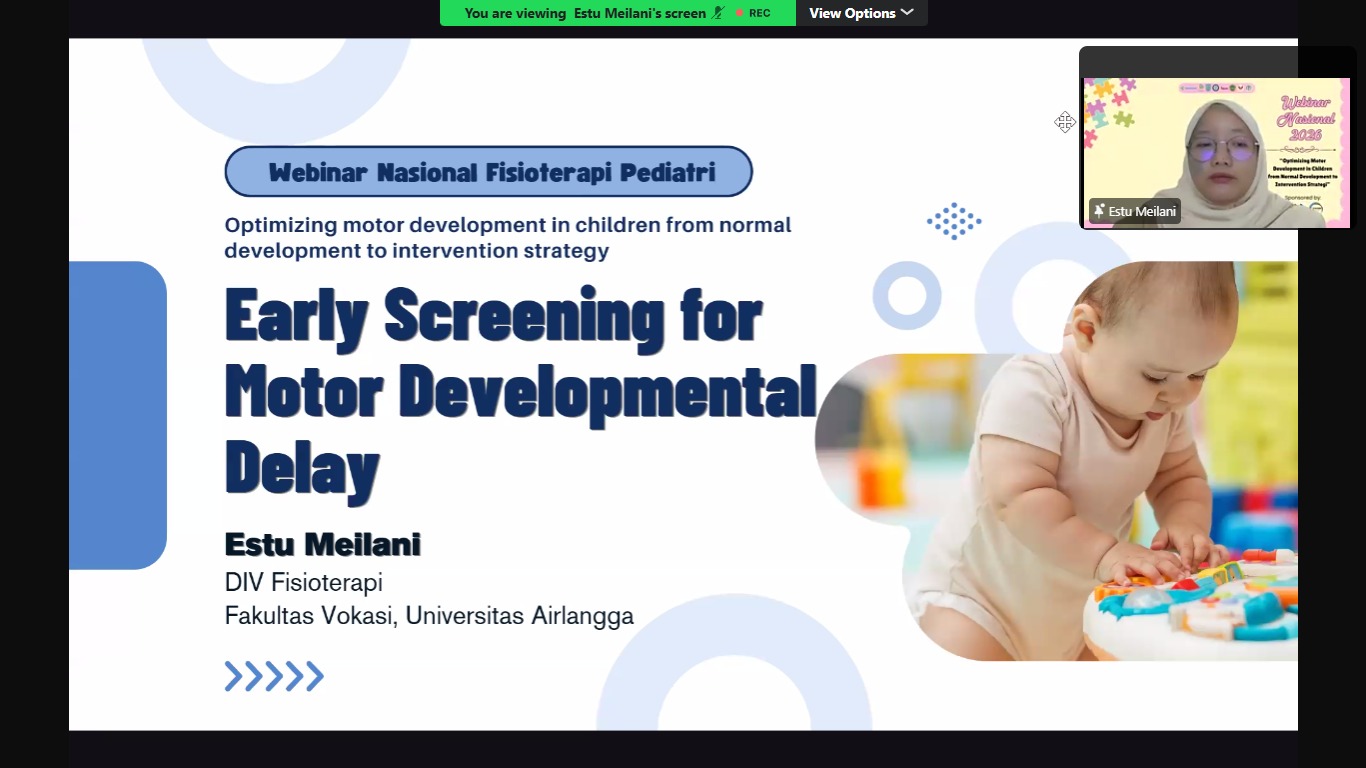
UNAIR NEWS – Motor skills development in children needs to be monitored from an early age to identify deviations and determine appropriate interventions. This thing served as one of the issues discussed at the 2026 National Pediatric Physiotherapy Webinar organized by Physiotherapy Students Organization of Faculty of Vocational Studies (FV) Universitas Airlangga (UNAIR), on Saturday, September 26, 2026. Brought the theme of “Optimizing Motor Development in Children: From Normal Development to Intervention Strategy”, this webinar conducted via Zoom also featured dr Yohanes Purwanto Ftr SPsi PhD and Estu Meilani STr Fis MSc as speakers who discussed motor development, screening and intervention strategies in children.
Milestone changes promote a more detailed motor skills understanding
In the first session, dr Purwanto explained that understanding of children’s motor development milestones requires a more detailed look at their development. He reviewed several updates to the milestones, one of which is crawling, which is no longer considered as a primary criterion for normal development statistically, as no more than 75 percent of typically developing children go through this phase. Nevertheless, crawling exercises still offer benefits for children’s neuromusculoskeletal development.
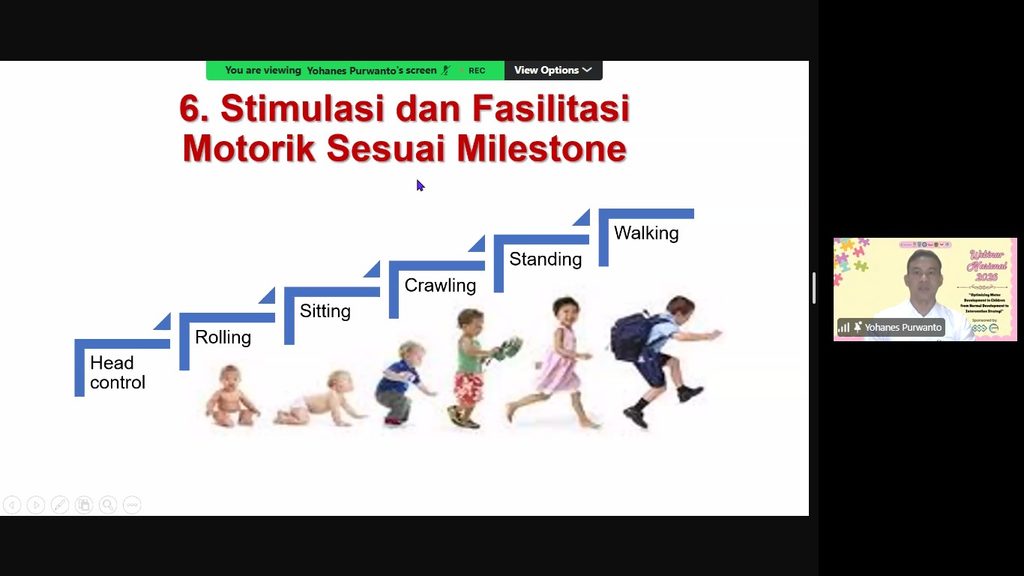
Changes in understanding of these milestones also require pediatric physical therapists to gain a deeper understanding of motor development. dr Purwanto believes that children’s physiotherapy education should not focus solely on the age ranges associated with head control, rolling, sitting, standing, and walking. Physical therapists should understand the stages of each developmental processes in greater detail, including the developmental process of head control and other movements.
“So, pediatric physical therapists learn about motor development not in just three-month increments, and not just the six gross motor milestones, but if possible they track the development on a week-by-week basis,” he explained.
He also reminded that this understanding should to be applied when observing children’s daily activities. Excessive use of strollers can limit the development of postural and anti-gravity muscles. Meanwhile, baby walkers have not been proven to accelerate walking skills and carry a risk of injury from falls.
Early detection opens up intervention opportunity
The second session continued with the presentation of Early Screening for Motor Developmental Delay by Estu Meilani. She explained the importance of early detection because brain plasticity is at its peak between the ages of 0 and 2 years. Premature infants, infants with low birth weight, and infants with congenital abnormalities also need early detection and follow-up assessments until the age of five.
Meilani then presenting three screening tools: the Developmental Prescreening Questionnaire (KPSP), the Denver Developmental Screening Test (DDST), and the Alberta Infant Motor Scale (AIMS). Meilani emphasized that screening does not end with labeling a child’s developmental conditions. Early detection also served as the primary step in determining the appropriate intervention to be provided as early as possible.
“So, the earlier we detect any deviations, the earlier we receive warning signs, the greater the brain’s plasticity we can harness to help the child return to their normal milestones,” she explained.
Meilani also emphasized the importance of educating parents about positioning techniques and stimulation exercises that can be done at home. She believes that home exercise programs play a vital role in supporting children’s development.
Author: Katara Joy Kurniawan
Editor: Ragil Kukuh Imanto