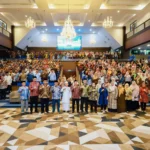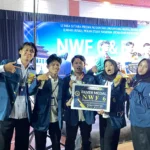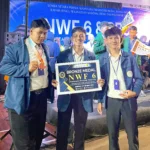
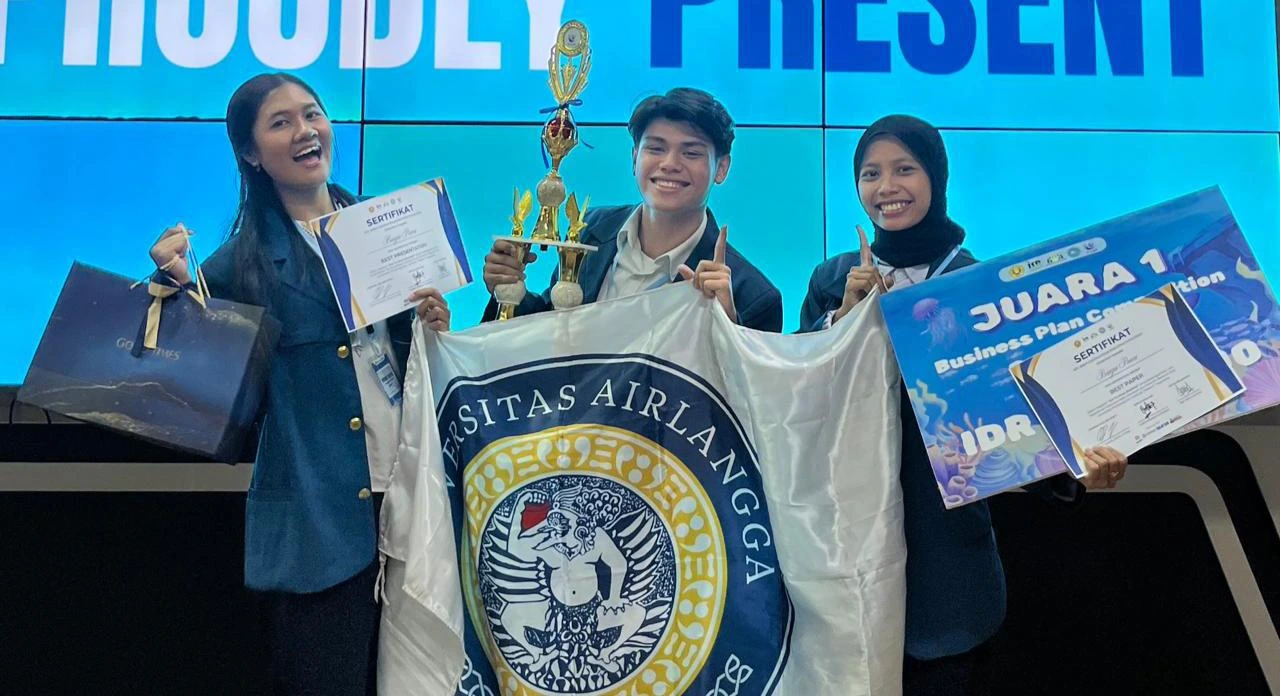
UNAIR NEWS – A team of Universitas Airlangga (UNAIR) students has created an eco-friendly organic mulch made from sludge and palm coir, positioning it as a catalyst for circular agriculture. The innovation earned them first place in a business plan competition organized by the Interdisciplinary Scientific Research Student Unit at UPN Veteran Yogyakarta. The final round took place on Friday, Aug. 22, 2025.
The winning team—Fransisca Andini Cakra Puspitasari, Muhammad Maulana, and Nur Sofwatun Nisak—are all students from UNAIR’s Faculty of Economics and Business (FEB). Their proposal, TANIRA: Eco-Friendly Organic Mulch from Sludge and Palm Coir as a Circular Agriculture Catalyst to Strengthen Indonesia’s Food Industry Resilience 2045, was presented under the competition theme: Empowering Digital Entrepreneurs to Innovate, Build, and Grow for a Sustainable Future.
TANIRA concept
Puspitasari, speaking on behalf of the team, said the idea emerged from challenges in Indonesia’s agriculture sector. “We saw pressing problems in the field, especially the buildup of organic waste from industry and farming. The palm oil sector, for instance, generates huge amounts of sludge and coir that are rarely used effectively. That was the basis for developing TANIRA,” she explained.
TANIRA is designed as a sustainable farming solution by turning palm oil waste into organic mulch. The product helps retain soil moisture, suppress weeds, and enrich soil fertility—key factors for boosting long-term productivity.
The team said their entry was driven by a strong motivation to improve agricultural productivity in Indonesia, a country long rooted in agrarian traditions.
“Our main motivation came from a sense of responsibility toward Indonesia’s agriculture. Through this idea, we hope to help address existing problems while ensuring better, more valuable harvests,” Puspitasari said.
Author: Ersa Awwalul Hidayah
Editor: Yulia Rohmawati