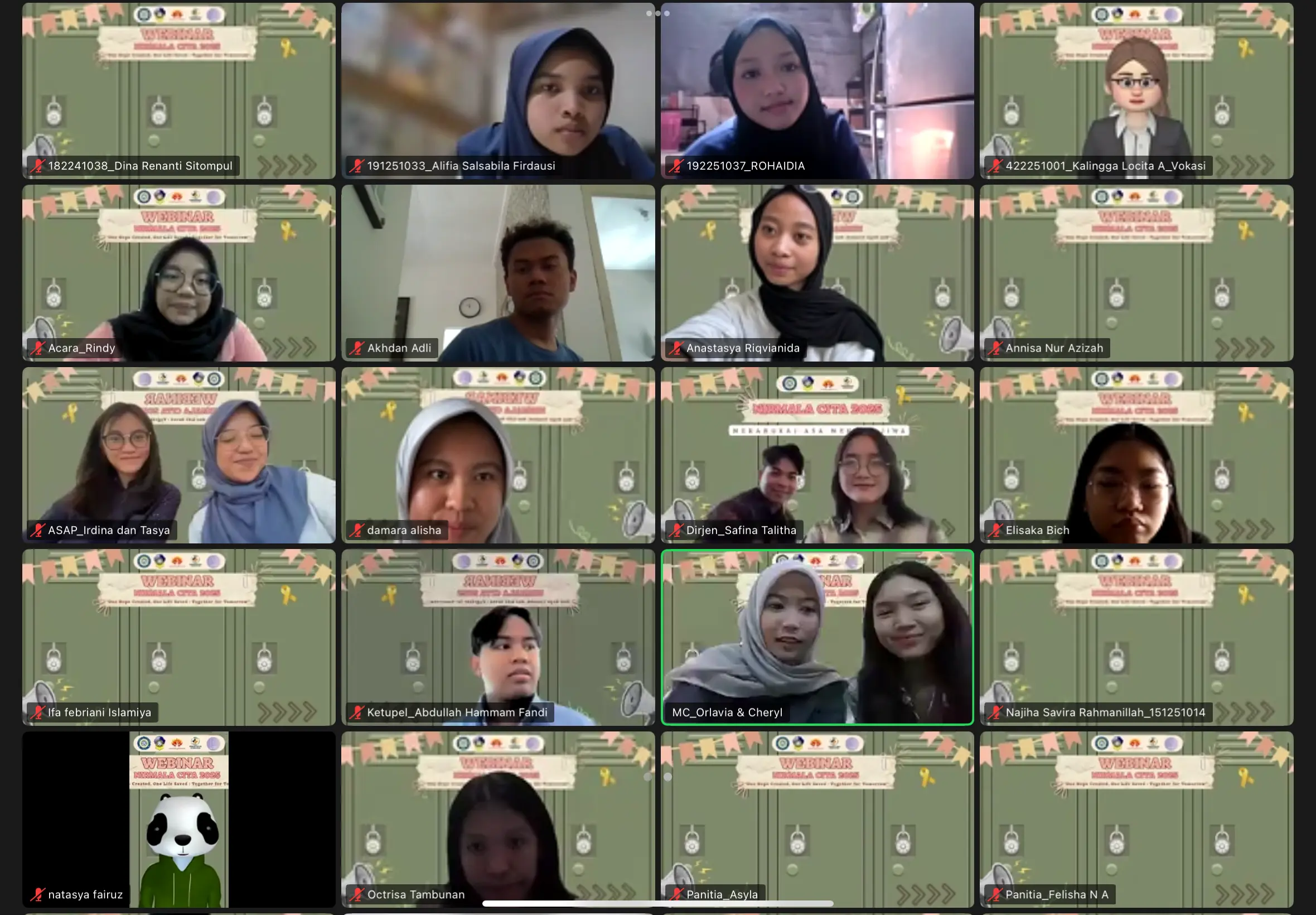
UNAIR NEWS — Mental health challenges among university students are drawing growing concern. A 2020 study by Argaheni revealed that 38.57 percent of students experience moderate stress, while 28.57 percent face severe stress. In response, the Student Executive Board (BEM) of Universitas Airlangga (UNAIR) hosted an educational webinar titled Nirmala Cita: One Hope Created, One Life Saved: Together For Tomorrow on Sunday (Sept. 7, 2025).
The event, held in observance of World Suicide Prevention Day, featured psychiatrist dr. Damba Bestari, Sp.KJ as the keynote speaker. The session aimed to provide students with both knowledge and practical skills for managing stress and offering first-line support to peers in mental distress.
Understanding stress and its consequences
The doctor explained that stress represents a change requiring adaptation. It is not inherently negative: eustress can promote productivity, while distress can be harmful if left unchecked. She also shared U.S. data showing that 44 percent of college students experience depressive symptoms, and 15 percent report strong suicidal thoughts.
“New students, in particular, struggle with uncertainty, the transition from high school, and time management,” he said.
Building mental health first aid skills
The webinar emphasized Mental Health First Aid (MHFA), which equips individuals to respond to mental health crises. Dr. Bestari noted that such assistance does not require professional training. “It’s like helping someone who has just fainted or been in an accident. It doesn’t replace ongoing professional treatment,” she explained. Suicide prevention within MHFA is built on three steps: look, listen, and link.
Look, Listen, Link
Look means observing warning signs in individuals at risk, such as social withdrawal, hopelessness, or frequent talk about death.
Listen requires offering empathetic, nonjudgmental support. Dr. Bestari encouraged asking directly about suicide, stressing that mentioning the word will not trigger suicidal thoughts. She emphasized reframing suicide as a medical issue rather than a matter of right or wrong.
Finally, link means connecting the individual with support networks or professional care, such as psychologists or psychiatrists.
Why community matters
Dr. Bestari also reminded participants that suicide prevention is a public health issue, not just a clinical concern. Social support, hope, and a sense of purpose serve as protective factors that can prevent crises.
“Those who die by suicide don’t want to end their lives—they want to end their pain,” she concluded, highlighting the importance of empathy and community support.
Author: Ahmad Abid Zhahiruddin
Editor: Khefti Al Mawalia