


UNAIR NEWS – The government, through the Ministry of Communication and Digital Affairs (Komdigi), recently issued Minister of Communication and Digital Regulation (Permen Komdigi) Number 9 of 2026, which regulates the limitation or suspension of social media accounts for children under the age of 16. The policy is introduced as an effort to protect children from various digital content that may negatively affect their development.
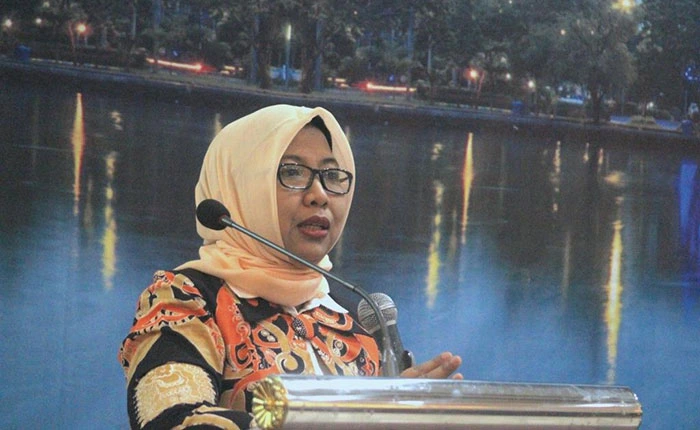
Responding to the policy, Professor of Media at the Faculty of Social and Political Sciences (FISIP), Universitas Airlangga (UNAIR), Prof. Dra. Rachmah Ida, M.Comms., Ph.D., explained that the regulation does not mean completely restricting children’s access to social media. According to her, the government only suspends account activation until children reach an age considered more mature.
She assessed that the policy reflects the government’s concern in protecting children from exposure to irresponsible content in digital spaces. This is because social media is a very broad space where users find it difficult to control the circulating content, especially for children who do not yet have adequate digital literacy.
Impact on children’s development
From a communication science perspective, Prof. Ida considered that the policy has the potential to provide positive impacts on children’s development. One of them is reducing exposure to content that is not appropriate for their age.
According to her, without clear restrictions, children can easily be exposed to various types of content that are not intended for them. This condition can influence children’s mindset and encourage them to undergo maturity processes at an earlier stage.
“If children are allowed to freely access social media, they can be exposed to content that is not their intended target. As a result, children may become mature before their time,” she explained.
She also highlighted that social media today cannot be separated from the logic of digital capitalism. This condition, according to her, can influence how children perceive social media. Children may imitate the lifestyles of content creators, such as consumptive behavior, the desire to be popular, and the urge to create content to gain attention or profit, even though they are not yet mentally and socially prepared.
Role of parents and family
In addition, Prof. Ida emphasized the importance of the role of parents and families in assisting children when interacting with digital media. She assessed that parents should not use gadgets as an instant solution to calm children.
According to her, the habit of giving gadgets from an early age may lead children to become dependent on digital devices. Therefore, parents need to actively guide children and improve digital literacy within the family environment. “Parents must become companions for children in using digital media, including filtering the content they consume,” she stated.
Prof. Ida also assessed that society needs to support the policy to create a safer digital environment for children. “Society needs to follow this regulation in order to create a healthy and responsible digital environment for children,” she concluded.
Author: Maia Chaerunnnisa
Editor: Yulia Rohmawati