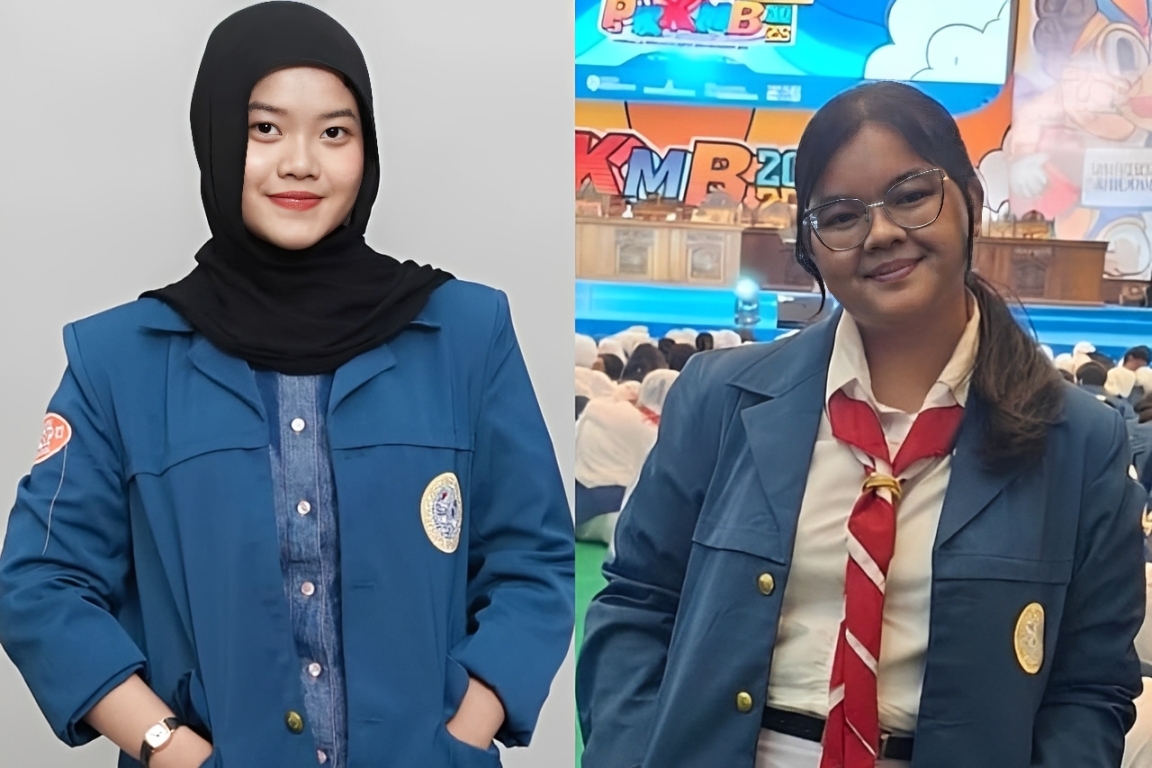
UNAIR NEWS – For many applicants, the Computer-Based National Selection Test (UTBK-SNBT) represents the arduous culmination of months of academic preparation. While the high-stakes examination typically induces significant anxiety and trepidation, two Universitas Airlangga (UNAIR) students from the class of 2025, Khesya Kalpika Akuina and Tisya Desti Winanda, offered insights into the university’s testing environment and their personal pedagogical strategies.
Exemplary service and institutional infrastructure
The quintessential experience of sitting for the UTBK at UNAIR was characterized by exceptional comfort and professional oversight. Both students, assigned to early morning sessions without prior sustenance, noted that the organizing committee provided refreshments to bolster participants’ stamina. “Before the examination commenced, we were supplied with light snacks and tea, which proved indispensable for maintaining focus,” Winanda said. Akuina corroborated this sentiment, highlighting the administrative efficiency encountered upon arrival. “The reception was immediate, with staff seamlessly directing us to the designated waiting areas through a highly coordinated process,” Akuina explained.
The tranquil atmosphere of the testing centers further facilitated a conducive environment for the rigorous assessment. Akuina underwent her examination at the Pringgodigdo Building within the Faculty of Law on the Dharmawangsa-B Campus, while Winanda was stationed at the Shared Lecture Building on the MERR-C Campus. Despite the geographic disparity, both encountered a standardized level of institutional support and robust infrastructure. “The technical systems remained infallible throughout the duration of the test, ensuring a seamless experience that allowed us to remain centered. The personnel were remarkably attentive, rendering the overall process at UNAIR highly satisfactory,” they noted.
Pedagogical approaches and strategic insights
The preparatory phase leading up to the UTBK was not devoid of logistical and psychological hurdles. Winanda pivoted to an intensive study regimen only two weeks prior to the examination following an unsuccessful bid in the non-exam selection track. She adopted an autodidactic approach, leveraging digital resources such as YouTube alongside practice manuals and diagnostic testing platforms. Conversely, Akuina had maintained a formal tutoring schedule since the start of her senior year, though she only reached peak focus after the initial selection results. Both acknowledged the challenges of a compressed timeline and the subsequent onset of academic burnout.
To mitigate exhaustion, Winanda integrated mandatory rest periods and diversified her study modalities to maintain engagement. She strategically concentrated on subtests relevant to her target major in Information and Library Science, specifically Indonesian and English literacy. Meanwhile, Akuina targeted the science and technology cluster, prioritizing Quantitative Knowledge and Mathematical Reasoning, a focus that eventually secured her admission into UNAIR’s Aquaculture program.
Addressing the prospective candidates for the 2026 testing cycle, Winanda emphasized the importance of self-awareness regarding one’s limits and the necessity of maintaining confidence despite the complexity of the subtests. Akuina reinforced this by advocating for consistency and physical resilience. “Maintain a balanced study schedule and avoid overexertion. Prioritize your health, as a physical setback on the day of the exam could jeopardize months of effort. Regardless of the outcome, recognize that this single assessment does not define the entirety of your future,” they concluded.
Author: Yongki Eka Cahya
Editor: Ragil Kukuh Imanto