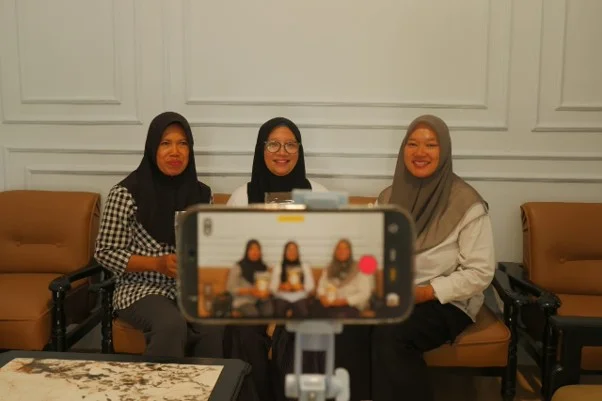
UNAIR NEWS – SMART Posyandu Prafi cadres have started introducing their products through educational videos. On camera, the cadres explain the ingredients used, processing methods, and nutritional information to potential buyers. This activity is part of the assistance that the Ministry of Transmigration’s Patriot Expedition Team 3 from Universitas Airlangga (UNAIR) provides to six groups of cadres of SMART Posyandu (integrated health service posts) in Prafi Subdistrict, Manokwari Regency, West Papua.
Products introduced include spinach chips, pumpkin chips, dried banana slices, coconut oil, taro chips, chocolate-coated banana chips, original banana chips, and cassava chips. All of these products have received halal certification and home-industry food production (PIRT) certification. In addition, the business run by the cadres has obtained a business license and a Taxpayer Identification Number (NPWP).
Videos of spinach chips, pumpkin chips, chocolate-coated banana chips, and plain banana chips have been filmed. Other products are being prepared for the next video shoot. Each group had the opportunity to talk about the products they made themselves.
Patriot Expedition Team Head Dr Muthmainnah SKM MKes explained that the videos help buyers get to know both the products and the people who make them. “In the videos, the cadres mention the product names and explain the raw materials, including ingredients sourced from their own gardens. They also explain that the products are made without preservatives, artificial colors, or flavor enhancers such as MSG. For the original banana chips, for example, the sweetness comes from the bananas themselves, without any added sugar,” Dr Muthmainnah said.
These explanations are based on each product’s specific recipe. As a result, consumers receive clear information about the ingredients and the manufacturing process. Products containing chocolate, for example, must list this ingredient so that buyers are aware of the composition.
Cadres also learn to convey nutritional information in simple language. In the video about spinach chips, the cadres introduce spinach as a food that contains iron. This message is linked to the importance of eating a varied diet to help meet iron needs. Information about raw ingredients is kept separate from the nutritional content of the finished product, which must be determined through testing.
Taking videos provided a new experience for the cadres. They had to remember the order of their explanations, speak clearly, and maintain eye contact with the camera. Whenever they stumbled or forgot a part of their lines, they had to reshoot the scene.
“We were nervous at first. We’d start speaking, then suddenly forget the next part. The Patriot team patiently guided us, even though we had to do multiple takes. We stayed enthusiastic. After seeing the results, we were happy to find that we were actually able to explain the product ourselves,” said one cadre.
The training was conducted by Dr Muthmainnah, along with Sri Rahmawati SPsi MSi; Imeldawaati Tambunan SKM; Anggun Anggifosari SIKom; Surma Elisa Manihuruk SKM MKes; and Widyasari Yuni Agustin ST. The team helped the cadres prepare their stories, practice conveying information, and take photos of the products.
Besides learning how to create content, the cadres also received guidance on using production equipment. A slicer helps automatically slice the ingredients for the chips, making the slicing process easier. After frying, a spinner is used to drain the oil clinging to the chips before the product is packaged.
“In the past, slicing the ingredients one by one would make our hands ache quickly. Now we have the slicer to help us, so the work is easier. After frying, the chips are also drained using the spinner. When packaged, the chips don’t feel too oily,” said one of the cadres.
Using this equipment helps the group prepare products more efficiently. Cadres pay close attention to the cleanliness of the equipment, the thickness of the slices, the frying process, and the condition of the products before they are packaged.
Dr Muthmainnah said that the video will be uploaded to social media. The link will also be embedded in a QR code on the packaging label so that buyers can immediately watch the cadres story.
“The hope is that when people buy a product, they can scan the code on the packaging and read an explanation from the women who made it. They will learn about the materials used, how the product is made, and the story behind this business. We want these cadres to become more confident and able to manage the promotion of their products independently,” she said.
This initiative aligns with SDG 4 (Quality Education) through training in communication and digital skills; SDG 5 (Gender Equality) through empowering women; and SDG 8 (Decent Work and Economic Growth) through developing the cadres businesses. Information on food and nutrition relates to SDG 3 (Good Health and Well-being), while the collaboration among the Ministry of Transmigration, UNAIR, and the cadre groups reflects SDG 17 (Partnerships for the Goals).
Through educational videos, the six groups of cadres hope that their products will become better known and reach a wider market. These skills are also expected to enable them to update content, answer buyers’ questions, and continue their joint efforts after the mentoring program ends.
Author: Dr Muthmainnah SKM MKes
Editor: Khefti Al Mawalia