
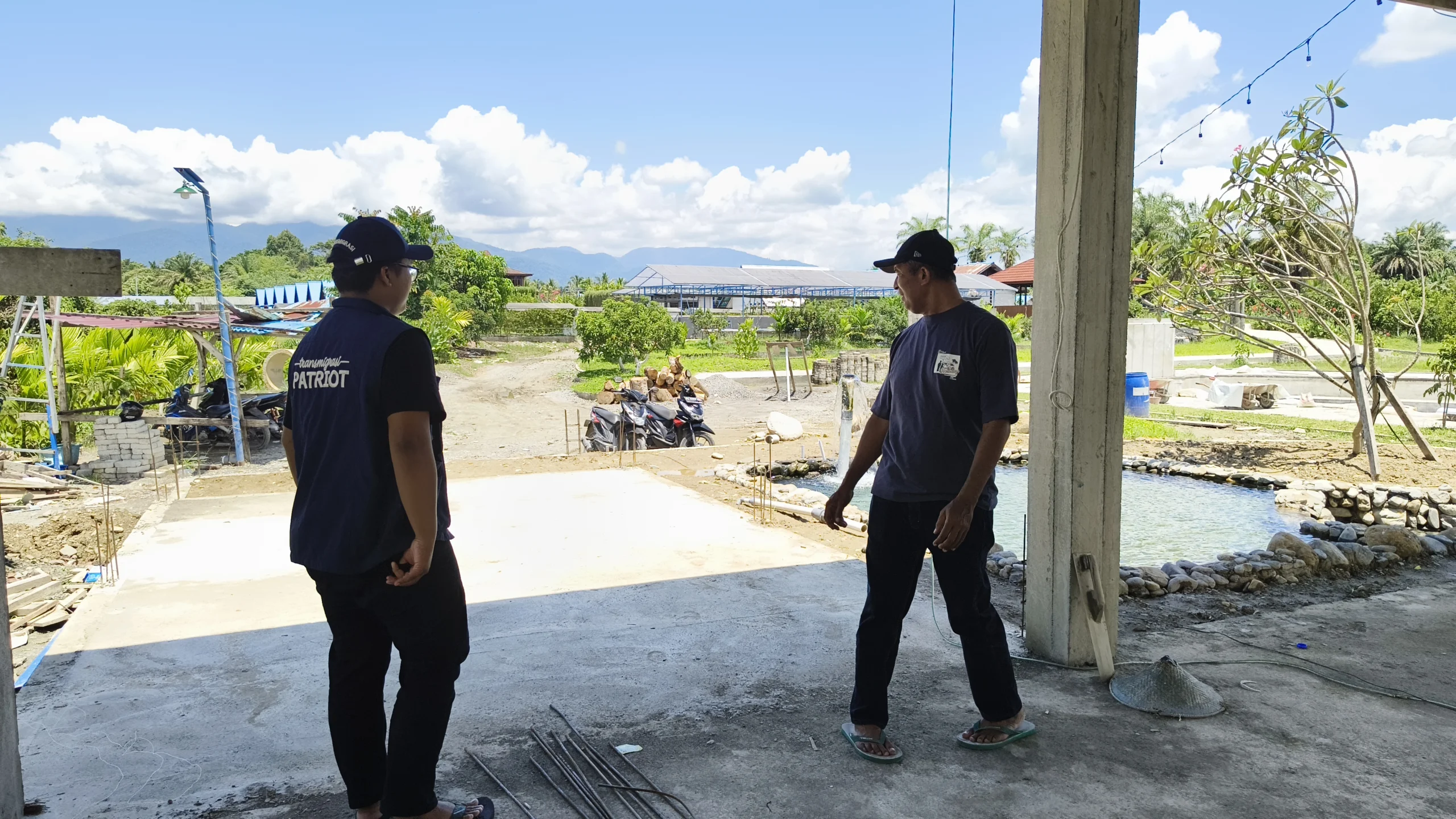
UNAIR NEWS – Amid limited infrastructure and market access, which are often classic challenges in transmigration areas of Eastern Indonesia, a vineyard in Udapi Hilir Village, Prafi District, Manokwari Regency, West Papua, has instead grown into an example of local innovation transforming into a new economic opportunity. It is Manokwari Anggur, a startup owned by Manto, which is now in the spotlight after establishing research collaboration and assistance with the UNAIR Patriot Expedition Team 18.
The fertility of the soil in the Prafi transmigration area, Manokwari Regency, West Papua, is not only a space for residents to farm but also opens opportunities for new businesses with economic value. One of them is Manokwari Anggur, a fruit plantation developed into an alternative tourism destination based on edu-agrotourism by Manto in Settlement Unit 4 (SP4), Udapi Hilir Village, Prafi, Manokwari, West Papua.
For more than five years, through Manto’s perseverance and spirit, Manokwari Anggur has grown into a business that utilizes local agricultural potential. It has also become an alternative tourism destination with an education-and-tourism concept for communities in the transmigration area.
So far, various high-quality fruit commodities have still largely been supplied from outside the region due to limited cultivation at the local level. Manto, as the owner of Manokwari Anggur, instead saw this condition as an opportunity to develop fruit commodities with economic value while creating economic circulation around the transmigration area.
“The most important thing is how we can bring high-quality fruit to Manokwari. So far, a lot has been brought in from outside. I try to cultivate it myself here,” said Manto, owner of Manokwari Anggur, during the research visit.
Driving sustainable economic growth from plantation to alternative tourism
The development of Manokwari Anggur also shows that the agricultural sector can be combined with tourism and education. The garden, which was initially developed as production land, has gradually become known as a place that transmigrant communities can visit.
The development of the area is in line with Sustainable Development Goals (SDG) 8 (Decent Work and Economic Growth). Through development from a vineyard into a sustainable rural tourism model, Manokwari Anggur is expected to create a local business ecosystem, from the supply of seedlings and production materials to a fishing pond, that can absorb local labor.
This confirms the close link between tourism and economic growth. The sustainable tourism principles applied prove that tourism-led growth can be built from local-scale initiatives.
Research collaboration, digital marketing strategy, and national market target
This potential became one of the focuses of the visit by the Universitas Airlangga Patriot Expedition Team 18. The visit was carried out as part of comprehensive research and assistance in developing the area’s potential, including through digital marketing strategy.
Manto, as the owner of Manokwari Anggur, welcomed this collaboration. It can strengthen branding and widen the marketing reach of local agricultural products.
“I hope that with this collaboration with the Patriot Expedition Team, what I have built and aspire to do to help the community can also be realized,” he concluded.
Products developed by migrant communities are considered to be of no lower quality than products that have been brought in from outside Manokwari. The challenge is how that quality can be communicated, marketed, and recognized by consumers more widely.
This is where the integration of digital marketing can become an important instrument. Local agricultural products need not only good production but also strategies to build identity, widen market reach, and connect producers with consumers. This strategy is expected to become an important instrument in driving inclusive economic growth while supporting poverty alleviation in the Prafi transmigration area, Manokwari.