
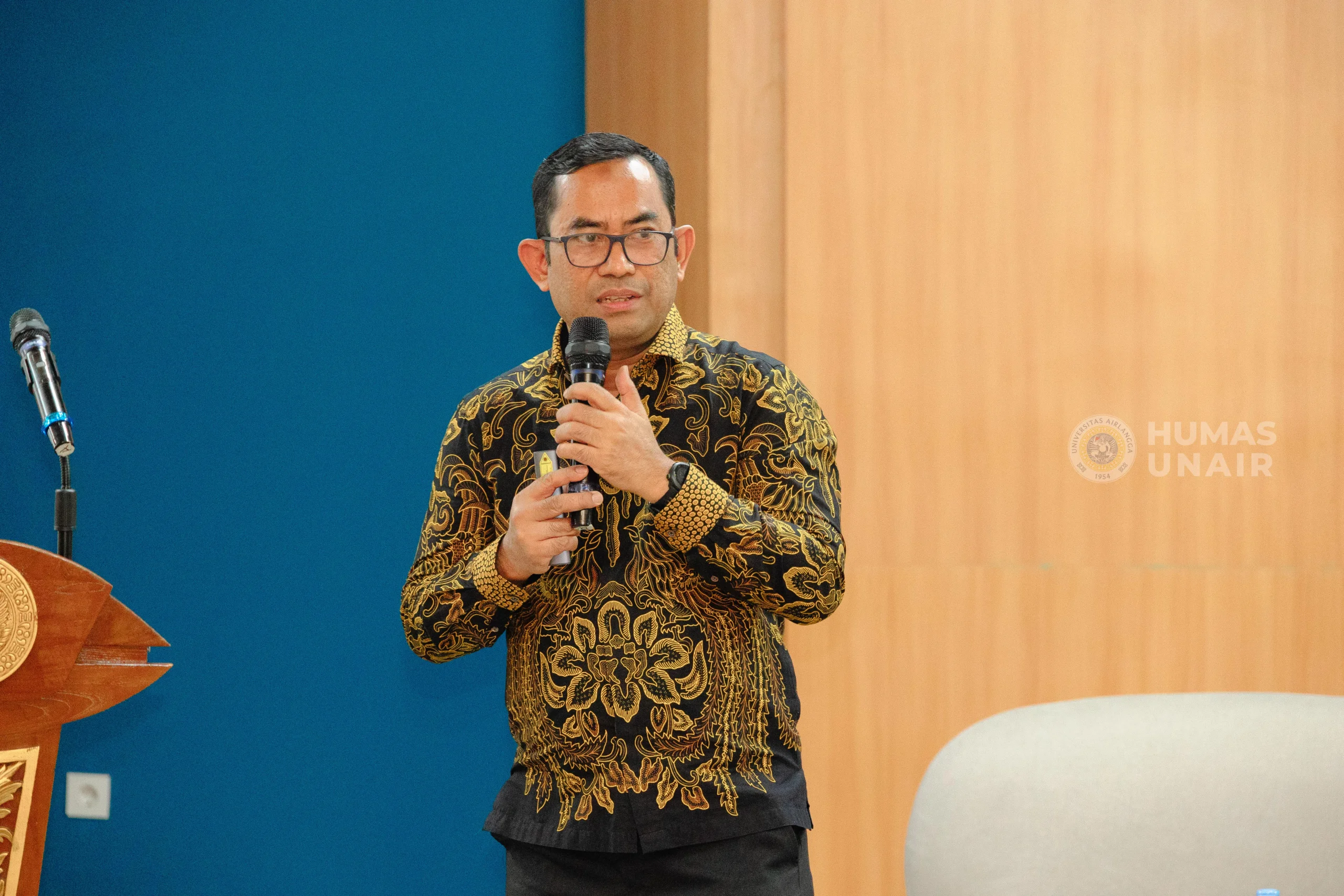
UNAIR NEWS – The rapid development of digital technology demands that public relations practitioners continuously increase their vigilance against potential cyber threats and personal data leaks. This was stressed by the Head of Ignite at PT Pijar Edukasi Teknologi when opening the UNAIR Public Relations Team Training titled Cyber and Data Monitoring: Hacking, Social Engineering, and Your Digital Rights at Bima Suci Hall, ACC Building, Campus C UNAIR, on Tuesday (October 20, 2026).
Safeguarding stakeholder information
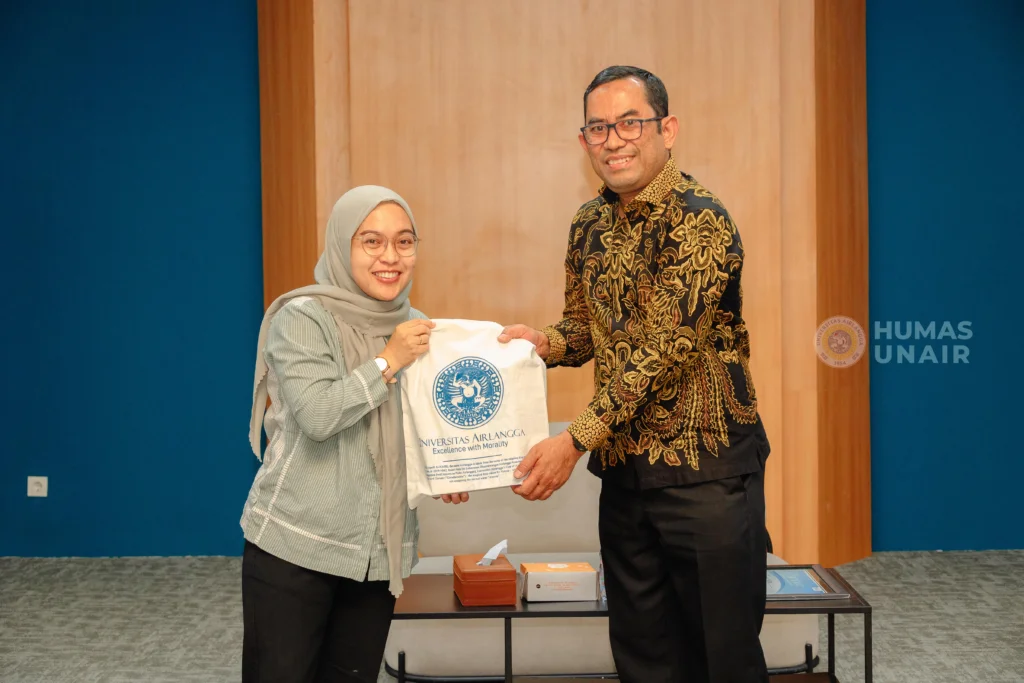
Secretary of the Center for Public Relations and Protocol (PHMP) Universitas Airlangga (UNAIR), Dr Hilda Yunita Sabrie SH MH, said that technological progress must be balanced with secure information governance, especially concerning the personal data of the institution and the public. For her, public relations has a strategic role in managing and protecting the data it holds so that it does not create cyber vulnerabilities.
“Technological progress certainly needs to be balanced with vigilance, especially regarding cyber security. Public relations must be able to provide information services to the public while ensuring that the data we manage is safe,” Sabrie said.
She hopes participants can educate colleagues in their respective units. “It is hoped that after this activity, you can become a mouthpiece in your work unit to convey the importance of personal data protection to the entire academic community,” she added.
Humans as the main hacking vulnerability
Cybersecurity expert and Head of Ignite at PT Pijar Edukasi Teknologi, Yogiswara Witha, stressed in his presentation that the human factor is often the main vulnerability in cyber hacking threats.
Cybercriminals more often use social engineering techniques by manipulating victims’ emotions, such as fear, haste, or being tempted by prizes, rather than technically hacking system fortresses directly.
“Hackers often do not hack technological fortresses, but target the humans who hold system access. When we are tired, unfocused, or panicked, that is where psychological manipulation comes in through phishing, malicious apps, and fake links,” Witha stressed.
Witha also warned of the dangers of the habit of over-sharing information on social media. Pieces of data such as barcodes, personal identities, and location photos can be collected by perpetrators through Open Source Intelligence to build fraud scenarios.
“Photos and information we upload freely can open many dangerous data gaps without us realizing it. Cybercriminals can generally use Open Source Intelligence techniques to profile targets before launching their actions,” he explained.
Building a digital security culture
To anticipate increasingly complex threats, Witha stressed the importance of applying account governance rules in a disciplined manner in line with the Personal Data Protection Law (UU PDP). Simple steps such as activating two-factor authentication (2FA), using strong passwords, and designating a person in charge of official accounts are crucial to implement in every work unit.
Besides technical arrangements, institutions also need to prepare a clear incident response flow from the start, so that every potential hack or data leak can be followed up quickly and in a coordinated manner.
“Technology systems can be updated quickly, but building a data security culture in people requires consistent habit. Maintaining the confidentiality of institutional data is a shared responsibility so that we avoid security crises in the future,” Witha concluded.
Author: M Yasir Dharmawan Diniy
Editor: Khefti Al Mawalia