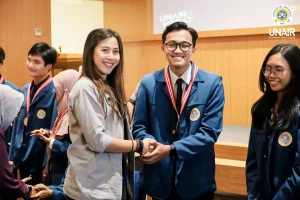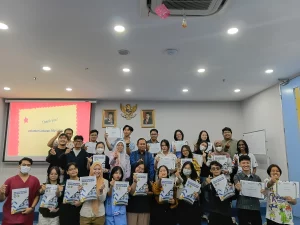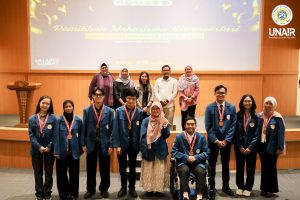


UNAIR NEWS – Airlangga Global Engagement (AGE), in collaboration with the Faculty of Veterinary Medicine (FKH), organized the ASEAN University Network (AUN) Summer Camp: Airlangga Adventure (AIRVENTURE 2025). Held from August 11–20, 2025, the program was carried out with ASEAN under the theme Protecting Marine Biodiversity. It was designed to support internationalization while expanding academic and cultural exchange opportunities.
Mangrove forest
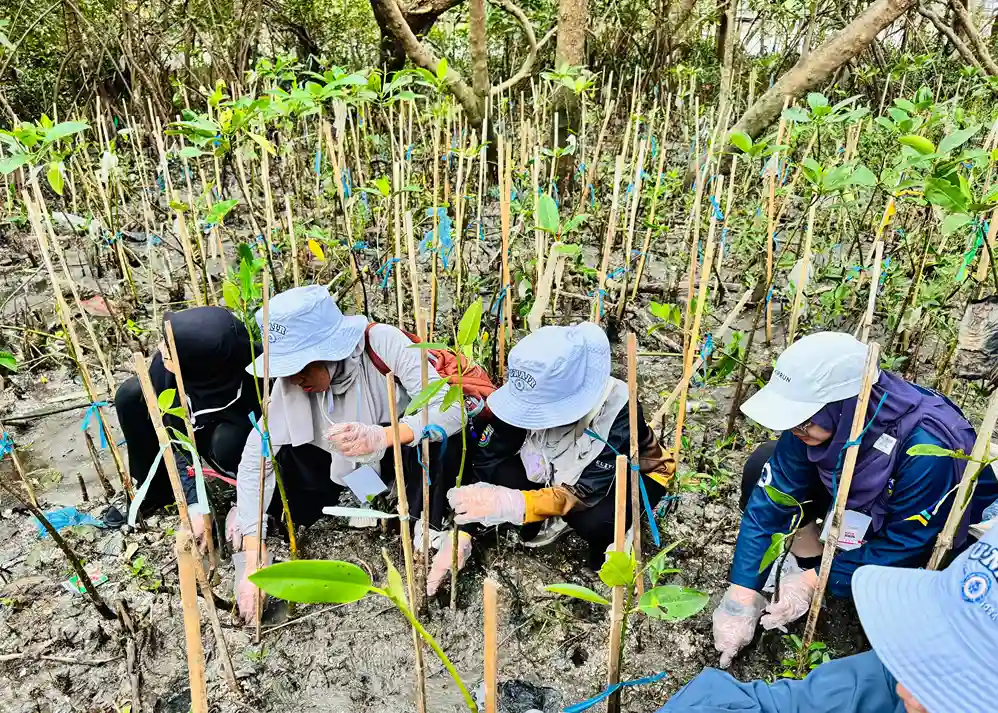
Among the highlights of AIRVENTURE was a Mangrove Workshop. At the site, 52 delegates from universities across ASEAN received lessons on mangroves and their fruit.
The mangrove species at Wonorejo Mangrove Forest is Rhizophora mucronata, known for its wide-ranging benefits, such as preventing coastal abrasion and erosion. “Mangrove roots are very effective at protecting coastal soil, making them a natural shield against land loss from the sea,” explained Devid, the tour guide.

He also noted that mangroves serve as natural filters. “Their roots help break down waste carried to shore and speed up the decomposition of chemical pollutants in the ocean,” he said.
Mangroves also play a critical role in stabilizing coastlines. By trapping soil deposits, they contribute to shoreline growth, creating space for terrestrial plants to take root. “Mangroves are five times more effective than ordinary trees at absorbing and storing carbon. The carbon dioxide they capture is stored in sediment biomass, known as blue carbon,” Devid added.
Mangrove fruit
Mangrove fruit offers benefits of its own. It can be processed into syrup or jam and holds economic potential in the food industry—for instance, as a coffee blend ingredient. Processing involves drying, roasting, grinding, and mixing with spices to enhance flavor and aroma. Beyond food, mangrove fruit can also be used as a natural dye for batik. “Once dried, the fruit produces colors such as light brown, dark brown, black, and pink,” Devid explained.
He further noted the fruit’s ecological role. “During fruiting season, it draws animals—especially monkeys—that feed on it. The fruit helps boost their immunity and stamina,” he said.
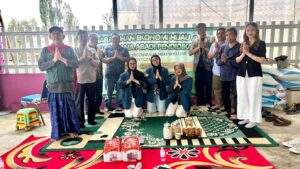
Delegates of the AUN Summer Camp enthusiastically joined the mangrove activities. They were especially eager to learn about different species and planting techniques, often capturing the experience with photos alongside their peers from across ASEAN.
Author: Arifatun Nazilah
Editor: Yulia Rohmawati