
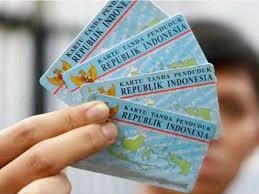
UNAIR NEWS – Bank Indonesia’s plan to roll out the Payment ID system on August 17, 2025, has been put on hold. The system, based on the National Identity Number (NIK), is designed to serve as a single gateway for recording individual financial transactions.
Although delayed, the proposal has sparked a range of responses. One of them came from Dr. Aziz Fajar, S.Kom., M.Kom., a lecturer at Universitas Airlangga’s Faculty of Advanced Technology and Multidiscipline (FTMM).
Benefits for fraud detection
Fajar said the Payment ID concept could help financial institutions detect potential fraud. With an integrated system, the government would no longer need to manually review annual financial data, as everything could be tracked through a single entry point.

“For example, if someone usually makes daily transactions of IDR 100,000 or 50,000, and suddenly there is a transaction of IDR 500 million, Payment ID would make it easier to identify both the sender and the recipient,” Fajar explained.
Protecting user data
Still, Fajar warned that data security remains a critical challenge. He pointed to past cases of ID card data leaks in Indonesia as a lesson that cannot be ignored. Without strong cybersecurity safeguards, he said, Payment ID could create new risks.
“If our data is compromised, unauthorized parties could monitor our spending patterns. That information could then be sold to private companies, such as online lending platforms,” he noted.
Strengthening cybersecurity
Fajar stressed that the effectiveness of Payment ID depends entirely on system security. If managed properly, he said, the government could more easily intercept suspicious transactions linked to online gambling or other illegal activity. But weak protections could have the opposite effect.
“If the security is poor, people may lose trust in digital transactions and return to offline methods, which would slow the progress of Indonesia’s digital economy,” he warned.
He argued that the government must first strengthen cybersecurity infrastructure before introducing Payment ID. Otherwise, the system could end up causing more harm than good.
Beyond technical readiness, Fajar also underscored the role of digital literacy. He suggested that education on safe digital transactions should begin at the high school and university levels, when young people start managing money independently. But parents, too, should not be left out.
“Many parents assume they won’t engage with the digital world, but in reality, nearly every aspect of daily life today is connected to digital technology,” Fajar concluded.
Author: Rosa Maharani
Editor: Yulia Rohmawati