
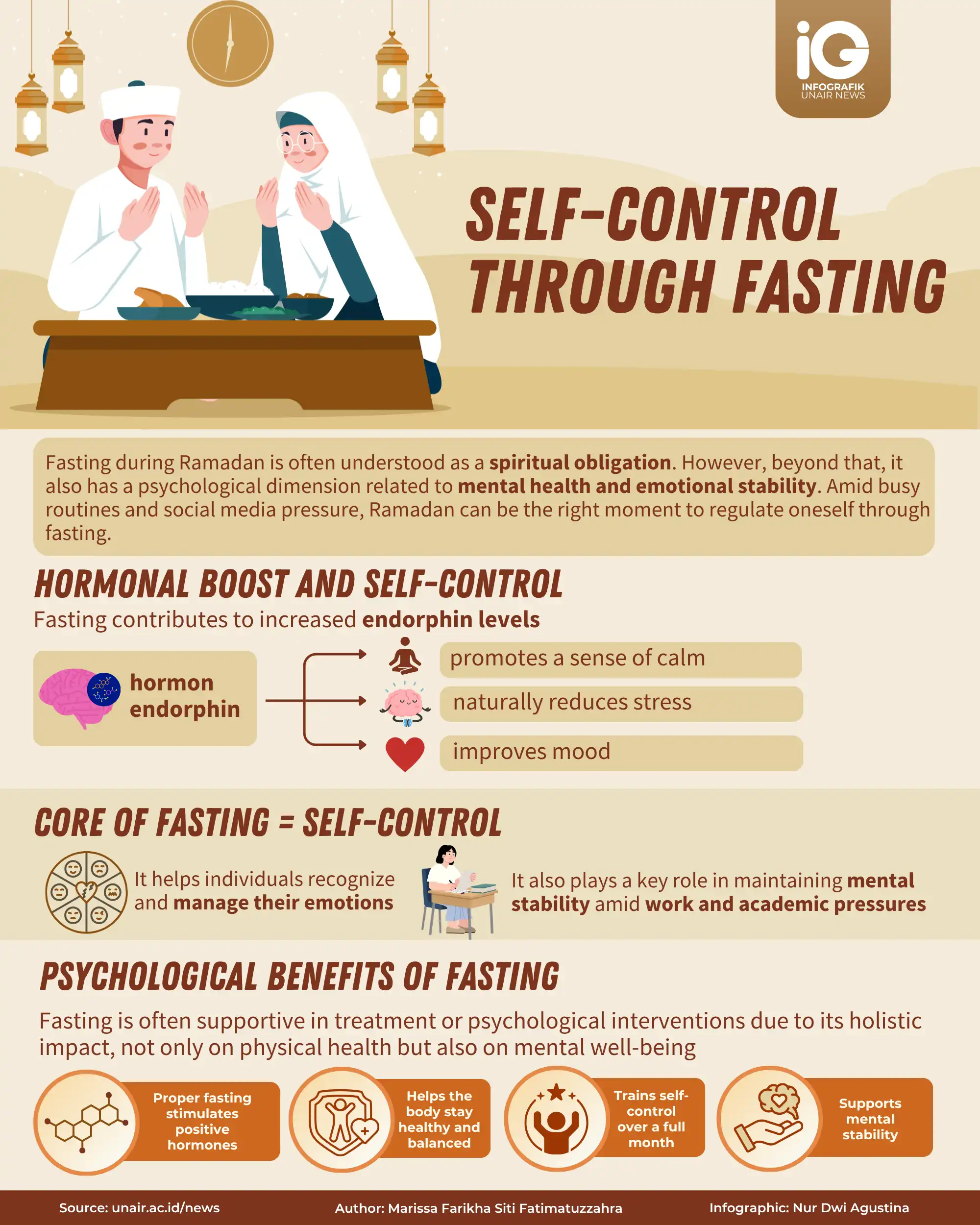
UNAIR NEWS – Fasting during Ramadan is often understood as a spiritual obligation. However, beyond that, it also has a psychological dimension related to mental health and emotional stability. Amid busy routines and social media pressure, Ramadan can be the right moment to regulate oneself through fasting.
Hormonal boost and self-control
Fasting may contribute to increased endorphin production in the body. These hormones help promote a sense of calm, naturally reduce stress levels, and enhance overall mood and emotional well-being.
Core of fasting = Self-control
It helps individuals recognize and manage their emotions. It also plays a key role in maintaining mental stability amid work and academic pressures.
Psychological benefits of fasting
Fasting is often incorporated as a complementary component of medical treatment or psychological interventions because of its holistic effects on both physical and mental well-being. When practiced properly, fasting can stimulate the production of beneficial hormones, support overall health and balance, and strengthen self-discipline through sustained self-control over an extended period. In addition, fasting may contribute to greater emotional stability and foster resilience, helping individuals better navigate life’s challenges.
Read also:
UNAIR academic says fasting can strengthen self-control