

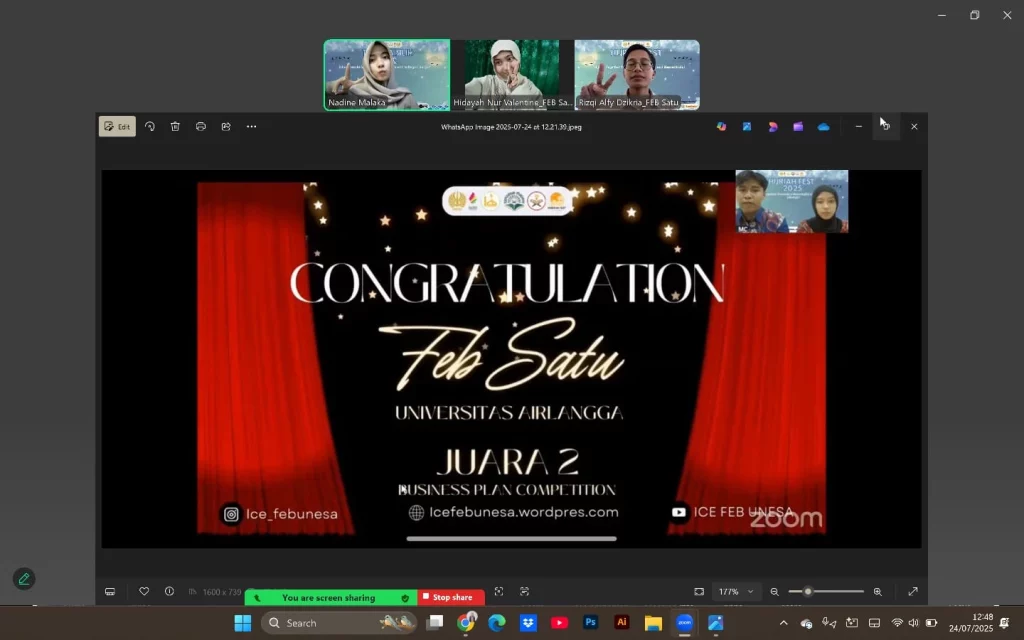
UNAIR NEWS – Universitas Airlangga students continue to make strides in innovation, producing creative products that lead to impressive achievements. This time, students from the Islamic Economics program at the Faculty of Economics and Business (FEB) secured a notable victory at the International Business Plan Competition, part of the Hijriah Fest 1446 H event.
The team, known as FEB Satu, consisted of three students: Rizqi Alfy Dzikria (team leader), Hidayah Nur Valentine, and Nadine Ramadhanty Malaka. Together, they developed NutriFe, a halal-certified biscuit uniquely formulated as a practical solution to help prevent and reduce anemia.
Focused on combating anemia
In an interview, the FEB Satu team shared that their product addresses the issue of anemia, particularly among high-risk groups such as adolescent girls and pregnant women. The concept was inspired by their concern over the high prevalence of anemia in Indonesia. Often underestimated, anemia can significantly impair productivity, concentration, and even contribute to stunted growth in future generations.
NutriFe is made using two main ingredients: katuk leaves and red beans. The team aligned their concept with the competition’s theme, “Healthy Living Through Halal Lifestyle,” and sought to create a product that prioritizes both health and halal standards. They also saw potential in developing a biscuit using local ingredients that are rarely found in similar products.
What makes NutriFe stand out is its integration with a digital companion platform called NutriFe Care. This platform offers features such as nutritional education, daily consumption reminders, and self-assessment tools for anemia symptoms. As a result, consumers receive more than just a product—they gain a digital health companion that supports long-term well-being.
“We saw great potential in local ingredients like katuk leaves and red beans, which haven’t been widely explored. With NutriFe, we aim to offer a nutritious, halal product while educating consumers on the importance of early anemia prevention,” said Valentine.
Overcoming challenges through teamwork
The team admitted that one of their biggest obstacles was managing time, especially while balancing academic, organizational, and personal commitments. Despite the challenge, they viewed it as a valuable learning experience that strengthened their time management and communication skills.
“Time management was definitely our biggest hurdle, with everyone juggling classes, extracurriculars, and other responsibilities. But through that, we learned to respect each other’s time and communicate more effectively. We’d squeeze in time wherever we could—sometimes revising late at night or between lectures. It wasn’t easy, but the challenge actually pushed us to stay consistent and committed,” member of team explained.
In closing, the team encouraged fellow students interested in similar competitions to start with real-world problems rather than trying to be overly unique. They stressed the importance of conducting initial research to ensure the proposed solution is both relevant and actionable.
Author: Kania Khansanadhifa Kallista
Editor: Ragil Kukuh Imanto