UNAIR NEWS – The earthquake that struck East Nusa Tenggara (NTT) some time ago has left deep emotional scars. Beyond the physical injuries, many people affected by the disaster continue to struggle with psychological distress, including grief over the loss of family members and anxiety about the possibility of another disaster.
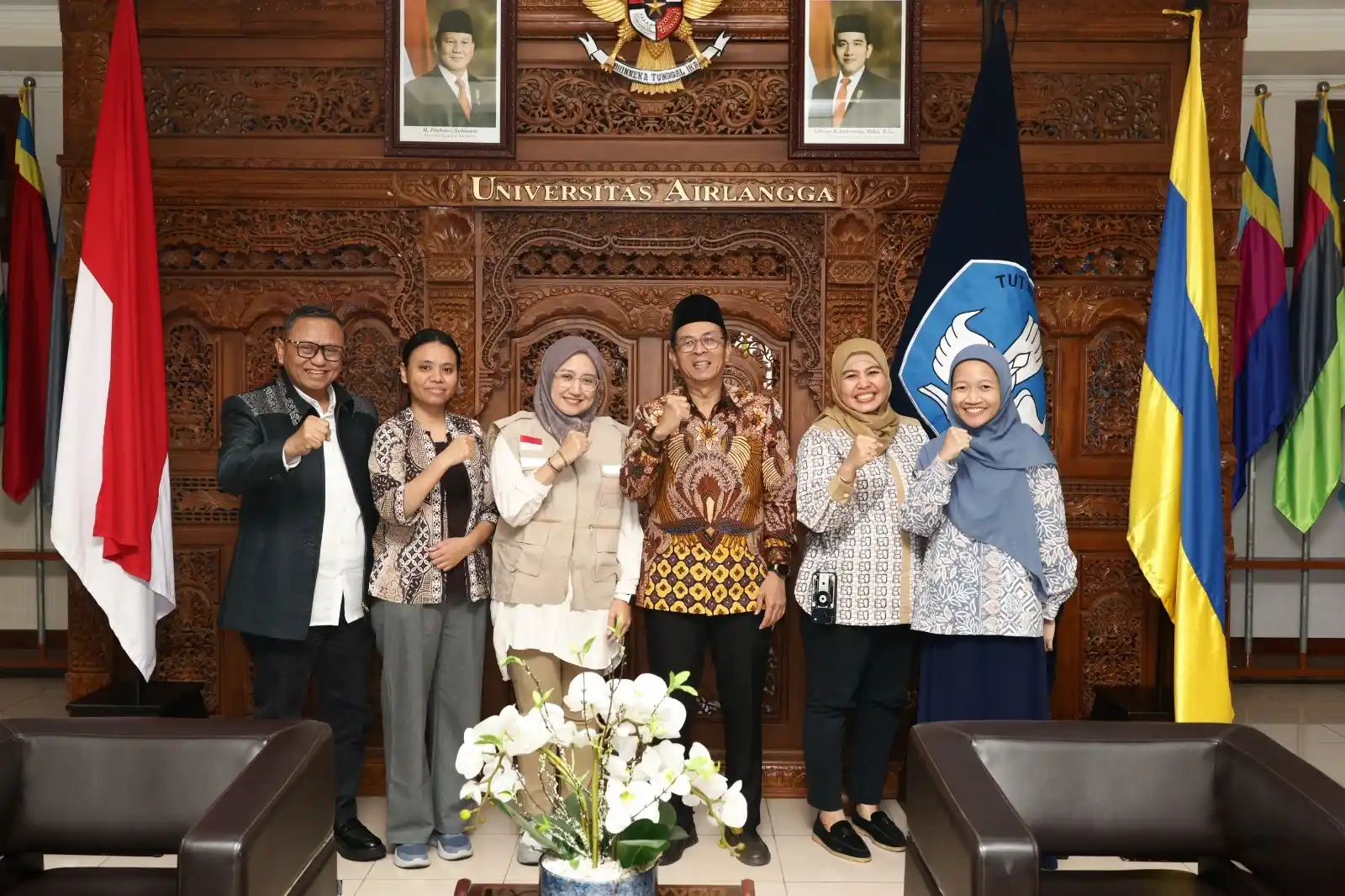
Recognizing the importance of trauma recovery for earthquake survivors in NTT, Universitas Airlangga (UNAIR) has once again deployed volunteers to provide medical support. The volunteers are dr Riani and dr Laili, two students in the Psychiatry Specialist Medical Education Program (PPDS) at UNAIR’s Faculty of Medicine (FK).
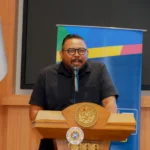
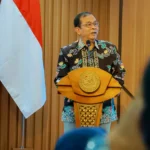
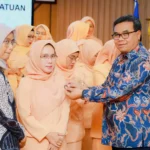
UNAIR Rector Prof Dr Muhammad Madyan SE MSi MFin, accompanied by Vice Rector for Entrepreneurial Ecosystem and Business Development (EEPB) Prof Dr Koko Srimulyo Drs MSi, officially sent off the two volunteers in a symbolic ceremony on Thursday, September 10, 2026. The Rector expressed his hope that their humanitarian mission would proceed smoothly and without any obstacles.
“I hope everything can be carried out as well as possible. Hopefully, everything will go smoothly, and they can return here to continue their PPDS education,” he said at the Balai RUA, fourth floor of the Management Office at the MERR-C Campus.
Screening needs
The two volunteers will leave for NTT, specifically East Manggarai, on Friday morning, September 11, 2026. They will carry out their duties there for the following week.

Speaking to UNAIR NEWS, dr Riani said their deployment was prompted by the need to screen residents for stress and trauma following the disaster. Before their departure, the two volunteers coordinated with local psychiatrists and health officials to prepare for the mission.
“The area we will visit, East Manggarai, has many children who have been affected and are experiencing stress and anxiety. Schools there are also closed, so we will conduct screening to help prepare them to return to school and become more resilient,” she explained.
Children are not the only ones vulnerable to mental health challenges following a disaster. Adults who have been affected may also experience psychological distress. For this reason, the screening will also include adults and older people.
The medical services will include education on relaxation and grounding techniques. Both are non-medication-based therapies that can be practiced whenever needed.
“If someone feels anxious, these therapies can be used. We will then conduct screening, and if medication is needed, we will provide it. If the medication is unavailable, we will refer the patient to the nearest hospital,” she added.
The psychological support and mental health services will be provided at the main evacuation shelter, as well as in other areas that have not yet been reached. “The main shelter will certainly be one of our locations. We will then coordinate with the local health authorities and psychiatrists to identify and visit places that have been seriously affected, particularly those that are far from the main area,” she said.
The deployment of FK UNAIR’s PPDS volunteers is expected to provide much-needed support as affected communities work to recover from the trauma of the disaster. With this assistance, residents can gradually regain their resilience and begin returning to their daily activities after the disaster.
Author: Yulia Rohmawati