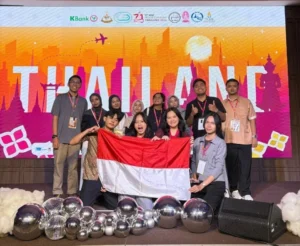


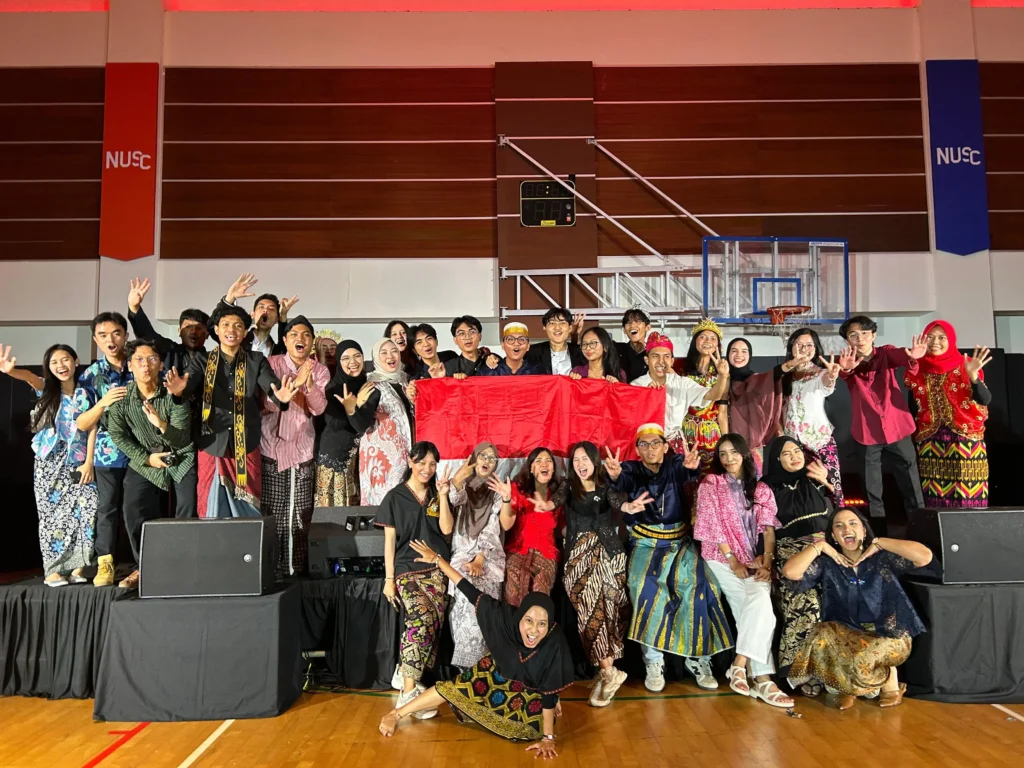
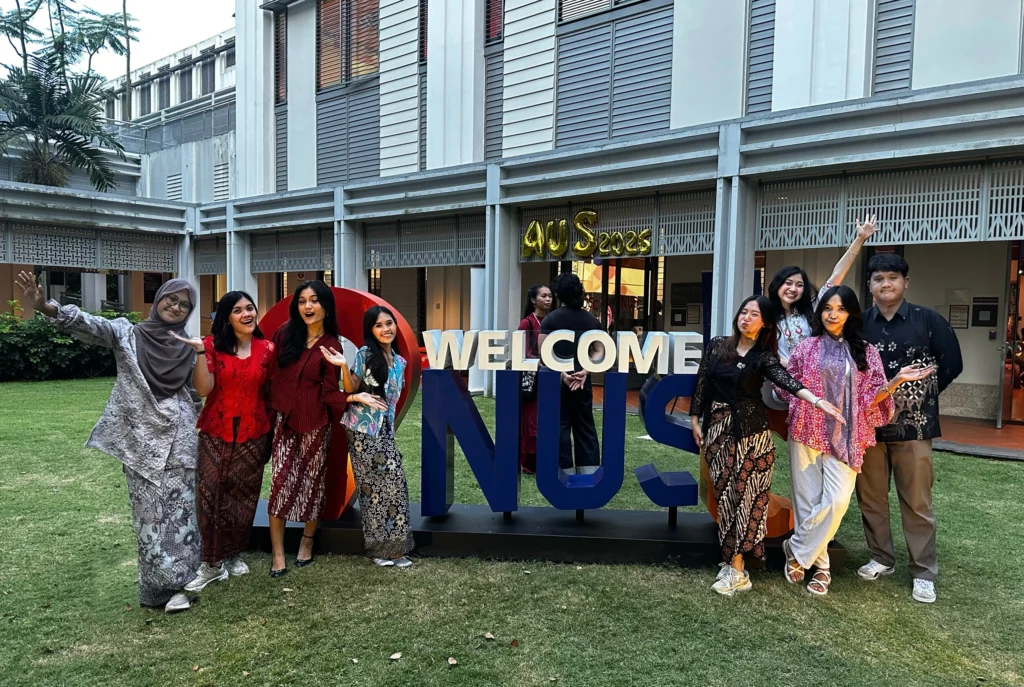
UNAIR NEWS – Eight Universitas Airlangga (UNAIR) students have once again achieved remarkable success on the international stage. They were selected as delegates for the prestigious Asian Undergraduate Symposium (AUS) 2026, organized by NUS College (NUSC), National University of Singapore (NUS), from July 4 to 18, 2026. The program, which is part of the ASEAN University Network (AUN) Summer Camp Program, carried the theme “Communities in Action.”
Being a university student is not only about attending classes. These students demonstrated how to maximize every opportunity to create a meaningful impact. This principle led eight UNAIR students Felisha Kintania (Management, 2024), Rahel Felicia Gondo (International Relations, 2024), Zahiya Kareentya Puspasari (Public Administration, 2023), Salma Arvianka Putri (Law, 2024), Shafa Annisa Nur Fadhilah (Psychology, 2024), Nadine Abigail (Information Systems, 2022), Muhammad Ammar Putra Ramadhani (English Language and Literature, 2023), and Celine Zafira Angel Haura Sie (Industrial Engineering, 2024) to be selected as delegates for the prestigious Asian Undergraduate Symposium (AUS) 2026.
Notably, three of the delegates Felisha, Rahel, and Nadine successfully led their respective international teams to secure a seed grant worth SGD 5,000 (approximately IDR 60 million) from NUS to implement the social projects they had designed.
Cross-country collaboration produces multidisciplinary innovation
The success of the three projects initiated by the UNAIR delegates was driven by the application of knowledge they gained during their studies. Felisha Kintania, a Management student from the Faculty of Economics and Business (FEB) UNAIR, applied marketing and positioning strategies in the “Peels Good” project, an initiative that transforms fruit peel waste into eco-enzymes while engaging elderly residents at a nursing home in Thailand. Through this project, she utilized her marketing management knowledge to develop the project’s positioning strategy.
Meanwhile, Rahel Felicia developed the “Politi-Knowsang” project, which will be implemented in Tuguegarao City, the Philippines. In response to the high level of political apathy among young voters, the International Relations student and her multinational team designed an interactive card game to improve grassroots political literacy. At the same time, Nadine Abigail introduced a digital innovation through “FlashLingo.” Drawing on her Information Systems background, she designed an inclusive English-learning application in the form of a flashcard game for children. The project aims to provide equal access to education for children with hearing impairments in Indonesia through special schools (SLB-B).
The three projects successfully passed a highly competitive selection process. Starting from a pool of 40 outstanding projects, the ideas were intensively refined with expert mentors from NUS. The judging panel evaluated the projects based on visibility, realistic budget allocation, effective communication with potential partners, and long-term sustainability within the community. “We only had about one week to develop our ideas together, align our vision, and prepare a proposal with people we had never worked with before. The challenge continued when we had to pitch our projects online to the NUS reviewers after returning to our respective countries. However, it was through this process that we learned how to collaborate globally,” explained Felisha.
Realizing grant funding and building a culture of innovation
Felisha shared that the UNAIR delegates brought home many valuable lessons, particularly from the innovation ecosystem and culture at NUS, which strongly emphasizes creating tangible impacts on society through action-oriented initiatives. She believes that innovation does not always have to be large-scale but can begin by addressing simple problems within local communities.
“Don’t be afraid to try and never doubt yourself. Stay curious, because university is the best time to step out of your comfort zone and meet new people. I always believe in the saying, ‘We are what we think.’ Never hesitate to seize opportunities, because you will never know how far you can grow unless you dare to take the first step,” she concluded.
To foster a similar innovation ecosystem, Felisha highlighted that the strong sense of unity and family among the UNAIR delegates, who supported one another throughout the programme, became one of their greatest strengths. She also encouraged all Airlangga Knights to take the initiative and make full use of university facilities, including funding opportunities and information provided by Airlangga Global Engagement (AGE). “It was not easy to build a project with a multinational team while communicating entirely online. However, that experience taught us how to become global change makers despite cultural differences,” she said.
Author: Putri Andini
Editor: Ragil Kukuh Imanto