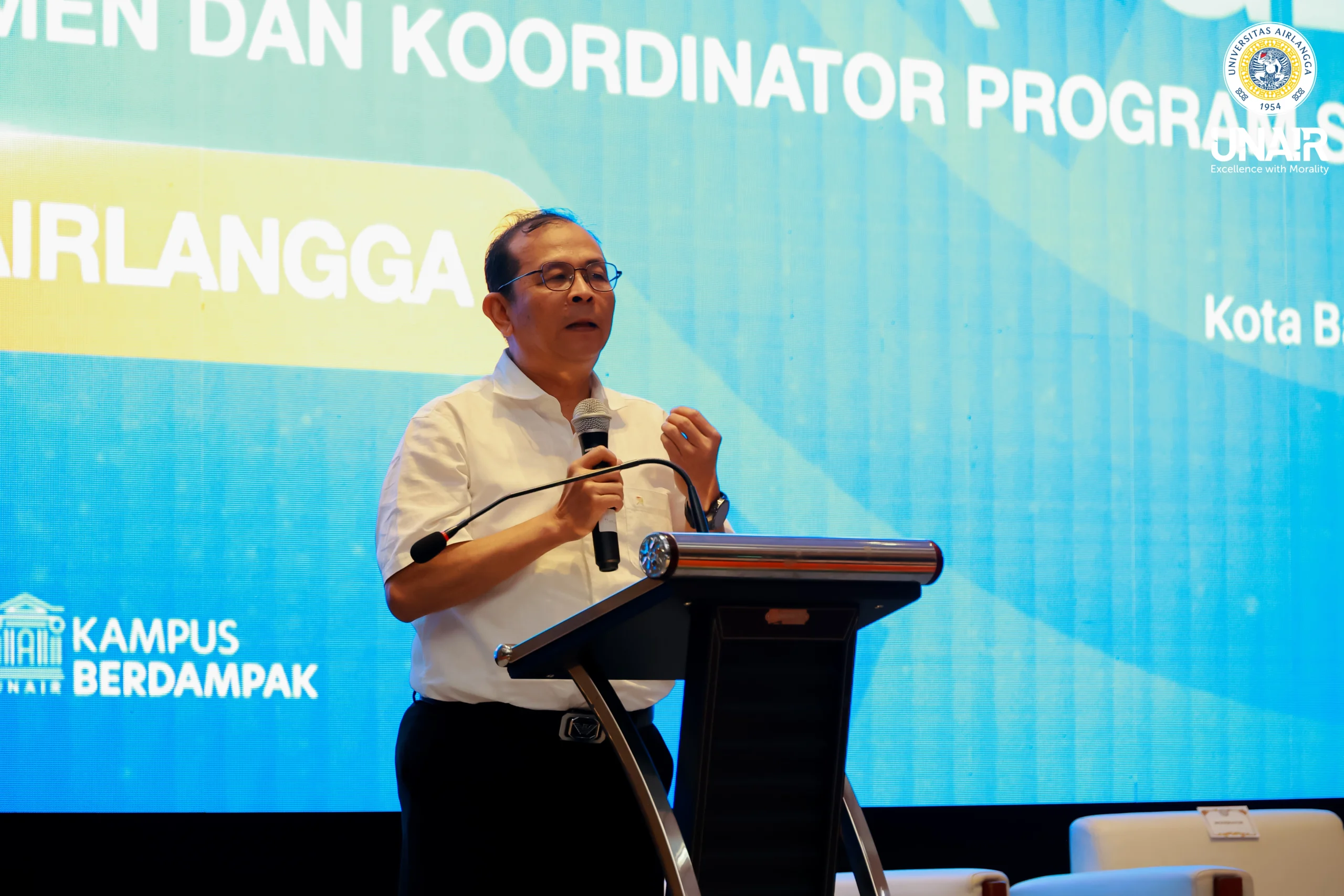
UNAIR NEWS – Maintaining the momentum of its achievements after ranking among the best universities in Indonesia is the primary focus of Universitas Airlangga (UNAIR). Addressing this development, UNAIR held a Working Meeting and Focus Group Discussion (FGD) Head of Department (KADEP) and Study Program Coordinator (KPS) in Batu City for two days, September 18-19, 2026. This strategic agenda focused on the second-quarter evaluation of study program performance, budget management efficiency, and strengthening the character of the academic community amid the challenges of the digital era toward World-Class Entrepreneurial University.
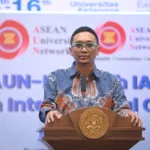
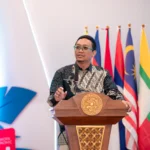
This strategic working meeting was opened directly by the Chair of UNAIR Academic Senate, Prof Dr H Nursalam MNurs (Hons) and UNAIR rector, Prof Muhammad Madyan SE MSi MFin. This agenda was attended by more than 200 participants, including university leadership, deans, head of centers, agencies, and directorates, as well as the head of departments and study program coordinators at UNAIR.

Strengthening KADEP and KPS role in study program
In his guidance, the Chair of UNAIR Academic Senate, Prof Nursalam emphasized the importance of departments’ heads and study program coordinators’ role as the frontline personnel who interact directly with students. The quality of study program management lies in the hands of department and study program heads. Academic Senate fully committed to operating its primary function of drafting regulations, providing recommendations, and granting approvals (3P) in order to support university policies while also determining future study program evaluations.
He also encouraged the development of joint degree programs and the adjustment of study program names or specializations to align with global trends. On the other hand, Prof Nursalam reminded the importance of training and upscaling lecturers and academic staff’s competencies to help them become more proactive.
Prof Nursalam shared an important philosophy to the participants about character education and integrity. Citing the thoughts of prominent figures, he emphasized the importance of educators possessing qualities that foster good character, discipline, responsibility, technological literacy, and entrepreneurship. He also cited an analogy from Jack Ma about consistency in working.
“Working is like riding on a train. Follow the railway, do not make turns, and if there are any issues, do not stop until you make it to your destination,” he added, reminding the importance of integrity, focus, and spirit in guiding students.
Prof Nursalam also noted that during working as the frontliners, departments’ heads and study program coordinators are expected to always be wise in using social media. Because in the era of global uncertainty, the flow of information moves very freely, quickly, and hard to control by the institutions, a situation that demands cautions from all parties.
Commitment for sustain development and institutional independence
Meanwhile, the UNAIR rector expressed his deep appreciation for all of departments’ heads and study program coordinators. In the first year of leadership transition, UNAIR has proven capable in maintaining its performance and even improving university rank. Nevertheless, the rector cautioned everyone against becoming complacent.
“Nowadays rankings become one of quality indicators that the public can see and evaluate directly, including through social media. Our achievements we’ve made are not meant to foster arrogance or show off. Rather, they were established as our pride and as appreciation to the academic community’s teamwork,” said the rector.
Regarding management challenges, the rector presented Universitas Airlangga (UNAIR) budget position among the Big 5 universities in Indonesia with the most efficient and limited budget scale. This condition encouraged the institution’s maximum capacity and independence strength in competing. Despite its limitations, UNAIR has proven its independence by successfully built 21 buildings in the past 12 years.
This independence strength also aligns with the goals in supporting UNAIR transformation toward Word-Class Entrepreneurial University. Therefore, infrastructure development was not merely seen as physical building, but also as a part of strengthening the innovation ecosystem, commercialization, and collaborations that are capable to produce added value for the public and industry.
“One of the strategic projects that we will run next year is the development of Airlangga Science Techno Park in Madura. This will be an important pilot project for UNAIR’s industry commercialization,” explained the rector.
Navigating VUCA era and upholding institution’s reputation
Closing his guidance, the rector urged all departments’ heads and study program coordinators to view students’ future in detail amid the global uncertainty (VUCA era). The free flow of information brings positive impacts and negative impacts that are difficult to control.
Therefore, the rector urged all of the academic community to continue improving, maintain the university’s reputation, and be wiser when commenting in public space. These things are required to reduce the potential of negative news. The rector also emphasized the importance in ensuring that the leadership succession process at the department level is properly prepared for and supported.
“Thank you for all of your dedication. Keep the spirit up to develop Universitas Airlangga together,” he concluded.
Maintaining rhythm, striving for Beyond Excellence

Completing the agenda, the Head of Planning and Development Board (BPP) UNAIR, Prof Dian Ekowati SE MSi MAppCom (OrgCh) PhD, presenting a key material by outlining the workflow and technocratic design of the university strategic plan (Renstra). The primary objective of this macro-level presentation was to provide an in-depth introduction to the business process that supports the institution’s journey toward World-Class Entrepreneurial University to all of departments’ heads and study program coordinators as the university’s frontliner pillars. This step is considered very crucial for aligning everyone’s operational vision.
In this opportunity, Prof Ekowati reminded us of UNAIR development trajectory in the period of 2026-2031. “We are moving forward to a huge target. The 2031 Beyond Excellence WCEU is no longer an option, but an obligation. Beyond Excellence is a must,” she emphasized.
Author: Ahmad Suhail Alhazimi
Editor: Ragil Kukuh Imanto