UNAIR NEWS – Palm oil waste has the potential to become a new source of income when communities are able to process it into useful products. In line with this, the Patriot Expedition Team (TEP) at Universitas Airlangga (UNAIR) is implementing a program to optimize palm oil waste as a growing medium for oyster mushrooms to boost the economy of communities in Prafi, Manokwari, West Papua.
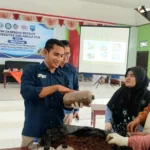
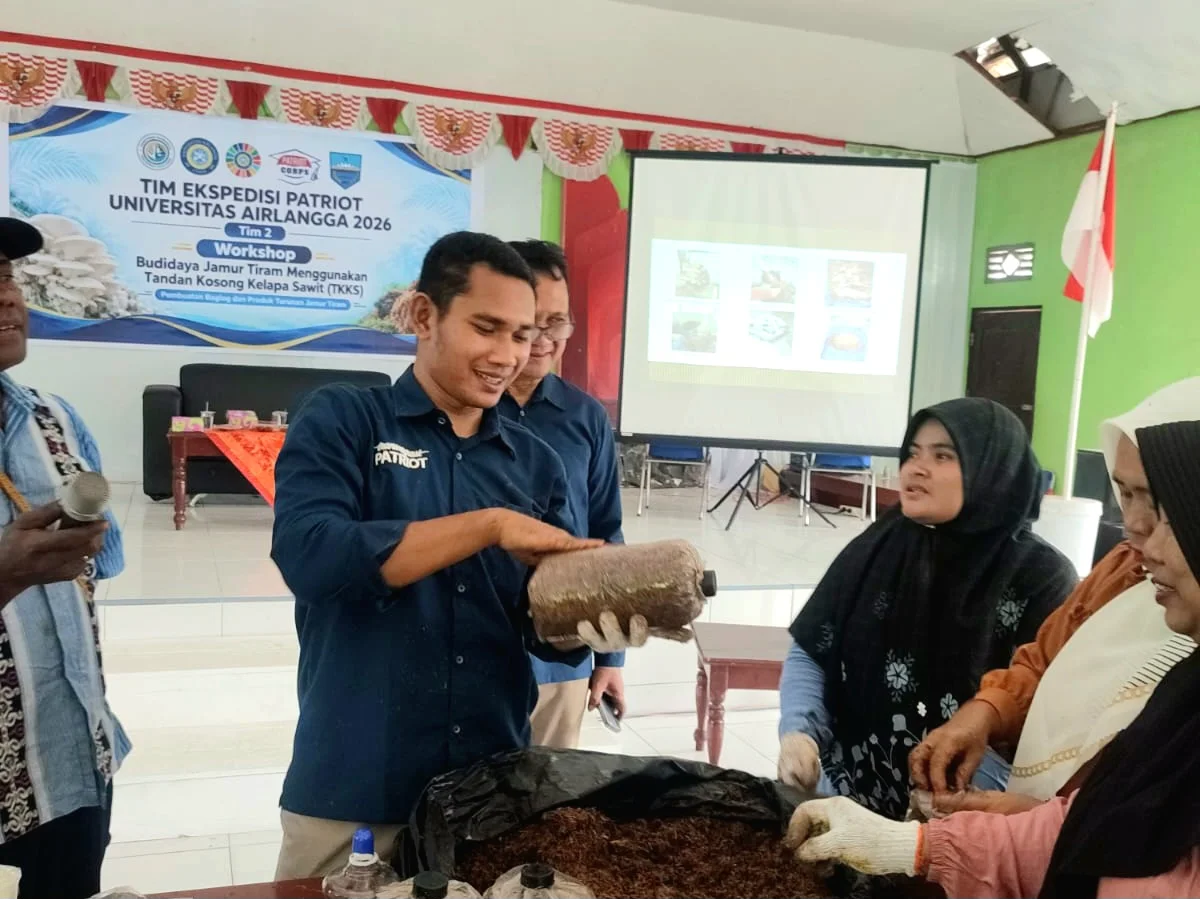
On Thursday, October 8, 2026, a team led by Prof Dr apt Sukardiman MS held a training session on making oyster mushroom baglogs (planting media bags) from empty fruit bunches (EFB), as well as on oyster mushroom processing, in Kampung Desay, Manokwari. The event encouraged the local community to process palm oil waste into raw materials with the potential to drive local businesses.
Processing palm oil waste into planting medium
Through the training, participants learned the steps involved in processing EFB into baglogs, or oyster mushroom growing media. The team explained the process, from chopping and composting the EFB, mixing in additional ingredients, and packing the mixture in plastic bags, to sterilizing it and planting the mushroom spawn.
“EFB contains cellulose and lignocellulose, which can support fungal growth. This material has the potential to serve as an alternative to sawdust, which is commonly used in oyster mushroom cultivation. Its use also opens up opportunities to reduce palm oil waste buildup in the surrounding environment,” Prof. Sukardiman said.
The local community also learned about the composition of the growing media, which combines EFB, rice bran, lime or dolomite, and water. The accuracy of the composition, the cleanliness of the process, and moisture control are key factors in supporting mycelium growth. After inoculating the spawn, growers need to maintain the temperature and humidity of the growing room to ensure optimal fungal development until harvest.
Developing mushrooms into marketable products
The training also introduced community members to food diversification through the production of oyster mushroom nuggets. This processing method provides an alternative way to use the harvest besides selling the mushrooms fresh.
“Oyster mushrooms contain protein, dietary fiber, B-complex vitamins, and various minerals. Processing them into nuggets can expand food options while also creating business opportunities in the processed food industry for the residents of Kampung Desay,” he said.
Processed products also offer added value because community members can develop packaging, frozen storage, and marketing strategies tailored to consumer needs. This means that the benefits of cultivation extend beyond mushroom production to the development of products that are competitive in the market.
This program also supports SDG 2 (Zero Hunger), SDG 8 (Decent Work and Economic Growth), SDG 12 (Responsible Consumption and Production), and SDG 17 (Partnerships for the Goals) through the utilization of palm oil waste, the development of community-based businesses, and the strengthening of collaboration.
Author: Maia Chaerunnisa Editor: Khefti Al Mawalia