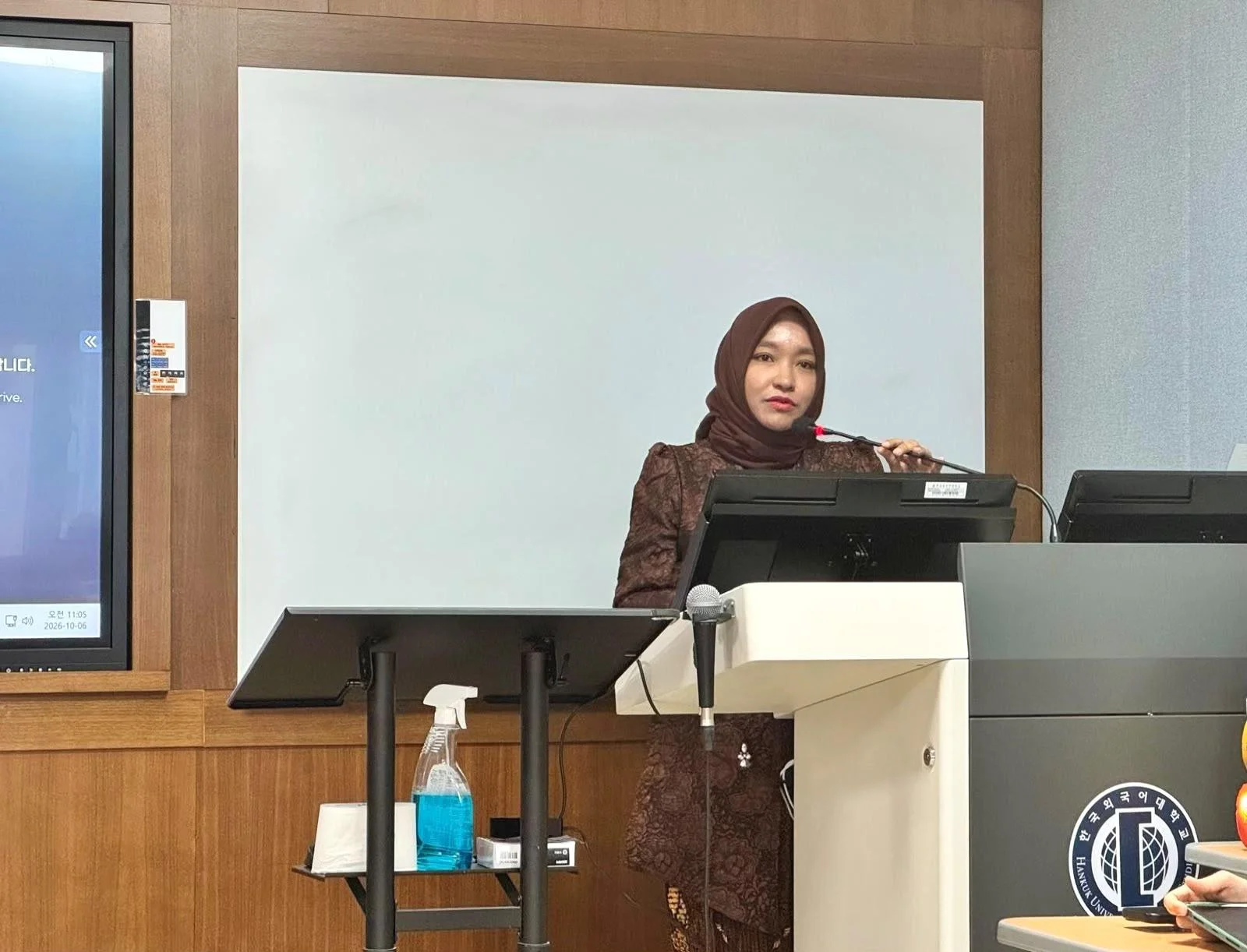
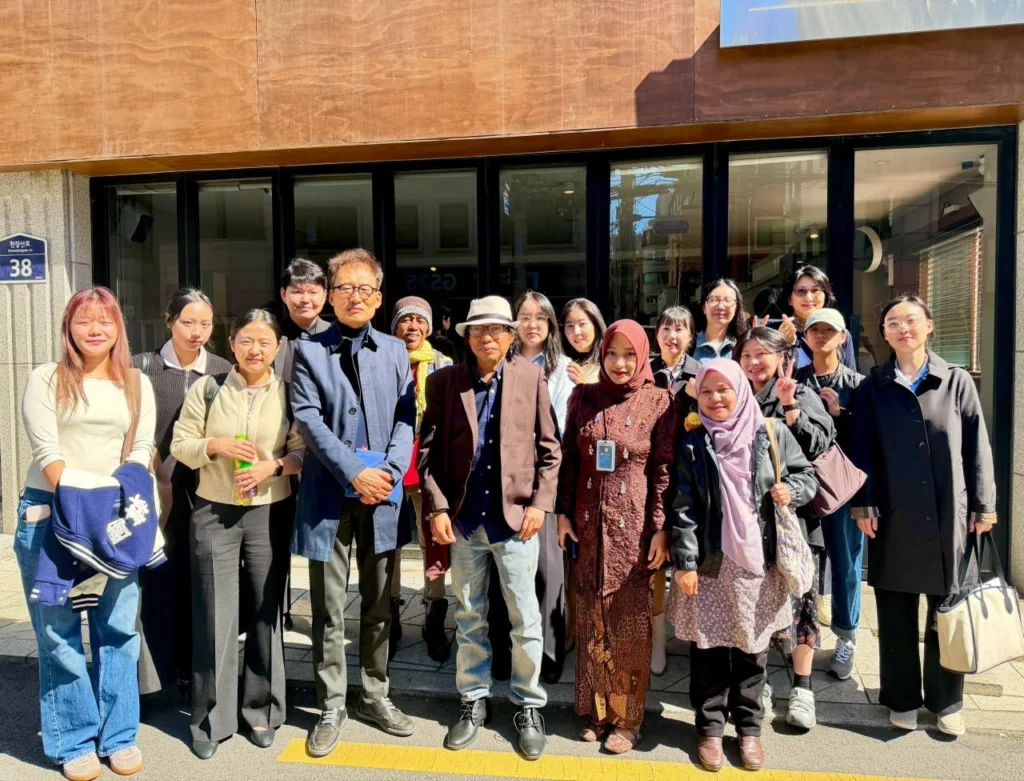
UNAIR NEWS – Dr Nadya Afdholy SHum MPd MHum, lecturer at the Faculty of Humanities (FIB), Universitas Airlangga (UNAIR), has the opportunity to serve as a visiting lecturer at Hankuk University of Foreign Studies (HUFS), South Korea, officially starting on Wednesday (September 1, 2026). During her assignment, she not only teaches but also participates in a cross-country academic dialogue through the Round Table Discussion “Can Indonesian Literature Go Global?”. The event was held in cooperation with The Korea-Indonesia Center at the Postgraduate School Building, HUFS, on Tuesday (October 6, 2026).
“The opportunity to become a visiting lecturer at Hankuk University of Foreign Studies (HUFS) is part of expanding collaboration as well as an effort to internationalize the study of Indonesian literature and culture,” she said.
Indonesian literature and the challenge of going global
For Dr Afdholy, Indonesian literature has great potential to go global. This can happen through breakthroughs across language barriers, such as translation, international publication, and the active participation of Indonesian writers in literary forums. However, the presence of Indonesian literature in various countries has not fully gained visibility commensurate with the richness of its traditions and the issues it focuses on.
The quality of works, availability of translations, access to books, introduction to Indonesia’s socio-cultural context, and support from educational and publishing institutions are factors in how Indonesian literature is received by foreign readers. The problem of Indonesian literature does not stop at offering works to the world. It is also about how local experiences in literary works can be communicated, translated, and brought together with the experiences of readers from other cultures.
“Perhaps we need to change how we view the internationalization of literature. Because the goal is not merely to make Indonesian works follow global market tastes, but to build conditions so that these works can appear with their own aesthetic distinctiveness and critical perspective,” she said.
Themes in literary works such as family, intergenerational relations, social inequality, gender, and identity hold cross-cultural relevance, becoming a meeting point between the experiences of Indonesian and Korean societies. She also stressed the need for a contextual and dialogical approach to ease the reading process, while highlighting the strategic role of universities in building cross-country appreciation.
Contribution to UNAIR and collaboration opportunities
The experience at HUFS, South Korea, becomes academic capital for developing Indonesian literature at the university level and internationally. The opportunity to contribute is one of the takeaways that can open space to introduce and study Indonesian language, literature, and culture in a different academic environment. While teaching at HUFS, the chance to interact with students from diverse language and cultural backgrounds has also been an educational experience for Dr Afdholy.
“For me, we not only need to bring Indonesian literature to the world, but must ensure that Indonesian academics and students play an active role. Their role is in determining how our literature is read, interpreted, and discussed at the international level,” she concluded.
Author: Amelia Farah Putri Iswara
Editor: Ragil Kukuh Imanto