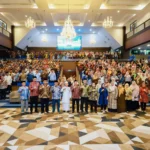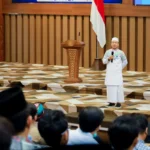
UNAIRNEWS – The Biology Department, Faculty of Science and Technology (FST), Universitas Airlangga (UNAIR) has once again demonstrated its commitment to global-scale community service. Through a scheme of Airlangga International Community Development – Faculty Global Network, UNAIR held an education session on eco-friendly urban farming using biofertilizers and compost, as well as an introduction to basic research methods for the academic community of MTsN 2 Malang on Saturday, September 12, 2026.
This event involved international partners from Malaysia, namely Prof Madya, Dr Zainul Akmar bin Zakaria, and Prof Madya Ir Dr Muhammad Abbas bin AHmad Zaini from the Faculty of Chemical and Energy Engineering, as well as Dr Nur Izzati Mohd Noh from the Faculty of Science, Universiti Teknologi Malaysia (UTM). Also in attendance were two students from Universiti Kebangsaan Malaysia (UKM), Bazlee Abu Bakar and Zahida Nasoha, who were also actively participating.
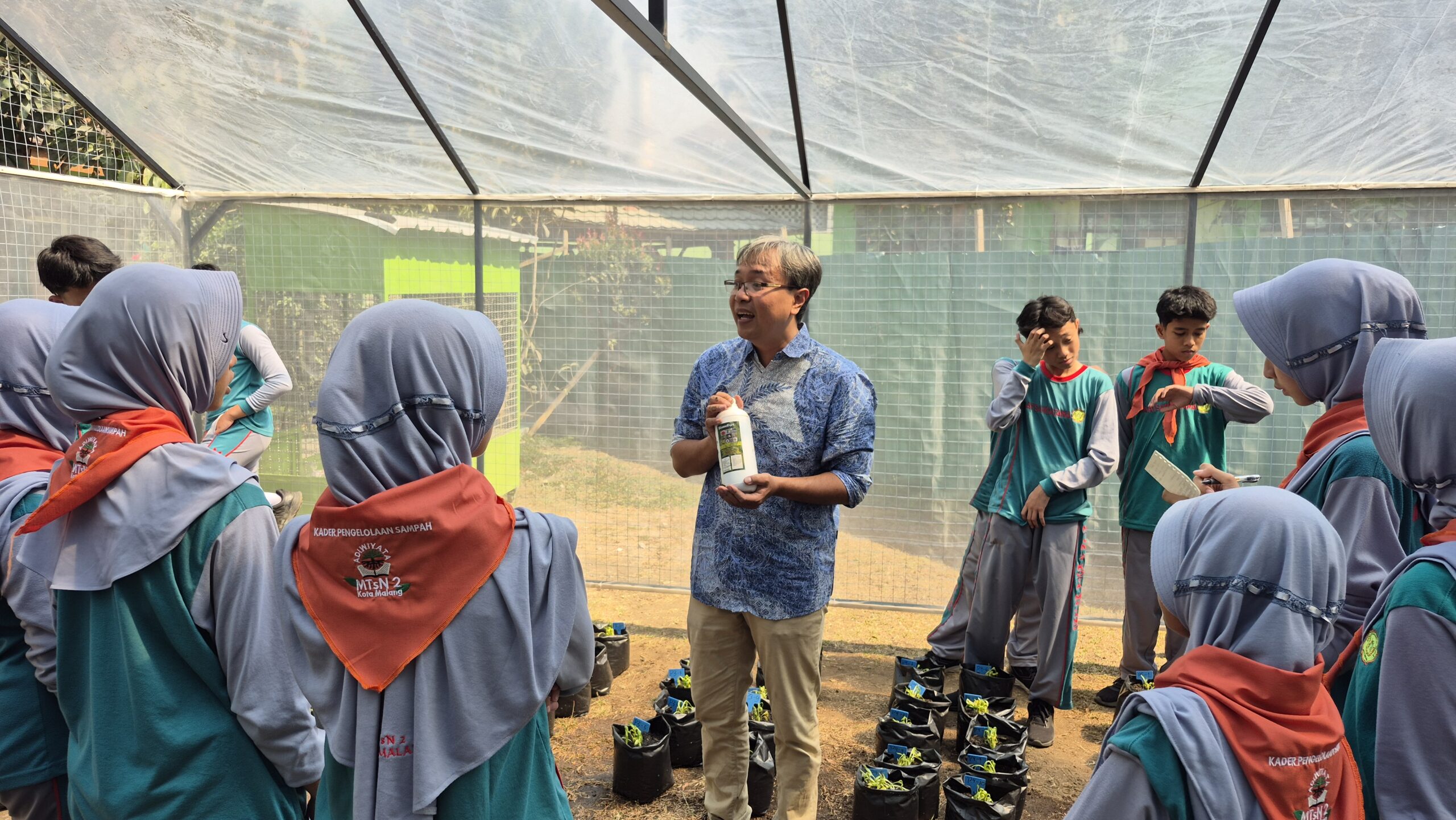
This program, which involved the school’s Adiwiyata team, went beyond mere theory to include hands-on practice. The results of campus research were directly implemented by using the school’s land. The school’s greenhouse, which its construction was supported by UNAIR, served as a natural laboratory, allowing teachers and students directly practice innovations in organic waste management and hydroponic farming methods.
Dr Almando Geraldi, the coordinator of UNAIR community service team, explained the importance of bringing research innovations to the community. “The school environment is the ideal setting to put these innovations into practice. We can develop organic waste management and urban farming together with MTsN 2 Malang as a partner,” he explained.
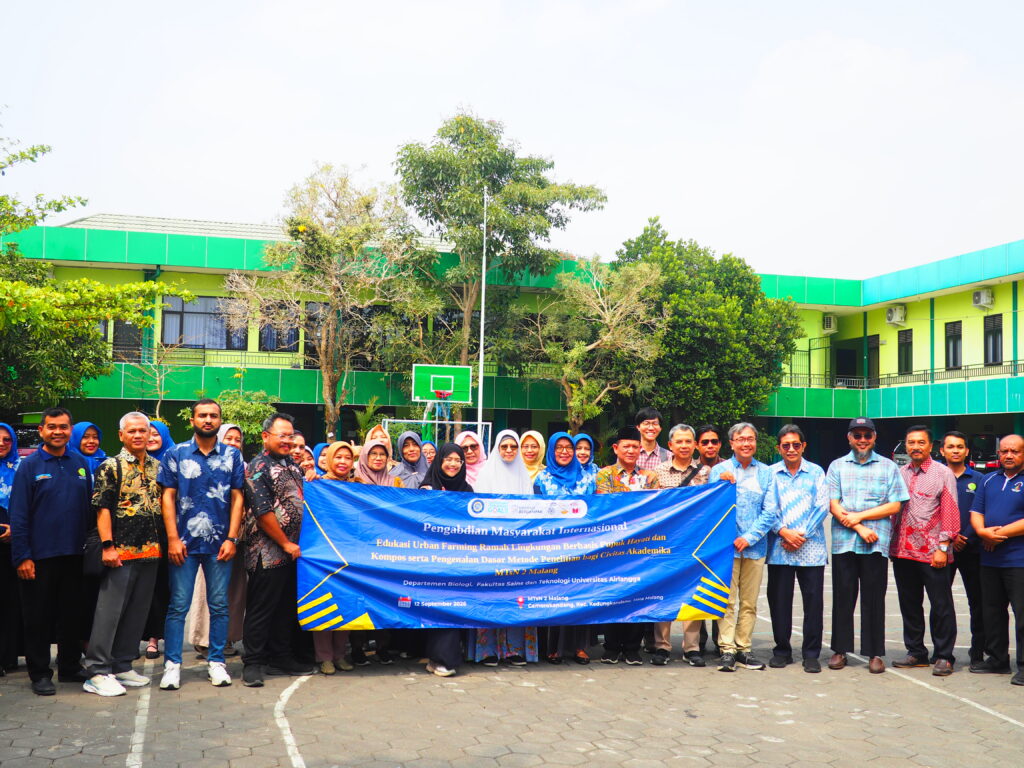
The Head of MTsN 2 Malang, Anita Yusianti MPd, expressed her appreciation for this event as a follow-up of the Implementation Agreement between the two parties. “Collaboration with universities provides students with real-world learning experiences. Hopefully, this synergy will continue to develop,” she said.
This international initiative is a concrete example of UNAIR’s contributions to achieve Sustainable Development Goals (SDGs). Particularly the pillars of Quality Education (SDG 4) through research methods practice, Sustainable Cities and Communities (SDG 11) through urban farming, Responsible Consumption and Production (SDG 12) through organic waste management, and Partnerships for the Goals (SDG 17) through international collaboration.
Author: Almando Geraldi
Editor: Khefti Al Mawalia