
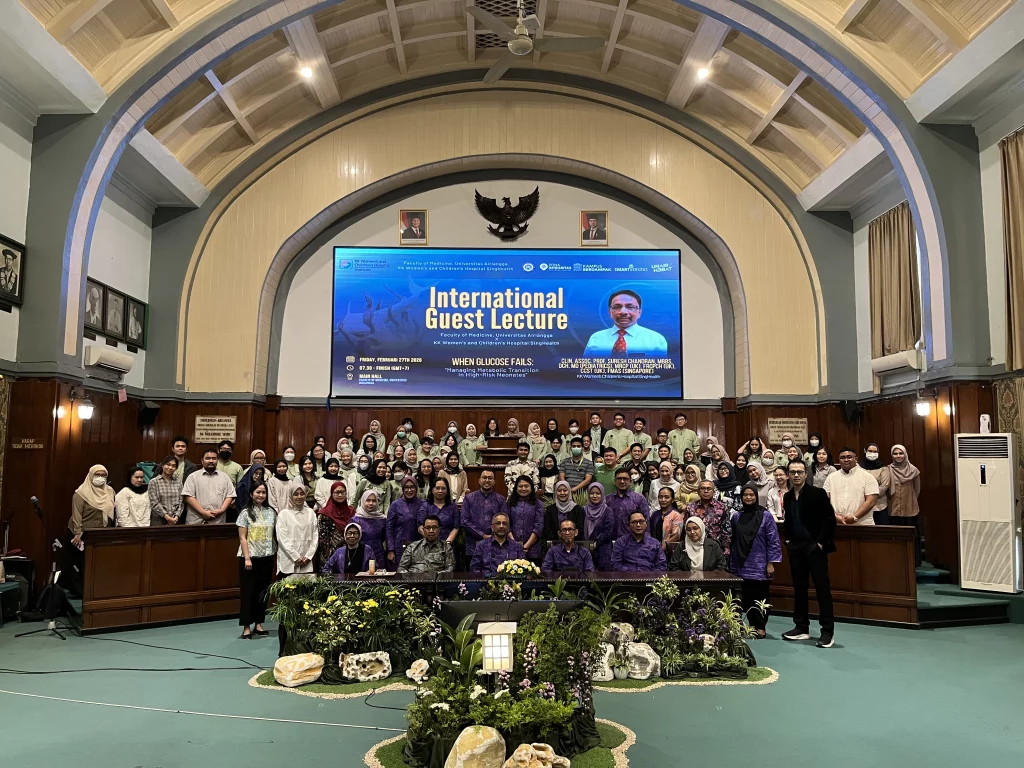
UNAIR NEWS – The Faculty of Medicine, Universitas Airlangga, held an International Guest Lecture on Friday (February 27, 2026) at the Faculty of Medicine Hall. It was a collaboration between the Faculty of Medicine of Universitas Airlangga, KK Women’s and Children’s Hospital SingHealth, and Medika Karya Airlangga.The keynote speaker, Clin Assoc Prof Suresh Chandran MBBS DCH MD (Pediatrics) MRCP (UK) FRCPCH (UK) CCST (UK) FAMS, delivered a lecture titled When glucose fails: Managing metabolic transition in high-risk neonates. The forum was attended by lecturers, pediatric specialists, residents, and junior doctors.
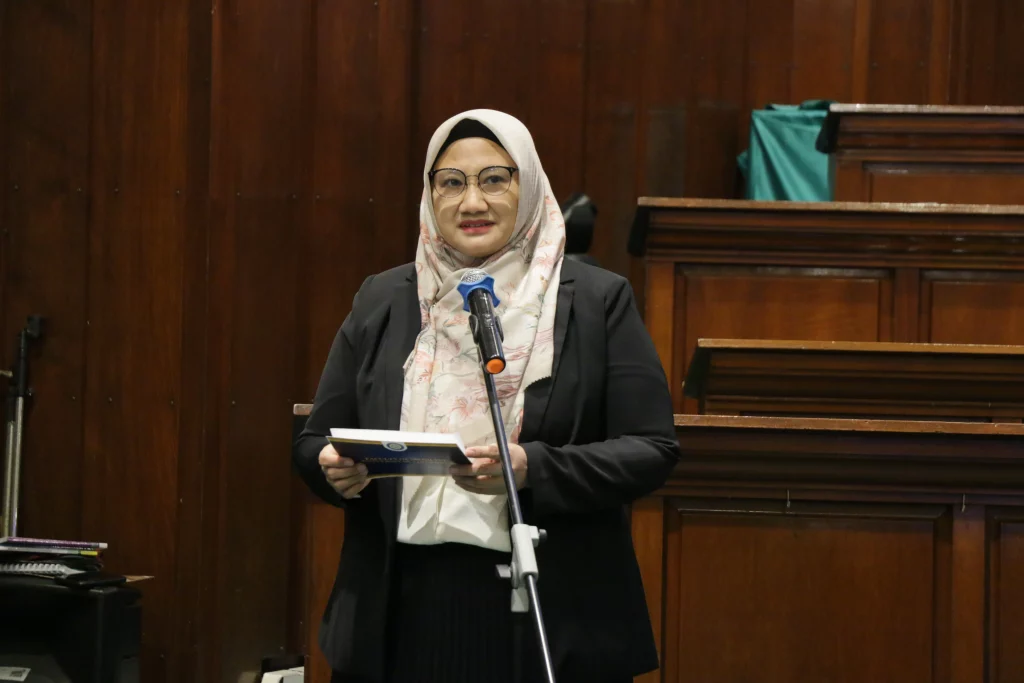
In her opening speech, the Dean of Medicine Prof Dr dr Eighty Mardiyan Kurniawati SpOG Subsp UroginRE emphasized that strengthening clinical capacity during the neonatal period has become an urgent need amid the increasing complexity of high-risk infant cases. “Today’s topic on managing metabolic transition in high-risk infants addresses one of the most critical phases in human life, particularly during the neonatal period. The transition from intrauterine to extrauterine life is a highly complex metabolic journey,” she said.
Revised neonatal hypoglycemia protocol reduces newborn hospitalization
Prof. Chandran explained that hypoglycemia in the early hours of life has traditionally been managed using a glucose-centric approach. Many healthcare facilities routinely measure blood glucose levels within the first 30 minutes after birth, a period when glucose levels naturally decline as part of physiological adaptation. This practice often leads clinicians to initiate glucose infusion early and admit newborns to specialized care units, even though most infants show no clinical symptoms.
He criticized this approach, arguing that applying glucose thresholds at inappropriate times may disrupt infants’ natural metabolic adaptation. “Hypoglycemia during the first few hours of life remains the most common metabolic condition in neonates. However, we still do not truly know what constitutes normal glucose levels at birth. As a result, current management relies on very limited evidence,” Prof. Chandran explained.
In response, his team shifted from a glucose-centric model to a feed-centric pathway. Healthcare providers prioritize early feeding initiation and skin-to-skin care within the first hour after birth, followed by glucose evaluation at two hours of age unless symptoms are present. This change reduced neonatal unit admissions by up to fivefold without increasing recurrence rates. The approach has since been adopted in clinical protocol adjustments during the metabolic transition phase of newborns.
Complexity of managing severe hypoglycemia in newborns
Following the discussion on metabolic transition in high-risk infants, the session addressed a more severe condition: persistent hypoglycemia caused by hyperinsulinism. Prof. Chandran explained that this condition occurs when low glucose levels persist beyond the first 48 hours of life and no longer represent a normal adaptive phase. According to him, clinicians must accurately identify the underlying cause, as recurrent hypoglycemia can interfere with brain development. Clinical decision-making at this stage requires careful assessment and close monitoring.
“Navigating this complexity is not easy because the diagnosis itself is not straightforward. In theory, the criteria seem clear: low glucose, detectable insulin, low ketones, and low free fatty acids. Anyone can understand that. But in real clinical practice, the situation is far more complex,” Prof. Chandran said.
Some infants require specialized therapy such as diazoxide, genetic testing, or even surgical intervention. Managing hyperinsulinism demands a systematic, evidence-based approach to prevent recurrent hypoglycemia and minimize the risk of permanent neurological injury from an early age.
Author: Kania Khansanadhifa Kallista.
Editor: Ragil Kukuh Imanto.