
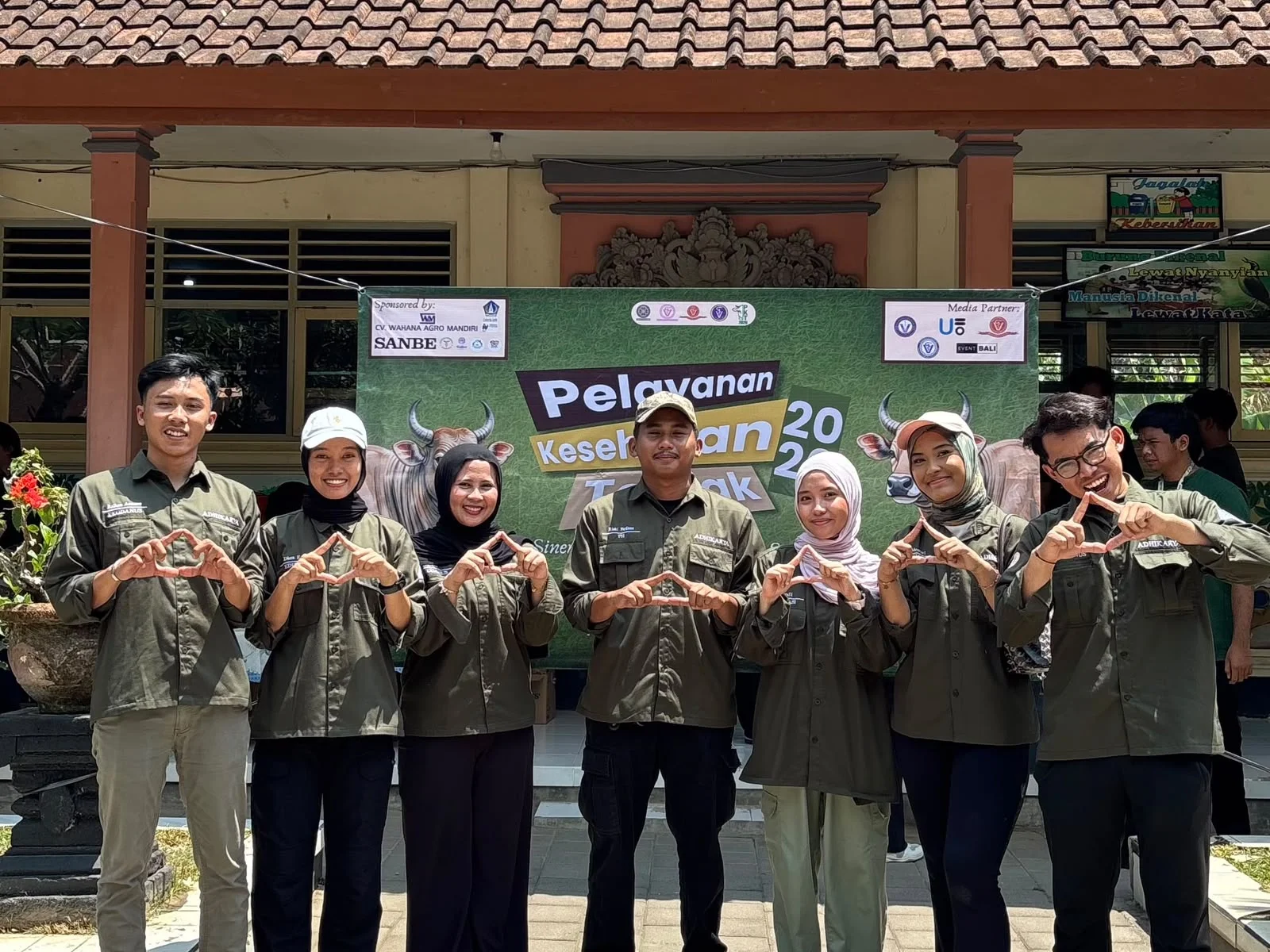
UNAIR NEWS – Seven students from the Faculty of Veterinary Medicine (FKH) Universitas Airlangga (UNAIR) attended the Livestock Healthcare Service 2026 program titled “Synergy in Service: Promoting the Health of Balinese Cattle”. This program was held on Sunday (October 11, 2026) at Universitas Udayana, Bali.
The seven delegates who are members of the Veterinary Professional Interest Group (KMPV) include Madinah Salsabillah Wahid, Ramadhan Aulia Rahman, Dhea Ediand Widiasakti, Mohamad Riski Firdaus, Nurhalizah, Aisa Mentari Nurdianti, and Muhammad Raihan Asmoro. They had the opportunity to apply their veterinary skills and provide care to 429 cattle.
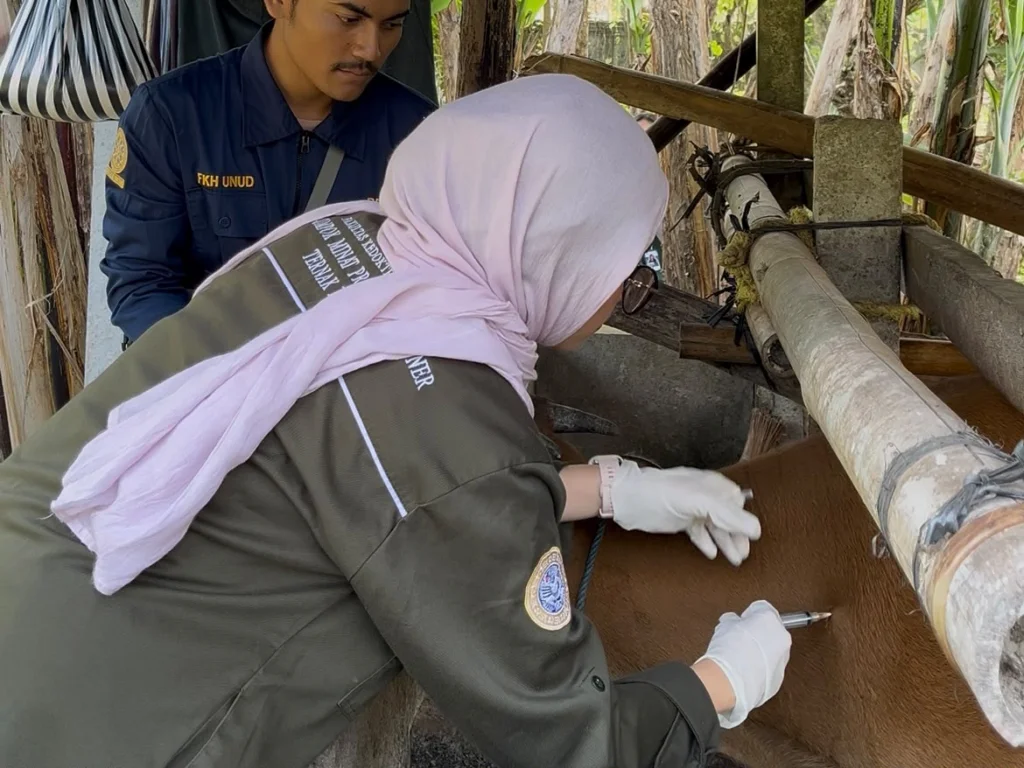
Learning livestock farmer education
Wahid, one of the delegate representatives, explained that livestock healthcare service is divided into ten groups, each assigned to a different area. Each group provides services, such as administering vitamins injections to cattle and offering education on maintaining livestock health with guidance from a veterinarian.
“In my opinion, this program served as an interesting experience because we can practice our knowledge while finding out the challenges faced when providing livestock health services directly,” she said.
In addition, she mentioned that one of the challenges she faced during the program was handling Balinese cattle. According to her, students need to adapt their handling techniques to the characteristics and responses of these cattle, which differ from those typically encountered in East Java.
“Our experience in handling Balinese cattle has been a learning experience in itself. We must adapt our handling techniques to ensure safety for both staff and the cattle, while also prioritizing the livestock’s welfare,” she explained.
Promoting livestock health
In addition to technical skills, this program also provides an opportunity for the delegates to learn about the local livestock farmers’ culture and customs. This opportunity serves as a learning experience in providing livestock health education to the community.
Through this program, Wahid hopes that the services provided will help maintain livestock health while increasing livestock farmers’ awareness on the importance of routine care.
“Hopefully, programs like this will continue so that more livestock farmers will receive education on livestock health. For us as a student, this experience also serves as a foundation to develop skills and knowledge in the field of veterinary medicine,” she concluded.
Author: Maulya Afifah Zahra
Editor : Ragil Kukuh Imanto