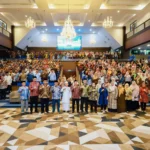
UNAIR NEWS – The Student Executive Board of the Faculty of Advanced Technology and Multidiscipline (BEM FTMM) at Universitas Airlangga (UNAIR) has introduced an innovative solution for the residents of Semambung Village, Jabon District, Sidoarjo Regency, through the Desa Binaan 3.0 Team I program. The initiative was carried out from early June until Saturday (July 11, 2026). It addressed two major challenges faced by the community: the high population of rice snails as agricultural pests and the frequent flooding of rice fields during the rainy season.
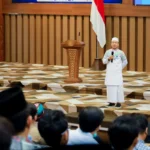
During the program’s opening ceremony, FTMM Student Executive Board advisor Fadjar Mulya, Ph.D., stated that the community service initiative provides valuable opportunities for students to learn and develop. Echoing this statement, Project Leader Reyna Rashiva explained that the conditions faced by local residents inspired the team to develop innovations that not only solve existing problems but also create added value for the community. “This program combines technology, community empowerment, and sustainability,” Rashiva said.

Introducing sustainable innovations
Rashiva further explained that rice snails can be processed into bionutrients and calcium powder, providing added value while improving soil fertility. The team collaborated with the Airlangga Student Research Group of Nanotechnology (ARGON) to assist local residents throughout the processing stages. “The bionutrient is used as a liquid organic nutrient for plants in the aeroponic system after being diluted according to the required concentration,” she explained.
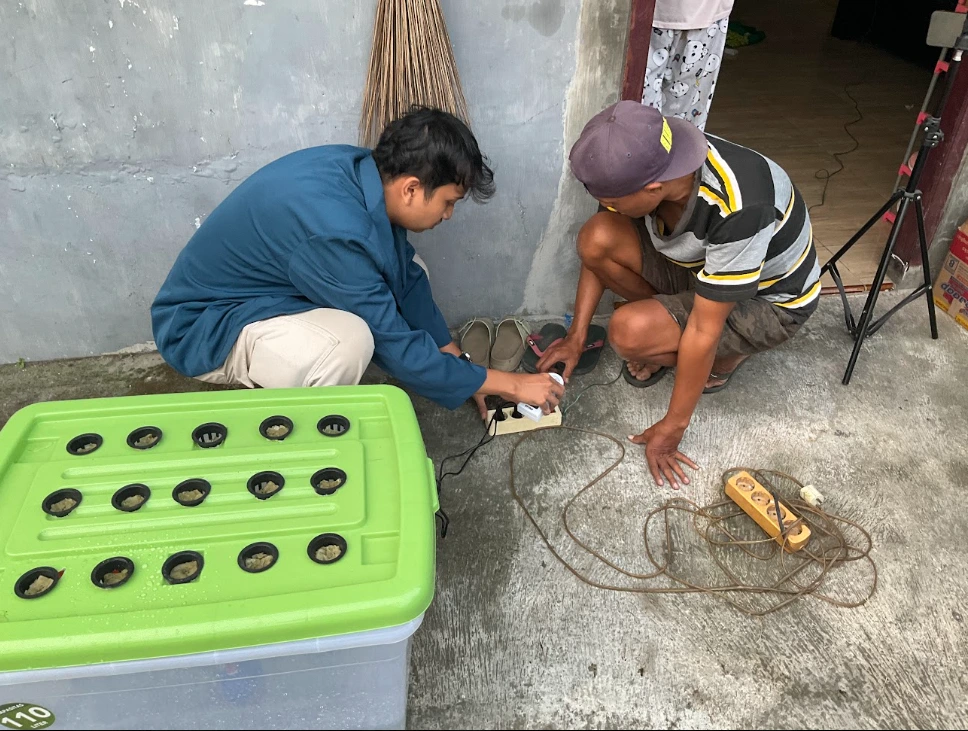
The team also introduced a smart fermenter equipped with an automatic pH sensor, an automated stirring system, and smartphone-based monitoring features. These technologies help maintain stable fermentation conditions while allowing users to monitor the fermentation process more conveniently. In addition, the team introduced an aeroponic farming system and the Biosaka Market initiative to promote sustainable agriculture while creating new business opportunities for local residents. “Biosaka Market aims to empower the community by encouraging residents to develop and market bionutrient products, creating business opportunities based on local potential,” she added.

Creating meaningful community impact
The program was implemented through a series of hands-on training sessions on operating and maintaining the equipment. This approach ensures that the innovations can continue benefiting the community independently. As part of the program’s sustainability efforts, Reyna stated that the team donated the smart fermenter and aeroponic farming system to the village government. “Thankfully, the community welcomed the program enthusiastically and actively participated in every practical session,” she emphasized.
According to Rashiva , the rice snail processing initiative has become a valuable learning experience for students while generating tangible benefits for the local community. She believes that the Desa Binaan 3.0 Team I program demonstrates how simple innovations can emerge from local potential through multi-stakeholder collaboration. “The program also supports the Sustainable Development Goals (SDGs), particularly SDG 1 (No Poverty), SDG 8 (Decent Work and Economic Growth), and SDG 15 (Life on Land), through community empowerment, strengthening the local economy, and promoting the sustainable use of natural resources,” she concluded.
Author: Putri Andini
Editor: Ragil Kukuh Imanto