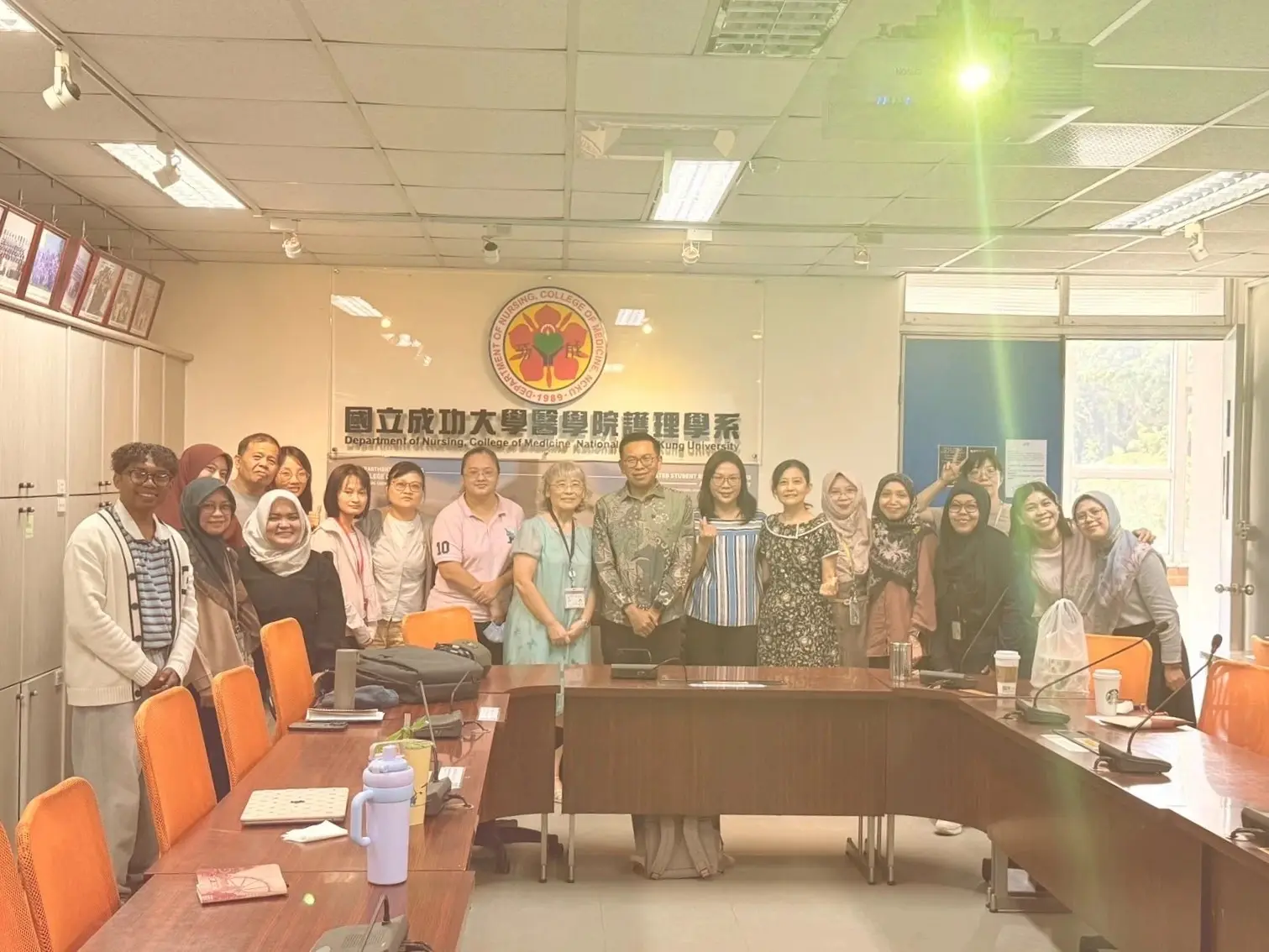
UNAIR NEWS – A professor of Faculty of Nursing (FKp) Universitas Airlangga (UNAIR), Prof Ferry Efendi SKep Ns MSc PhD, shared strategies for building a trajectory of impactful research during a guest lecture at the Department of Nursing, National Cheng Kung University (NCKU), Taiwan, on Thursday (September 17, 2026).
This session titled “How to Build Up My Research Trajectory and Become a World’s Top 2% Scientist?” involved post-graduate students and lecturers of NCKU. This academic visit received grant support from National Science and Technology Council (NSTC) and NCKU under the leadership of Prof Esther Ching-Lan Lin PhD RN.
Prof Efendi, who has been listed among the World’s Top 2% Scientist by Stanford/Elsevier since 2022, emphasized that research excellence is built by consistency and resilience in facing challenges.
“There is no single way to achieve excellence. Every challenge, every proposal that has been turned down, every publication that was rejected, and every instance of uncertain funding has actually shaped me into the researcher I am today,” said Prof Efendi.
Realistic problem orientation
Prof Efendi also highlighted the tendency of young researchers to get trapped in complex topics. According to him, research with a long-term impact actually stems from real-world problems in the field.
He advised researchers to find a balance between personal interests, societal needs, and their own capabilities. Practical steps that can be taken include conducting direct observation in the field, focusing on underserved communities, and utilizing scoping review for mapping research gaps.
“Try asking nurses in the field, what issues they faced in clinical settings or in the community. That’s usually where the real research questions emerge,” he explained.
Publication managerial and mentor’s role
Regarding scientific publications, Prof Efendi emphasized the importance of identifying a target journal before beginning the writing process. Researchers are advised to check the topic’s suitability, the Scopus/WoS quartile, CiteScore, and the acceptance rate. Moreover, cover letters and responses to reviewers must be prepared professionally.
He also recommended managing multiple manuscripts simultaneously. “Don’t wait until one article is accepted before writing a new one. Always have three manuscripts or more in different stages,” he said.
Prof Efendi also highlighted the strategic roles of his mentors in his academic journey, such as Prof Ching-Min Chen (NCKU), Prof Lisa McKenna (La Trobe University), and Prof Angeline Bushy (University of Central Florida).
Real impacts outside
Prof Efendi reminded that research success is not limited to the citation numbers, h-index, or rankings. It rather came from its real contribution to the policy and the community.
One of his research papers, IJEPA: Gray Area for Health Policy and International Nurse Migration, has been cited in policy documents by international organizations such as WHO, OECD, and WTO. Moreover, he initiated the Nurse Job Market platform, which is widely used by medical workers.
Prof Efendi shared four key messages to the students: to choose one area of research to focus on this semester, to reach out the potential mentors or collaborators, to design a research relevant with societal issues, and to to have the courage to submit articles to high-impact journals. “Stay relevant with the needs of the community,” he concluded.
Author: Fauziah Laili Romadhon
Editor: Yulia Rohmawati