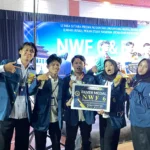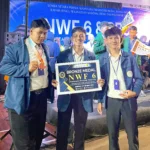
UNAIR NEWS – Adolescent mental health issues often go overlooked. Through a short film titled “Getun,” a team of Universitas Airlangga (UNAIR) students set out to provide education on mental health issues, work that successfully advanced to the 2026 Student Digital Innovation Competition (LIDM) in the Educational Digital Video (VDP) category.
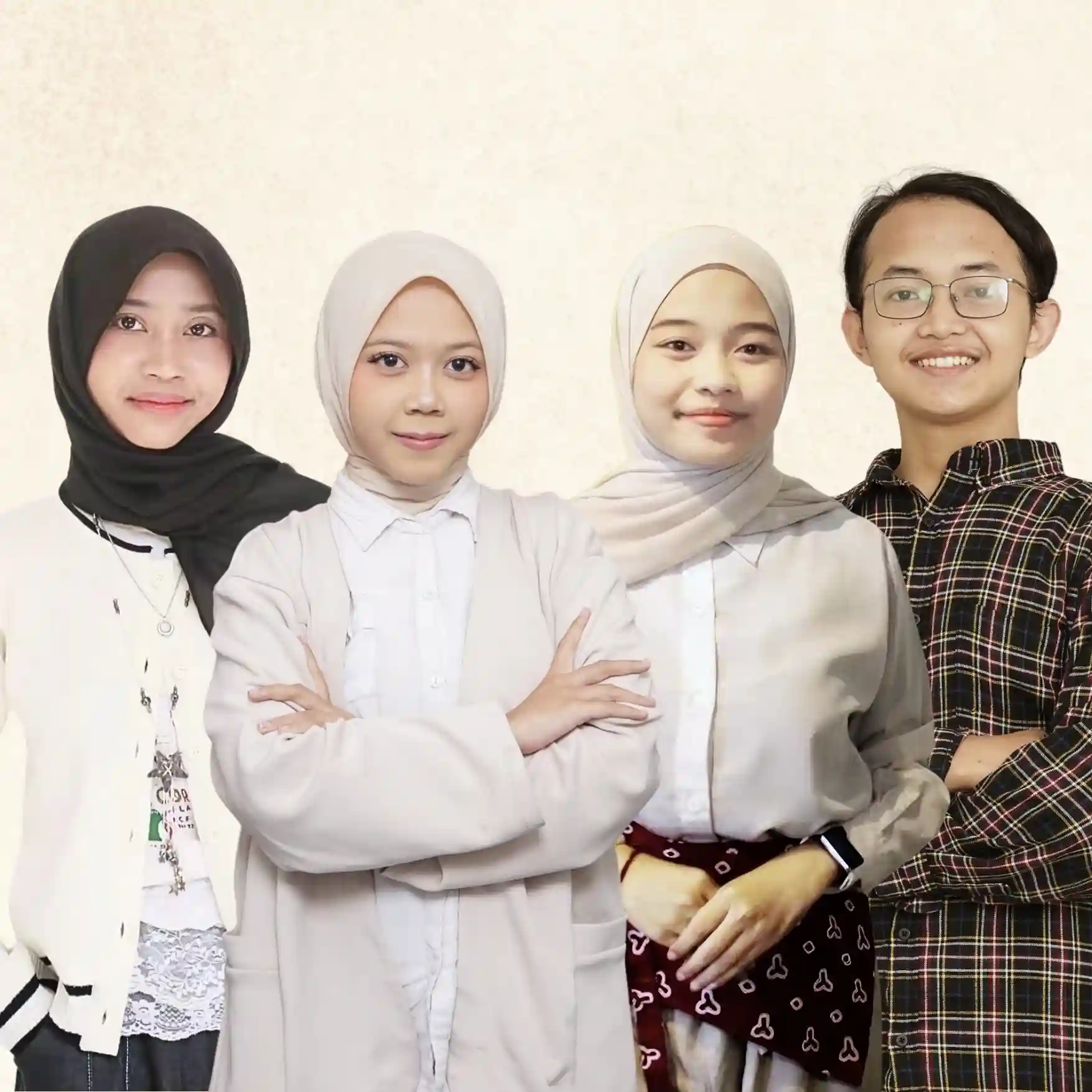
The team, named Tam Production, consists of Qonita Tsaniyah (FISIP), Achyarul Sapto Prabowo (FV), Allina Fiftiyani Nurjanah (FKM), and Evlen Flowera Helmy Reza (FISIP). Beyond education, Tsaniyah said GETUN also campaigns for the importance of two-way communication between children and parents, using a storytelling approach that is easy for anyone to relate to.
“If it’s only explained through definitions or theory, people might understand it on an informational level, but they won’t necessarily feel its real impact. That’s why we chose storytelling through film,” she said.

The meaning of GETUN and its emotional journey
GETUN tells the story of a father’s regret over how long it took him to realize the emotional burden his daughter, Niken, had been carrying alone. For the team, the distance that can grow between a child and their parents was a compelling idea to build the work around. Despite having worked hard and tried to give their best, parents’ busy schedules can sometimes cause them to overlook their children’s emotional needs. “We wanted to invite the audience to see that affection isn’t always about what we give, but also about whether we’re truly present and willing to listen,” Tsaniyah said.
Rather than delivering the education directly, the team chose to build an emotional space through a number of visual techniques, such as a montage of the changes in Niken’s condition, flashbacks to the past, slow-shutter POV shots during Niken’s panic attack, shifts in camera focus, sound design, and changes in visual atmosphere. As a result, the message comes through not only in dialogue, but also in how the audience feels and experiences the atmosphere while watching GETUN.
“We used this approach so that audiences could reflect from different angles. Students learn the courage to speak up, friends learn to be more empathetic, while parents can re-examine how they communicate with their children,” she added.
Reaching a wider audience
The strength of GETUN lies in how the team delivers its message through a father’s emotional journey. The audience’s role extends beyond simply receiving the education, as they’re also drawn into observing how bullying and mental health affect the relationship between parent and child.
“We invite the audience to see things from the father’s perspective, a man who felt he had done his best, until he finds Niken’s diary, realizes everything he had overlooked, and is finally overcome with regret,” she explained.
Going forward, the team plans to expand GETUN through a program called “GETUN Goes to School.” This work by Tam Production will be screened at a number of senior high schools across Surabaya, followed by discussions with students and school counselors (BK). The team also plans to develop derivative content for YouTube, Instagram, and TikTok to reach a wider audience with their educational videos. “Our hope is that GETUN can serve as a medium that makes people pause for a moment and reflect on how they treat and listen to the people around them,” she concluded.
Author: Amelia Farah Putri Iswara
Editor: Ragil Kukuh Imanto