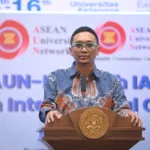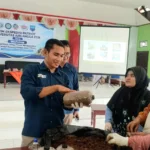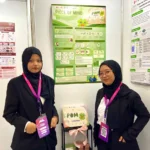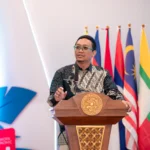
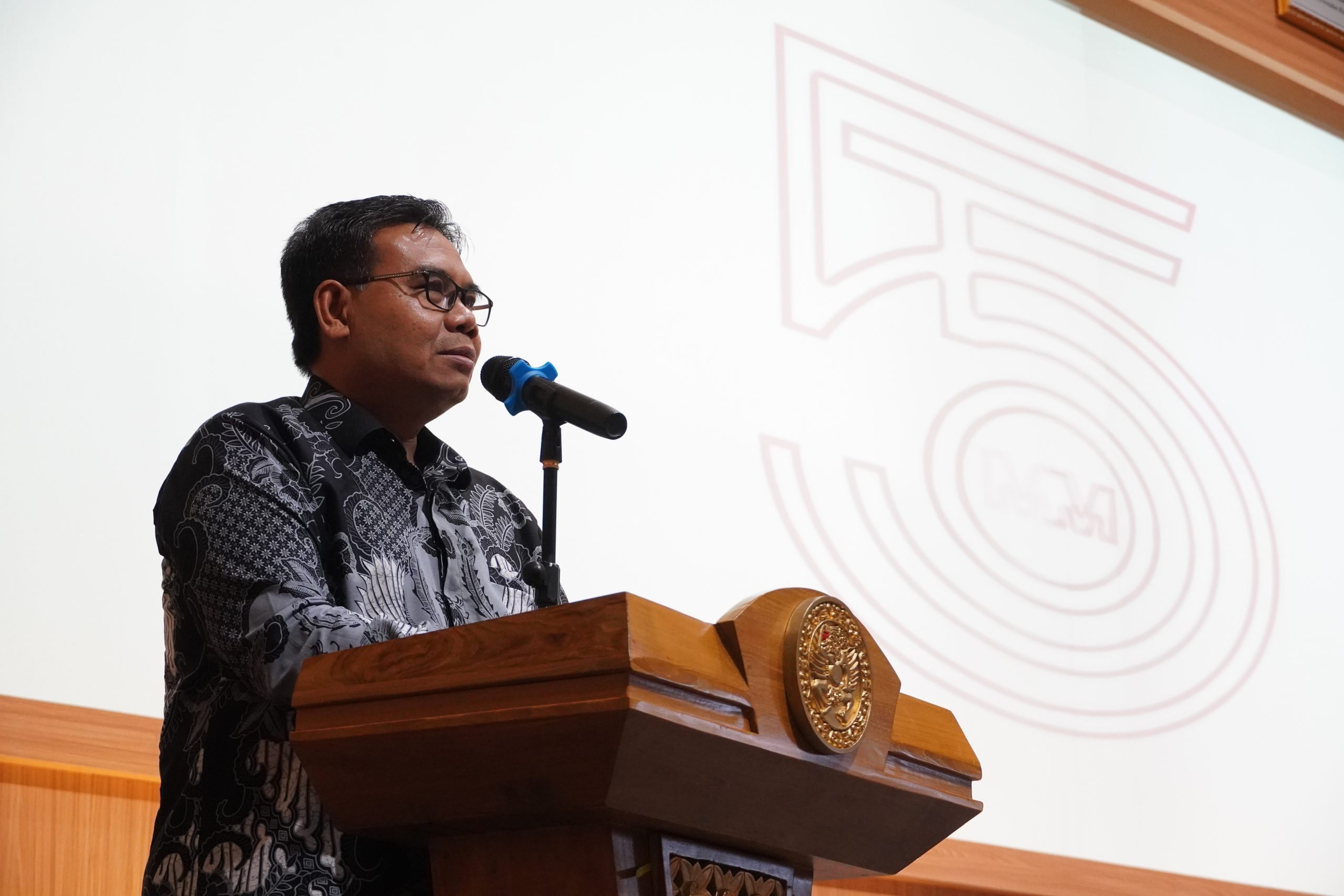
UNAIR NEWS – The Faculty of Advanced Technology and Multidiscipline (FTMM) Universitas Airlangga (UNAIR) commemorated its fifth anniversary with a celebratory gathering held on Wednesday (May 7, 2025), at the Candradimuka Hall, 9th floor of the Nano Building on the MERR-C campus.
FTMM Dean Prof. Dwi Setyawan reflected on the faculty’s founding, which officially took place on May 1, 2020. “Before becoming FTMM, we were known as STMM—the School of Advanced and Multidisciplinary Technology—which launched on November 10, 2019. The structure was formalized on May 1, 2020, through a dean’s decree, and we welcomed our first cohort of students in August 2020,” he recalled.
During his speech, Prof. Setyawan expressed appreciation to the entire academic community at FTMM for their contributions to the faculty’s development. “I want to thank our leaders, faculty members, and students. Though we are only five years in, the achievements have been extraordinary—from research collaborations and publications to national and international recognition,” he said.
Strategies and challenges over the years
Now in his final year as dean, Prof. Setyawan shared that May 2025 also marks the end of his and the current vice deans’ terms. Speaking with UNAIR NEWS, he detailed the collective efforts of leadership, faculty, and students over the past five years, highlighting three core strategies behind FTMM’s growth.
Launching during the COVID-19 pandemic posed a major hurdle. To establish FTMM’s presence, Prof. Setyawan turned to digital platforms, using social media and creating an official website to introduce the new faculty to the public. “Alhamdulillah, we reached our goal in the first year by enrolling 100 students across five programs,” he said.

The second strategy involved meticulous budgeting and funding management. “As a tech-focused faculty, we need state-of-the-art equipment to support the learning environment. All five programs are centered around future-oriented technologies, so the infrastructure had to match those demands,” he explained.
Prof. Setyawan’s third strategy focused on engaging students in promoting FTMM via social media. “I built a media studio for students so they could freely create content and spread the word about FTMM,” added the UNAIR and ITB alumnus.
Balancing faculty growth with student development
Prof. Setyawan also recognized the dedication of FTMM’s early faculty members. “Among the first were Ms. Prastika, Mr. Arif, Ms. Indah, and others. I hope their careers continue to thrive along with FTMM,” said the former Vice Dean II of the Faculty of Pharmacy.
Building a team of lecturers posed another early challenge. To meet teaching needs, FTMM hired permanent, non-civil servant faculty—allowing the leadership to recruit top-tier talent from prestigious universities in Indonesia and abroad. High-quality facilities further support these lecturers in delivering their best work.
These investments have paid off. FTMM students have earned awards across various competitions, both nationally and internationally—such as PIMNAS, the RCAP CoSpace Rescue Challenge U19, and the RoboCup Asia-Pacific. Graduates have also landed jobs and research opportunities in countries including Germany, Japan, Malaysia, Taiwan, the United Kingdom, and Australia.
In addition, Prof. Setyawan emphasized the importance of nurturing student potential. “FTMM students are already highly capable—they were selected to be at UNAIR. We help them realize their full potential by identifying their strengths and providing resources, mentorship, and funding,” he said. He believes FTMM’s rapid growth is fueled by strong support for both students and faculty.
Plan for accreditation before term ends
As his tenure comes to a close, Prof. Setyawan is working to secure independent accreditation for two of FTMM’s academic programs: Robotics and Artificial Intelligence Engineering (TRKB) and Data Science and Technology (TSD). “Previously, our programs could only be evaluated by BAN-PT, which didn’t allow for a ‘Very Good’ rating due to the lack of graduates. Now that we’ve produced graduates, we can pursue reaccreditation through LAM-INFOKOM, a more specialized agency aligned with our disciplines,” he explained.
Prof. Setyawan aims to complete the accreditation process before his term ends in 2025, allowing students to graduate under the new accreditation status. He sees the initiative as a final contribution—both an evaluation of his leadership and a foundation for future improvements. “It serves as a performance review for all of us—faculty, staff, and administrators—and a guidepost for the future deans,” he said.
Author: Febriana Putri Nur Aziizah
Editor : Ragil Kukuh Imanto