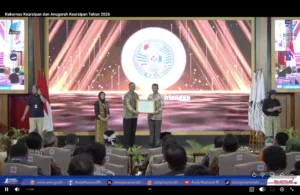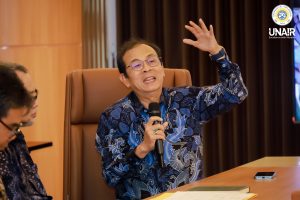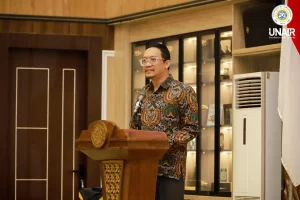



UNAIR NEWS – The Faculty of Science and Technology (FST) Universitas Airlangga (UNAIR) has once again secured recognition through the 2026 East Java Progress Research Grant, with two lecturers successfully obtaining research funding as of Friday (May 24, 2026). Among the recipients is Dr Rizkiy Amaliyah Barakwan ST, a lecturer in Environmental Engineering. The program is part of a collaborative research initiative among state universities in East Java, organized in partnership with the East Java Provincial Government. It aims to strengthen inter-university collaboration in developing research-based solutions to strategic regional issues.
BSF technology transforms organic waste into valuable resources
Dr. Barakwan’s research focuses on organic waste management technology, particularly the treatment of food waste. “The food waste undergoes bioconversion using Black Soldier Fly (BSF) larvae and is processed into animal feed,” she explained.
The research was initiated in response to Indonesia’s high level of food waste generation. The country ranks among those with the largest volumes of wasted food globally, with discarded food originating from households, restaurants, traditional markets, hotels, and the food industry. The consequences include growing landfill waste volumes, methane gas (CH4) emissions that contribute to global warming, as well as unpleasant odors and environmental pollution.
Through an innovative approach, she introduced a circular economy model that converts waste into protein, which can serve as an alternative livestock feed source. The process also enables the extraction of larval oil for biodiesel production, while the remaining residue can be repurposed as organic fertilizer.
“The research has shown food waste reduction efficiency exceeding 70 percent within a relatively short processing time of around 15 days. It also has the potential to reduce greenhouse gas emissions caused by the disposal of organic waste in landfills,” Dr. Barakwan said.
Supporting food security and a healthier environment
Through the project, she hopes to reduce the volume of organic waste sent to landfills, thereby lowering methane emissions generated through waste decomposition. She also aims to empower communities to process food waste directly at its source into products that can provide economic benefits.
The use of BSF larvae bioconversion technology aligns with several Sustainable Development Goals (SDGs). It contributes to SDG 2: Zero Hunger by producing alternative protein sources for livestock feed, reducing dependence on fish meal, and improving food and feed production efficiency. The innovation also supports SDG 3: Good Health and Well-being by helping reduce organic waste accumulation, minimizing odors and disease vectors, and lowering environmental pollution. In addition, the technology strongly supports SDG 12: Responsible Consumption and Production through food waste reduction, resource recovery, and the implementation of circular economy principles.
Author: Fauziah Kandela
Editor: Khefti Al Mawalia