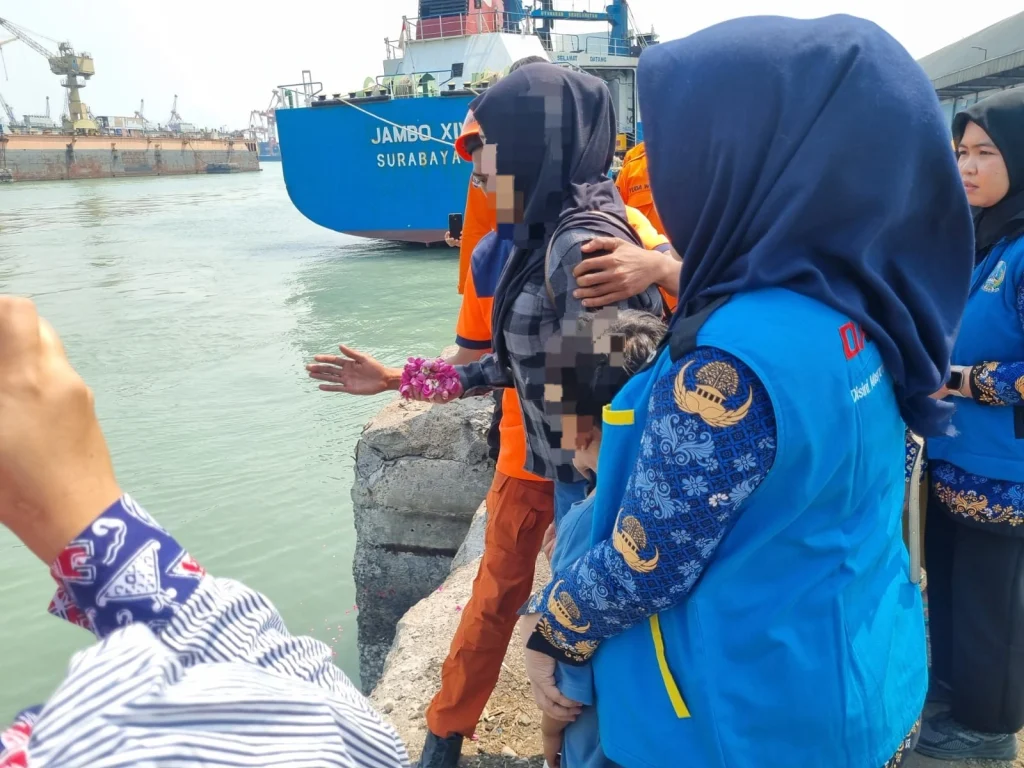
UNAIR NEWS – The sinking of Virgo Ship Transport 8 in Java Sea on Sunday (September 13, 2026) has left the victims’ families in grief and uncertainty. The ship, which operated the Surabaya-Banjarmasin route, lost contact before actually flipping over and sinking.
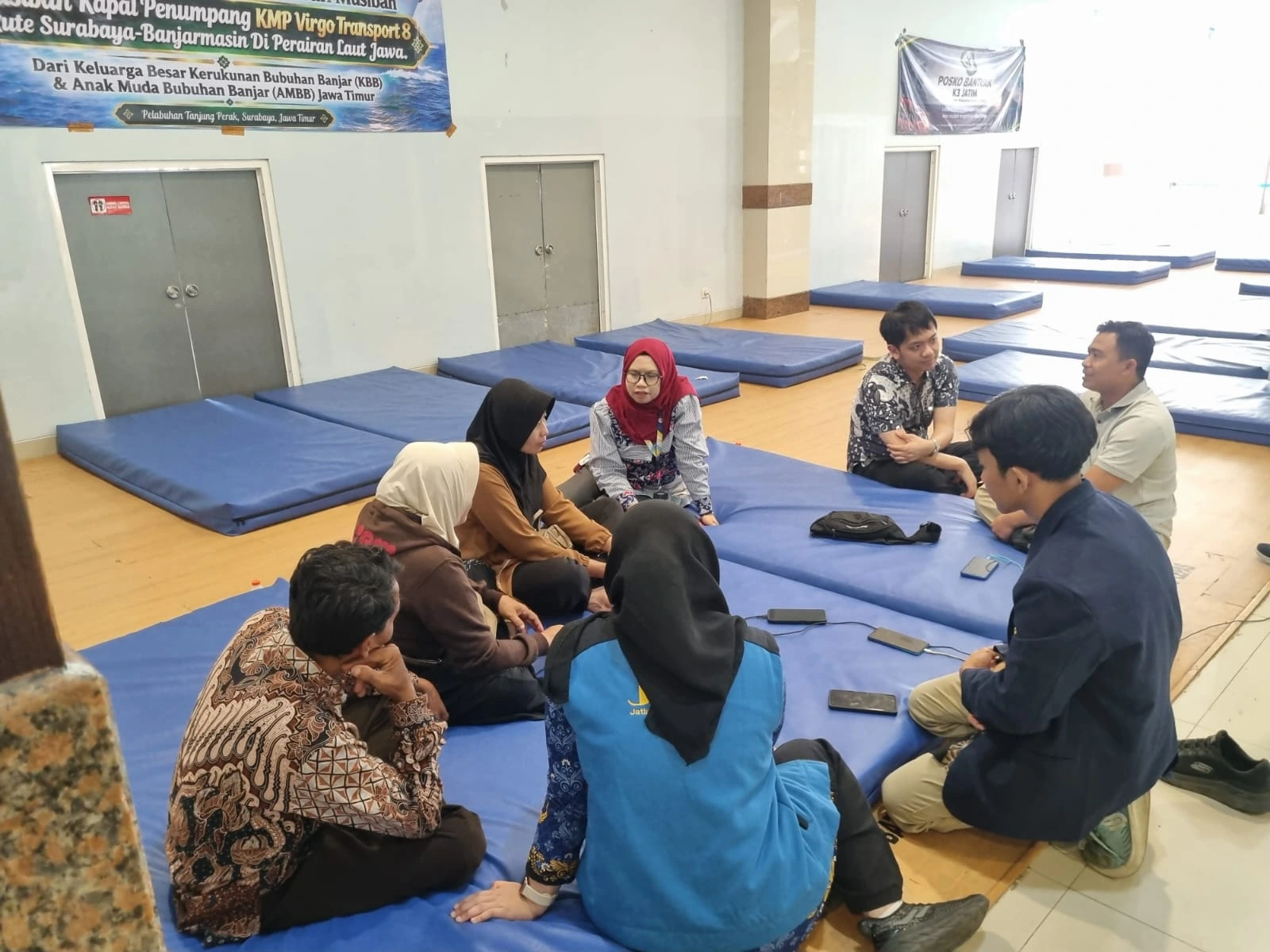
While awaiting news, Universitas Airlangga (UNAIR) through Garda Ksatria Airlangga (GARKA) sent a psychiatric support team to assist the victim’s families at the Basarnas Tanjung Perak Service Post from Thursday (September 17, 2026) until Friday (September 18, 2026). The team consisted of Dr dr Izzatul Fithriyah Sp KJ K as the Coordinator of Psychiatry Specialization Program at UNAIR, along with two students from Specialist Physician Education Program (PPDS), dr Winson Chuanardi and dr Dhimas Himawan.
Accompanying families during the wait
Dr Chuanardi explained that the team departed after receiving information and invitation from Basarnas (National Search and Rescue Agency) with other related parties. After arriving at the location, the GARKA team provided a trauma healing service to help the victim’s families cope with emotional stress of waiting for news about the victims.
According to him, the victims’ families arrived at the port filled with both hope and anxiety. Some of them were still waiting for information regarding the whereabouts of family members who had not yet been found. The team then provided psychological support by talking and listening to the families.
“We talk with them, get to know them, find out about their relationship with the victims, and listen to how they’re feeling. Some of them were crying, looked sad, and some were still struggling to express their pain,” said dr Chuanardi.
In addition to psychological support, the victims’ families also participated in the victim identification process through DNA sampling. This process is a crucial part in the searching and victim identification process. Through the involvement of medical workers and psychosocial support, UNAIR is contributing in achieving Sustainable Development Goals (SDGs), particularly SDG 3 about Good Health and Well-Being, which focuses on health and well-being of the community.
Maintaining post-disaster mental well-being
According to dr Chuanardi, the psychological stress of the family does not simply end once the search for victims is complete. Uncertainty about the whereabouts of the family members can lead to the feelings of anxiety, sadness, shock, and difficulty in accepting the situation.
“What’s really hard is the uncertainty. They don’t know how their family members are doing, whether they’ve passed away or are still alive. This kind of condition leaves the family feeling uneasy,” he explained.
He explained that each person has different responses to traumatic situations. Some will express their grief by crying and telling stories, while the others choose to remain silent. Therefore, support services need to provide a space for families to express their emotions.
“Stress and anxiety due to traumatic experiences can persist if a person does not receive proper support. Psychological assistance is also crucial to help families overcome a crisis and identify conditions that require further treatment,” dr Chuanardi concluded.
Author: Maia Chaerunnisa
Editor: Khefti Al Mawalia