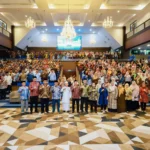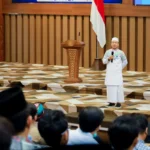
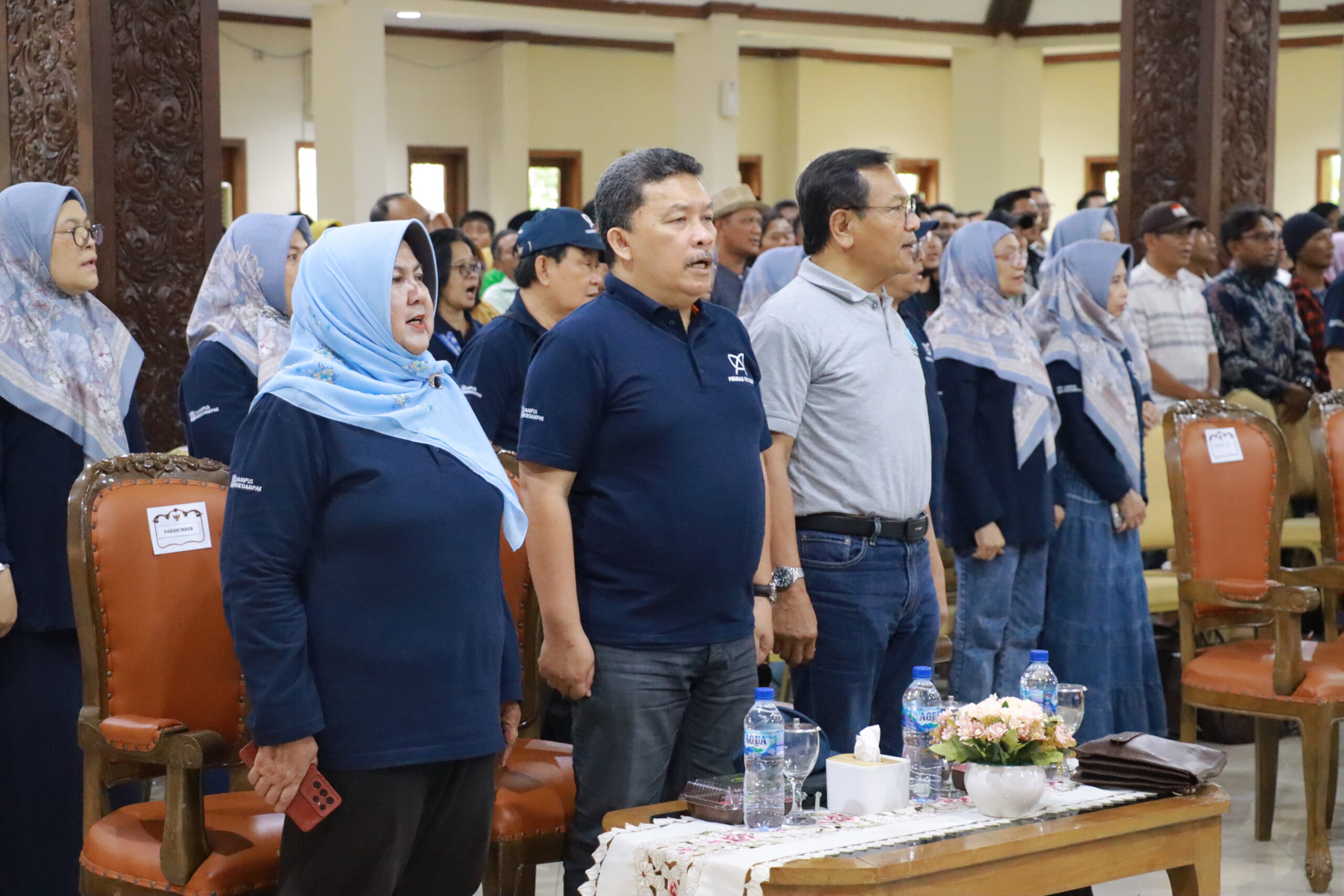
UNAIR NEWS – The livestock sector in Lamongan Regency continued to offer opportunities for growth, particularly through enhancing farmers’ knowledge and utilizing local resources. Through the Community Service Seminar organized by Faculty of Veterinary Medicine (FKH) Universitas Airlangga (UNAIR), three UNAIR FKH experts shared their expertise to local farmers at the Lokatantra Hall, Lamongan Regency, on Tuesday (September 29, 2026).
Presentation on the material was the main feature of the seminar, which brought together UNAR FKH academics and local farmers of Lamongan. The three speakers discussed interrelated aspects in livestock development, ranging from the potential for livestock development, biosecurity implementation, and the use of local resources as alternative feed. These materials offered practical perspectives for farmers in improving productivity while maintaining livestock health.
Promoting Lamongan livestock potential with UNAIR
Prof Dr Ferdik Abdul Rantam drh presented a material titled “Livestock Potential Development in Lamongan Regency”. He noted that Lamongan has great potential to develop the livestock sector through a collaboration between local potential and scientific support from UNAIR.
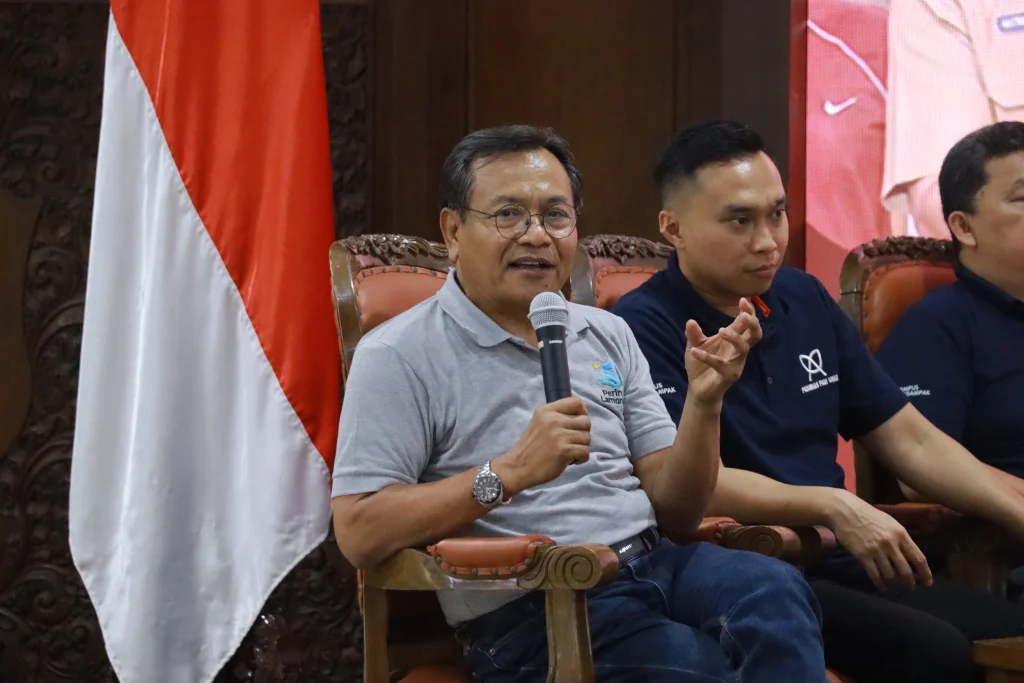
According to Prof Rantam, the availability of UNAIR experts can align with the need for livestock industry development in Lamongan. One breakthrough that can support the improvement of livestock quality is the embryo transfer program. “Lamongan has tremendous livestock potential. In the future, Lamongan and UNAIR can develop the livestock industry by utilizing existing expertise, including through the groundbreaking programs such as embryo transfer,” he explained.
Biosecurity serves as the key to maintain livestock health
Following this, Prof Dr Eduardus Bimo Aksono Herupranoto drh MKes presented a material on biosecurity implementation. He emphasized the importance of biosecurity implementation as a part of efforts to maintain livestock health and prevent diseases in the livestock environment.
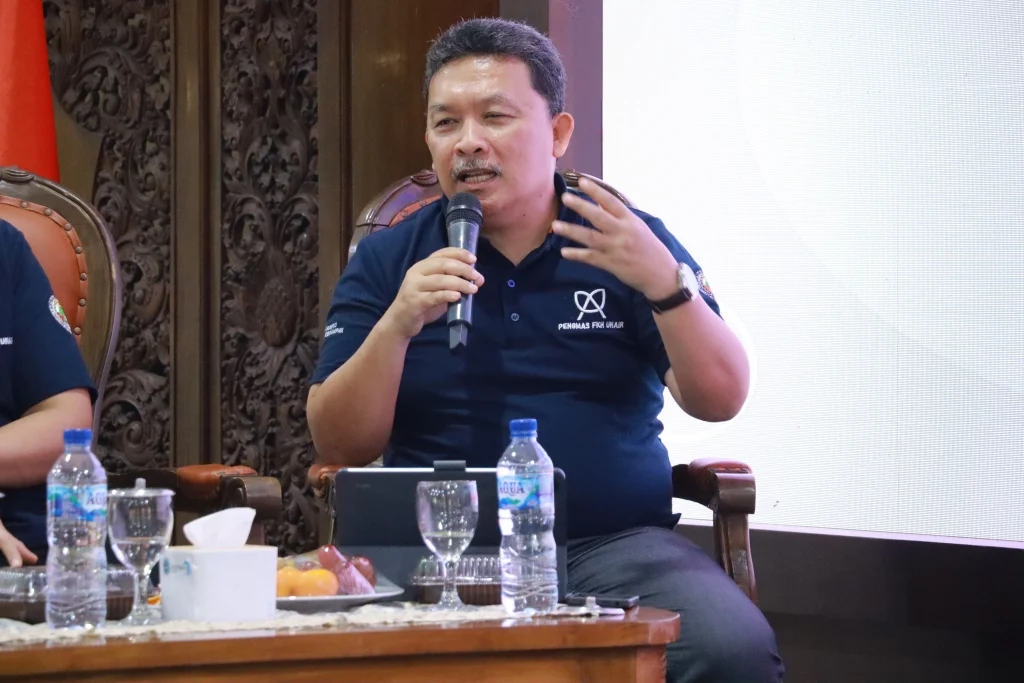
Prof Herupranoto explained that livestock and environmental hygiene served as crucial part in implementing biosecurity. Farmers need to pay attention to barn’s condition, animal hygiene, and surrounding environment in order to reduce the risk of disease transmission.”Biosecurity isn’t just about maintaining livestock clean, but also maintaining a healthy livestock environment so that the risk of diseases can be reduced,” he said.
Utilizing local resources for alternative feed
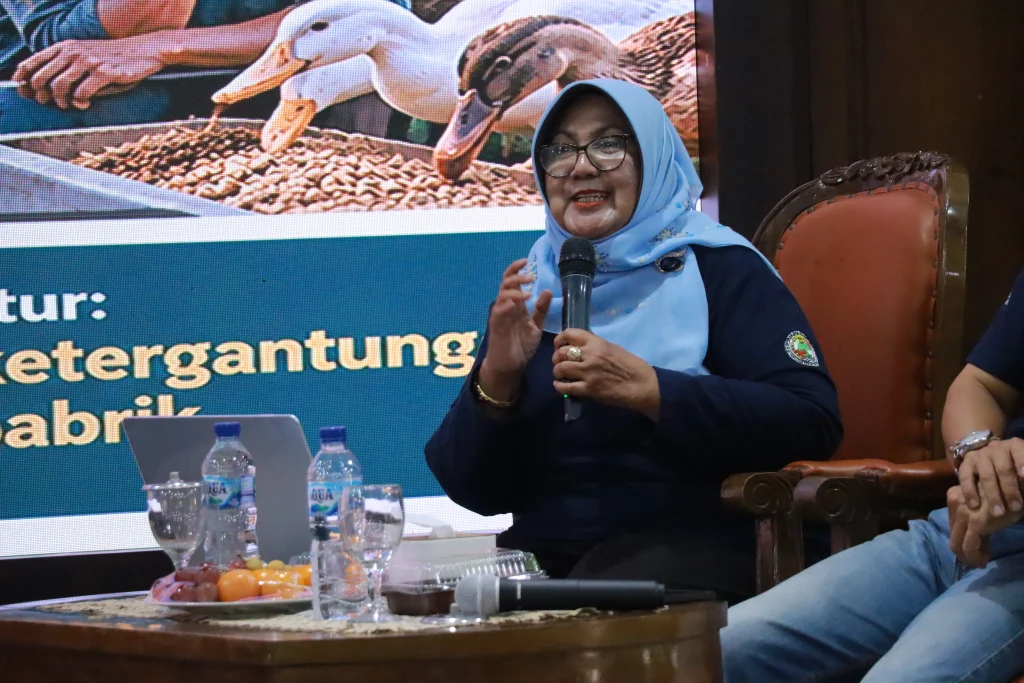
Meanwhile, Prof Dr Mimi Lamid drh MP presented material on “Local Resources Utilization as Alternative Feed”. She encouraged farmers to see the potential of existing resources as feed sources to reduce costs while fulfilling livestock nutritional needs.
Prof Lamid explained that livestock feed does not merely need proteins but also sufficient amounts of vitamins and carbohydrates. According to her, Lamongan Regency as a coastal area has resources that can be utilized by the community, one of which is fish not used by humans for consumption. “Affordable feed is actually all around us. Fish that aren’t used for consumption can be processed into fish flour and we can utilize it for livestock feed materials, especially in the coastal area such as Lamongan,” she said.
Through presentations from those three experts, UNAIR FKH encouraged Lamongan farmers to develop a livestock industry using a more targeted approach. This approach ranges from livestock quality improvement, biosecurity implementation, and feed efficiency based on local resources. This seminar also served as a forum to transfer knowledge from the university to the community, with the aim of fostering the sustainable development of the region’s livestock industry.
Author: Ragil Kukuh Imanto