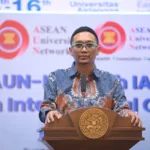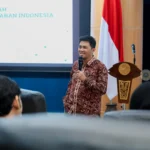
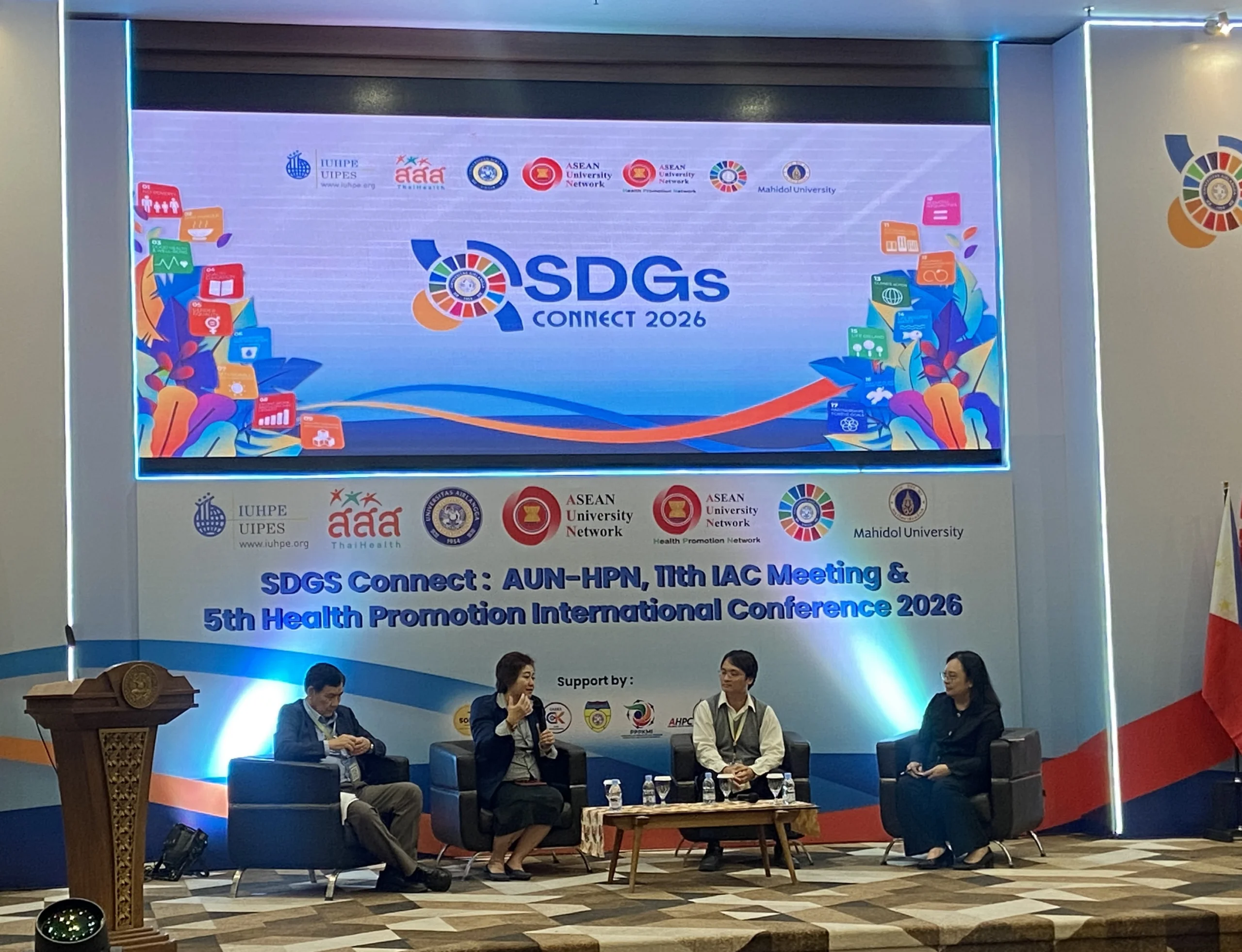
UNAIR NEWS – On the second day of the SDGs CONNECT 2026 International Conference, Universitas Airlangga (UNAIR) once again addressed global health issues on Thursday (October 15, 2026). The session titled “Global Collaboration in One Health and Health Promotion” was held at Garuda Mukti Hall, 5th floor, Rectorate Building, UNAIR MERR-C Campus.
Attended the event as one of the key speakers, the Vice President of IUHPE Southern West Pacific Region and Coordinator of UNAIR SDGs Center, Assoc Prof Dr Sri Widati, presented a talk titled “Global Partnerships and One Health Leadership: Building Institutional Health Literacy for Resilient Systems.
Global synergy and SDG 17
In her presentation, Assoc Prof Widati discussed the progress of the UN 2030 Agenda as well as the Interconnected Threat Matrix. She covered topics ranging from climate change, pandemics, antimicrobial resistance (AMR), and food security to the biodiversity crisis.
“Modern threats nowadays no longer recognize territorial or disciplinary boundaries. Therefore, a siloed approach is no longer relevant for addressing increasingly complex global crises,” she emphasized.
She explained that the SDG 17 (Partnerships for the Goals) functions as the primary driving force (engine of the goals) that activates the cross-sectoral One Health mechanism to achieve SDG 3 (Good Health and Well-being).
“SDG 17 is inclusive to the world because it drives the other SDGs points. Through this conference, we’re not only promoting SDG 3 about health and well-being but also all SDGs indicators in an integrated manner,” she said.
One Health Leadership
Moreover, Assoc Prof Dr Sri Widati presented on the urgency of a leadership paradigm shift from a hierarchical and reactive model toward One Health Leadership. “We need to shift a traditional leadership paradigm toward One Health Leadership that focuses on systems thinking, interdisciplinary collaboration, and evidence-based adaptive decision-making,” she explained.
Within this framework, she highlighted the vital role of higher education institutions as hubs that transform academic knowledge into concrete action in society through research integration, innovation, community service, and policy formulation. “ Higher education institutions must serve as hubs that connect the government, industry, and society to transform knowledge into concrete solutions,” she explained.
To conclude, she emphasized the openness of UNAIR and UNAIR SDGs Center to forging strategic collaborations on a global level. “We are very open to networking with all international partners to realize One Health in the future,” she concluded.
Author: M Yasir Dharmawan Diniy
Editor: Khefti Al Mawalia