
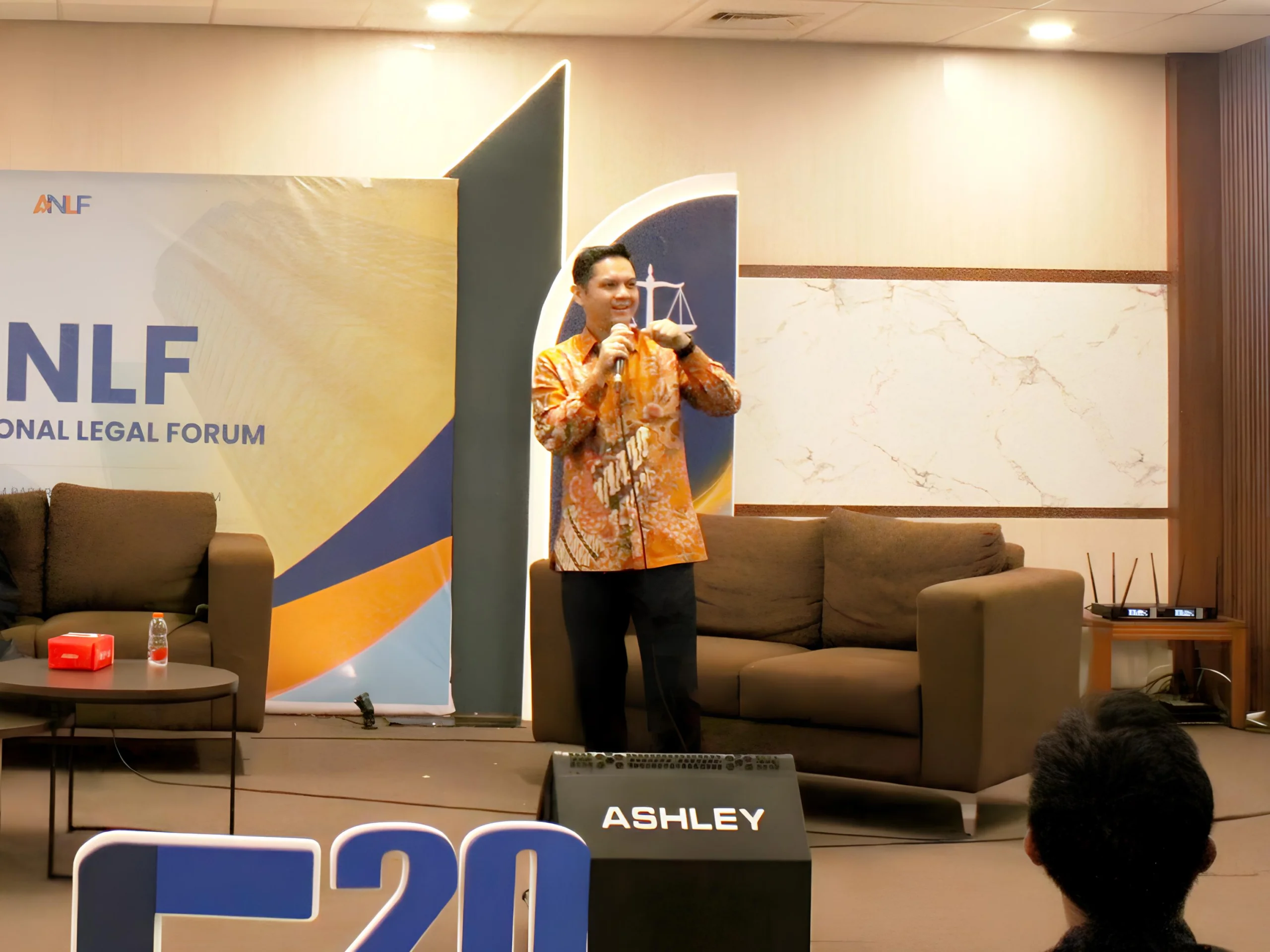
UNAIR NEWS – Indonesian capital markets are facing serious challenges following the MSCI Market Classification Review, which highlighted issues of transparency and investability. This was stated by Mohammad Renaldi Zulkarnain, SH LLM during the ALSA National Legal Forum (ANLF) 2026 National Seminar.
The event took place on Friday, October 16 2026, on the 11th Floor, A.G. Pringgodigdo Building, Faculty of Law (FH), UNAIR Campus B, Dharmawangsa. Zulkarnain discussed the threat of a downgrade in the status of the Indonesian stock market amid global geopolitical turmoil.
Threat of demotion
Zulkarnain explained that MSCI has noted market participant concerns regarding a lack of transparency in shareholding structures and allegations of coordinated trading. These conditions have led MSCI to reconsider the eligibility of Indonesian status as an Emerging Market.
“Input from market participants will be accepted until April 30, 2027. To address this, we must restore the foundation of corporate governance to the provisions of applicable capital market laws and regulations,” he said.
Global geopolitical impact
Global uncertainties such as trade wars, energy price volatility, and tariff policies have also heightened investor sentiment. Zulkarnain emphasized the importance of collaboration among institutions, as the financial sector constitutes a single, interconnected ecosystem.
“Indonesia’s financial services sector is supported by the non-bank financial industry under the Financial Services Authority (OJK), as well as the monetary system under Bank Indonesia and the Indonesia Deposit Insurance Corporation (LPS). Synergy among all these parties is vital for maintaining capital flows and reducing market volatility,” he explained.
To address significant market volatility, the OJK has established a legal framework through OJK Regulation No. 13 of 2023. This regulation provides flexibility in stabilization measures, ranging from adjustments to auto-rejection thresholds and trading halts to the relaxation of corporate action requirements.
“In volatile market conditions, public companies are even authorized to conduct share buybacks of up to 20 percent without the need for prior approval from a General Meeting of Shareholders. These legal measures are key to maintaining investor confidence and the stability of the national capital market,” he concluded.
Author: Maulya Afifah Zahra
Editor : Ragil Kukuh Imanto