
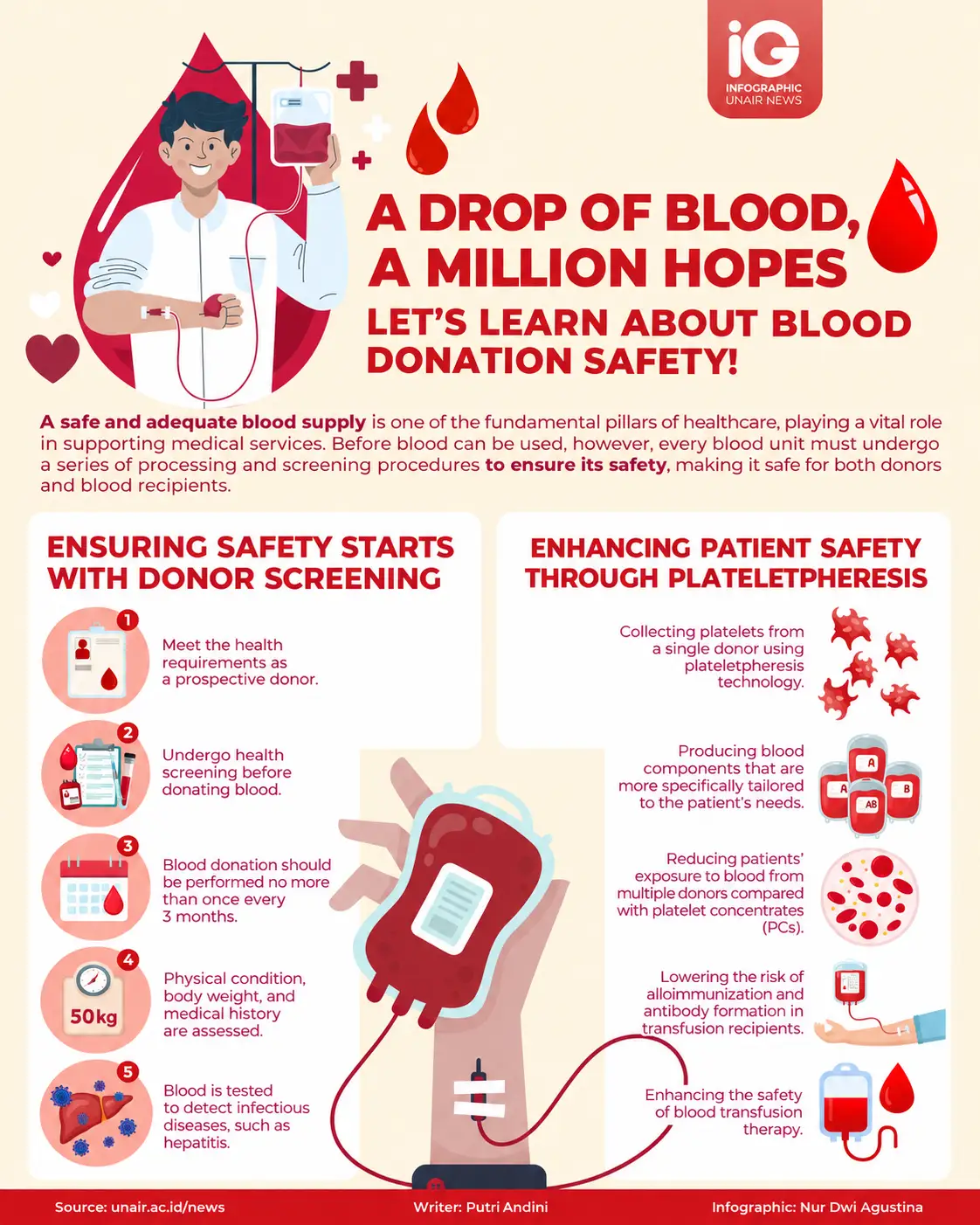
UNAIR NEWS – A safe and adequate blood supply is one of the fundamental pillars of healthcare, playing a vital role in both emergency treatment and the management of various medical conditions. Before blood can be used for transfusion, however, every unit must undergo a series of processing and screening procedures to ensure its safety for both donors and recipients.
Safety Starts with Donor Screening
Blood donation safety begins with the selection of eligible donors who meet the required health criteria. Before donating blood, prospective donors undergo a screening process that includes a physical examination, weight measurement, medical history assessment, and blood tests to detect infectious diseases such as hepatitis. In addition, individuals are advised to donate blood no more than once every three months to help maintain their overall health.
Enhancing Patient Safety Through Plateletpheresis
Plateletpheresis is a procedure that collects platelets from a single donor using specialized technology to produce blood components tailored to patients’ specific needs. Compared with platelet concentrates (PCs), this method reduces patients’ exposure to blood from multiple donors, thereby lowering the risk of alloimmunization and antibody formation while improving the safety of blood transfusion therapy.
Also read: