

UNAIRNEWS – Learning about skin anatomy does not have to be difficult or boring. Children in Kenjeran Village, Surabaya, recently discovered that health education can be both engaging and informative through an interactive program on the integumentary system led by D3 Nursing students from Universitas Airlangga.
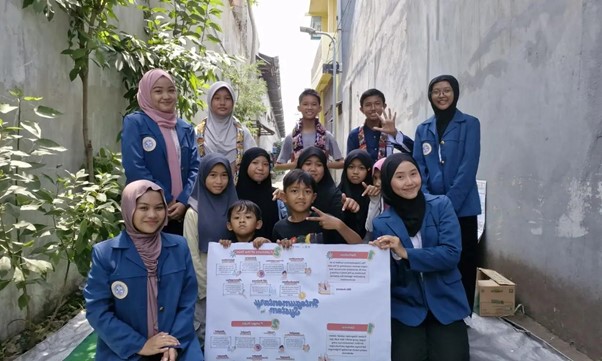
The skin health education program was held on April 11, 2026, at Jl. Kedinding Lor Gg. Blimbing Utara No. 9, Kenjeran, Tanah Kali Kedinding, Surabaya. The event was part of a health promotion initiative organized by Group 5 GR-4A students Nidya Athalia Nirmala, Zulfia Habidah, Dewi Humairo, and Asmawati Eka Kencananingsih under the supervision of Dr. Hafna Ilmy Muhalla, S.Kep., Ns., M.Kep., Ns., Sp.Kep.M.B.
Ten children between the ages of 9 and 14 participated in the program, which combined educational materials with interactive activities designed to make learning enjoyable and accessible.
Understanding integumentary system
The integumentary system plays a critical role in protecting the body from external threats, including germs, chemicals, ultraviolet radiation, and physical injury. In addition to serving as a protective barrier, the skin helps regulate body temperature, supports vitamin D production, and maintains fluid balance.
The integumentary system includes not only the skin but also hair, nails, sweat glands, and sebaceous glands, all of which work together to maintain overall health. According to Yousef et al. (2023), the skin consists of three primary layers: the epidermis, dermis, and hypodermis, each with distinct functions.
Children are particularly vulnerable to various skin conditions, including dermatitis, fungal infections, scabies, and acne, which often begins to develop during puberty. Scabies is caused by the mite Sarcoptes scabiei and can spread through direct skin contact or the sharing of personal items such as towels and clothing. Fungal infections are also common in humid environments, making them prevalent in tropical regions such as Indonesia.
Experts note that skin health is influenced by multiple factors, including personal hygiene, environmental sanitation, nutritional status, and daily lifestyle habits.
Learning through interactive activities
To make the material more engaging, organizers used an interactive wall magazine titled “My Skin, My Amazing Protector!” The display featured colorful illustrations, simple language, and educational content covering the structure and functions of the skin, common skin disorders, and proper skin care practices.
“With the wall magazine and games, the children were more enthusiastic and found it easier to understand the material,” said Asmawati Eka Kencananingsih, who presented the session.
The program began with a pre-test activity called “Guess Me,” which assessed participants’ existing knowledge while creating a lively and welcoming atmosphere. Following the presentation and question-and-answer session, participants took part in a post-test game called “Match Me,” where they matched images with the correct functions of the integumentary system.
Organizers reported that many participants were able to answer questions correctly during the post-test that they had struggled with before the session, indicating a measurable improvement in their understanding of the topic.
Building healthy habits early
The program also emphasized that maintaining healthy skin begins with simple daily habits. Regular bathing, handwashing with soap, wearing clean clothes, and keeping fingernails trimmed can help prevent many common skin conditions.
Adequate intake of vitamins A, C, and E is also important for maintaining skin integrity and supporting the body’s resistance to infection. Health educators encouraged participants to adopt these habits early in life, noting that long-term skin health is closely connected to overall well-being.
“Healthy skin is not only about appearance,” organizers emphasized. “It is also an important reflection of overall health.”
Author: Zulfia Habidah
Editor: Hafna Ilmy Muhalla