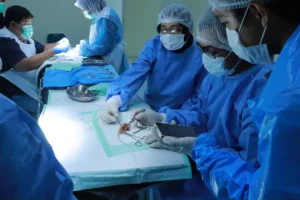


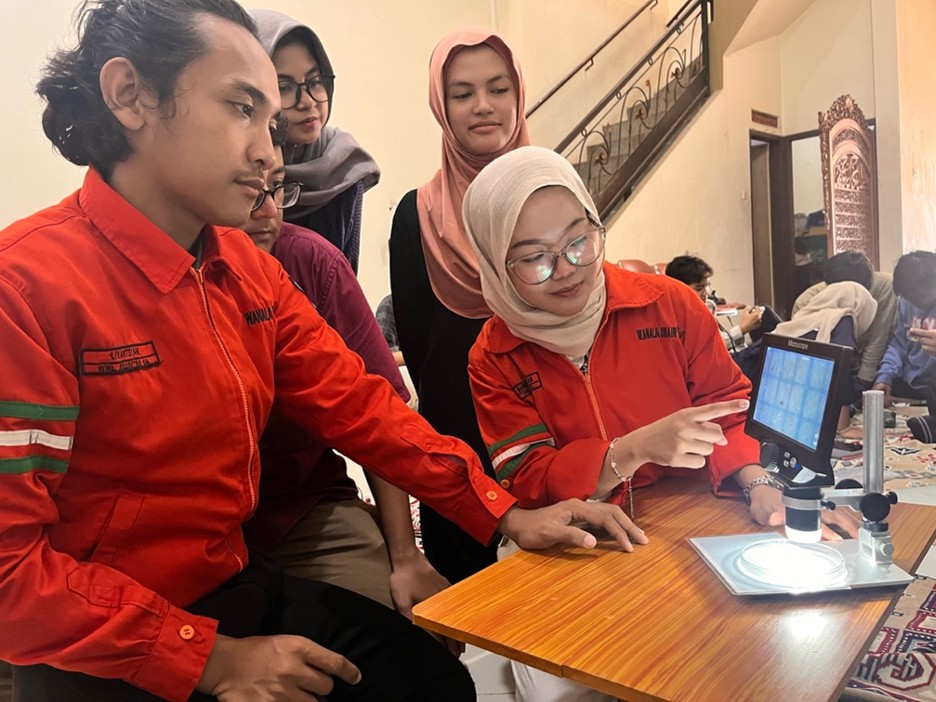
UNAIR NEWS — The Wanala Student Activity Unit (UKM) Universitas Airlangga (UNAIR) recently conducted an analysis of microplastic contamination in water samples from Kali Tebu while also carrying out water quality testing at the MOZAIK ECOTON Office in Surabaya on Saturday (May 23, 2026). Prior to the fieldwork, students attended an educational session on microplastics and their environmental threats delivered by ECOTON Advocacy Division Manager Mohammad Alaika Rahmatullah, commonly known as Alex.
The activity involved 12 Wanala members participating in the Intermediate Environmental and Wilderness Research Division (PLHAB) training program, accompanied by three senior members as mentors. Wanala President Abdul Hafizh Zakariyya stated that the advanced training is essential for new members, particularly as environmental issues continue to become more alarming.
“New Wanala members are required to participate in advanced environmental training so they can develop strong analytical skills amid increasingly threatened environmental conditions,” Zakariyya said.
Microplastics became the primary focus of the activity because of their potential impact on public health and quality of life. “We want to understand how much plastic waste residue exists in nature and examine its effects on humans through continuous exposure and interaction,” he explained.
Preparing for research action in Bawean
The microplastic awareness session organized by ECOTON was part of a broader series of preparatory activities for the Intermediate PLHAB training program ahead of its main initiative, Aksi Riset dan Edukasi Satwa Lestari Bawean, which will be held on Bawean Island in Gresik Regency. Research on microplastics will become one of the program’s primary objectives. The findings are expected to be connected with local community lifestyles in order to produce meaningful data that can support future microplastic mitigation efforts.
The practical session on microplastic analysis and water quality testing was conducted by two groups, each consisting of six Wanala members. The first group collected water samples from Kali Tebu and brought them back to the office for laboratory analysis to determine the amount of microplastic contamination. Meanwhile, the second group conducted water quality testing by collecting water samples and directly measuring Total Dissolved Solids (TDS) levels at Kali Tebu.
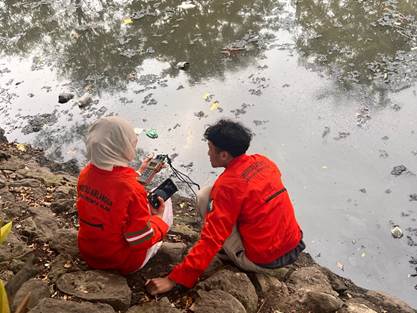
For Zalfa Zahirah Febriyani, one of the students participating in the Intermediate PLHAB training and microplastic analysis activities, the program provided a valuable opportunity to deepen her understanding of increasingly concerning microplastic pollution issues.
“Personally, I am very happy to gain new experience and broader insight into environmental pollution. The materials were delivered in a way that was easy to understand. We also had the opportunity to directly experience how microplastic analysis is conducted. So, we did not only receive theoretical knowledge, but were also invited to practice it firsthand,” she said.
Reducing plastic use as an initial step
Febriyani believes that understanding the science behind microplastics is a fundamental first step toward developing solutions to environmental problems. According to her, one practical action individuals can take is reducing personal plastic consumption. She added that such efforts can serve as a concrete example when encouraging surrounding communities to become more aware of waste management and environmental pollution.
The collaboration between Wanala UNAIR and ECOTON is expected to serve as an initial bridge for fostering greater awareness of environmental pollution issues. The initiative also aims to encourage integrated, real-world action both within the university environment and across the broader community.
Author: WANALA contributor