UNAIR NEWS – As the implementation of Sustainable Development Goal (SDG) 4 (Quality Education), the Research Group on Classical, Religious, and Local Cultures at the Faculty of Humanities (FIB) Universitas Airlangga (UNAIR) held a community service program at State Junior High School 2 Gading (SMPN 2 Gading), Probolinggo, on [CHECK: hari], October 11, 2026. The program was titled “Strengthening Language Literacy, Environmental Awareness, and Cultural Identity through Eco-Cultural Language Learning for SMPN 2 Gading, Probolinggo.”
SMPN 2 Gading was chosen because it is one example of the Pandalungan cultural region, which typically develops in the horseshoe region (Tapal Kuda). The students of SMPN 2 Gading use Madurese in their daily lives.
Strengthening cultural identity
The concentration of the ethnic Madurese community here stems from the Dutch colonial period. Many ethnic Madurese were brought to the horseshoe region as plantation workers. This led to the emergence of a new culture, a blend of Madurese and Javanese cultures.
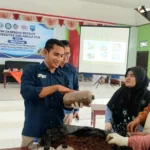
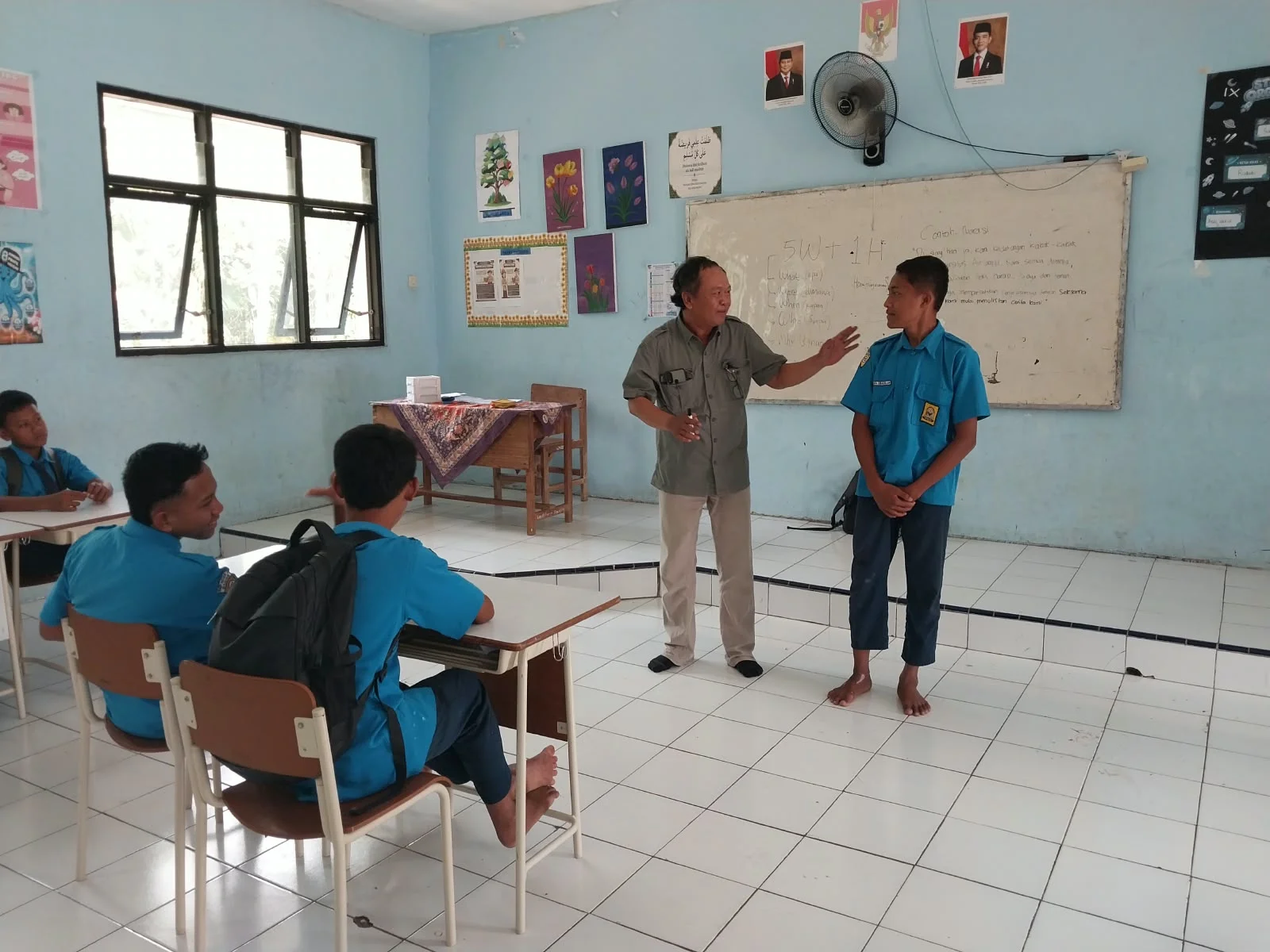
During the program, students of SMPN 2 Gading created their own narratives based on photographs that had been taken earlier. The activity was part of learning together between FIB UNAIR and the students, with the goal of strengthening language literacy through narrative writing, raising environmental awareness, and reinforcing cultural identity through the photographs that served as the basis for the narratives.
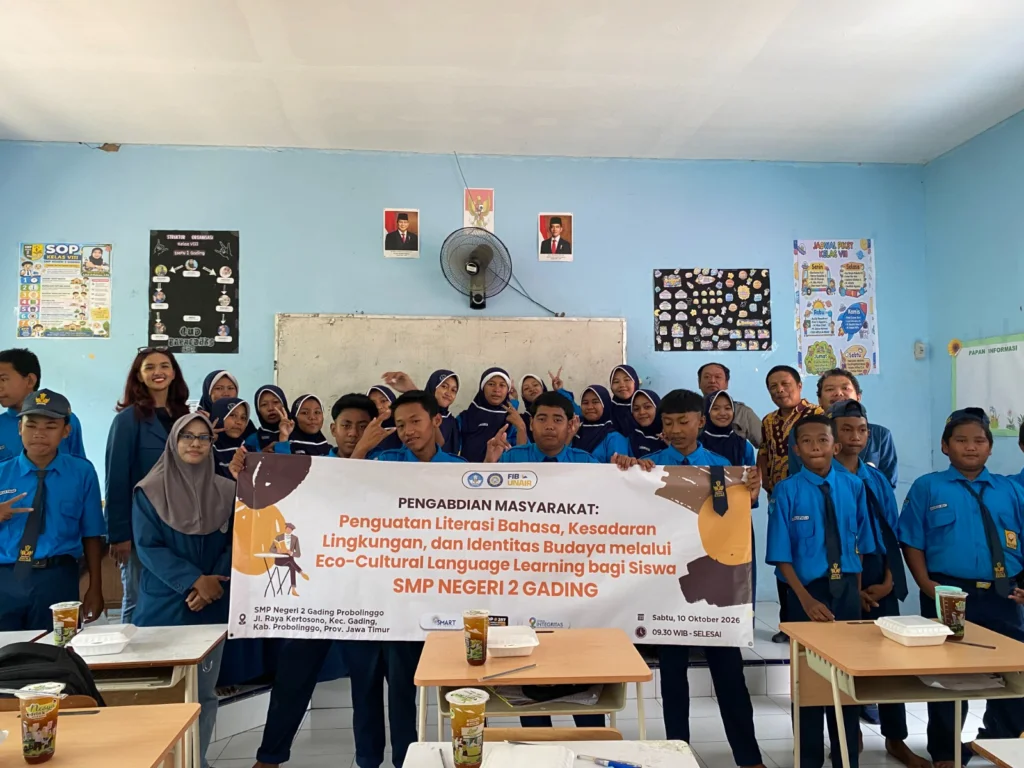
The program involved three classes at SMPN 2 Gading, namely the 7th, 8th, and 9th grades. The presenter distributed the previously collected photos to the students in each class.
The material was presented in each class along with general guidelines for writing a narrative: it must contain the 5Ws (What, Who, When, Where, Why) and 1H (How).
The presenter also gave instructions on writing a narrative in sequence, namely orientation, which introduces the characters; complication, which presents the problem; resolution, which offers the solution; and reorientation, which concludes the narrative.
Visual and daily experiences
After the presentation, the students were asked to write a narrative connecting the photos they received with their imagination or daily experiences. The process became a lesson in linking visual experiences with students’ daily experiences or imagination.
The students participated in the activity with great enthusiasm. The interaction and mutual learning between the FIB UNAIR team and the students are expected to become one way to strengthen literacy.
These independent narratives are expected to reveal the life and daily activities of the Gading community in Probolinggo. The FIB research team also hopes the program can be sustainable and beneficial for all parties involved.
Author: Muhamad Rohman Obet
Editor: Yulia Rohmawati