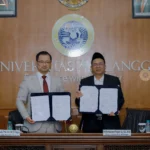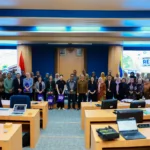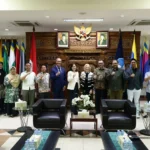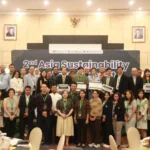
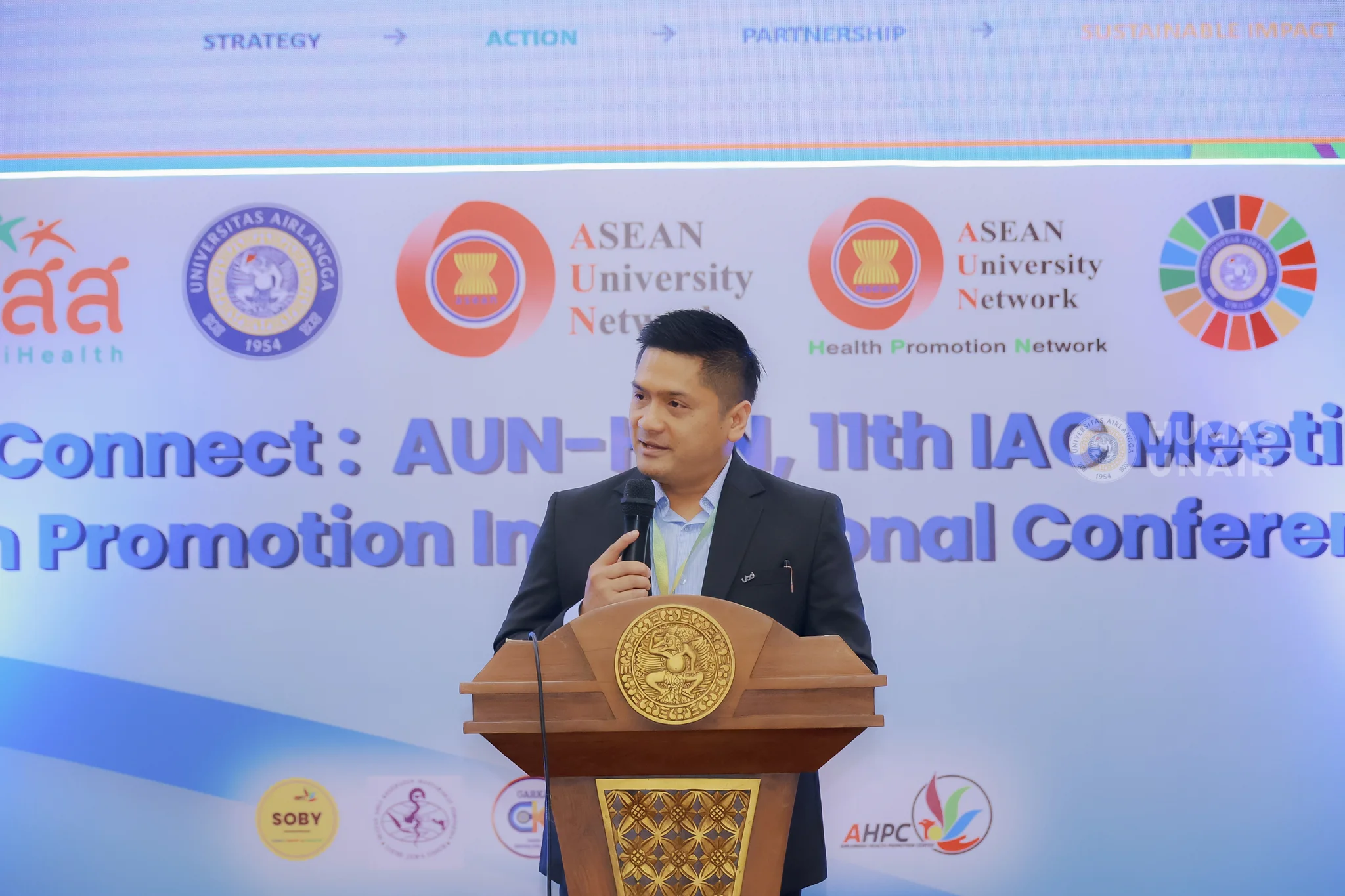
UNAIR NEWS – AUN-HPN 11th International Advisory Committee Meeting and 5th International Health Promotion Conference were held on Wednesday, October 14, 2026, at the Garuda Mukti Hall, Universitas Airlangga (UNAIR) MERR-C Campus. The event presented various perspectives from Asian universities on developing healthy campuses through policies, education, infrastructure, and health promotion innovations.
Integration of health education
Dr Deeni Rudita bin Idris from Universiti Brunei Darussalam (UBD) presented the strategy for developing a healthy campus through the Healthy University Roadmap 2025-2028. Additionally, UBD is also renewing its curriculum through the GenBESTARI program, which focuses on developing Balanced and Holistic Individuals, Ethical Leaders, Sustainable Thinkers, Transdisciplinary Practitioners, Adaptable, Resilient and Lifelong Learners, Responsible Global Citizens, and Innovative Problem-solvers.
“The Healthy University Roadmap is implemented by integrating health and well-being into institutional policies and the lives of the academic community. This curriculum renewal includes sustainability, the Sustainable Development Goals (SDGs), and health literacy,” he explained.
According to him, the success of a healthy campus depends on a shared vision and a commitment to sustainability. Moreover, Dr Idris emphasized that in the future, UBD will also focus on strengthening mental health, inclusive support, and program evaluation based on impact.
Impact of programs and infrastructure
Asst Prof Chaiwatchara Promjittiphong from Srinakharinwirot University (SWU), Thailand, emphasized that reach is not the same as impact. He assesses that the number of participants in an activity does not necessarily indicate a change in behavior or an improvement in public health.
“Universities need to use an evidence-based approach, understand community needs, and build partnerships to ensure programs have a sustainable impact. Additionally, there needs to be an evaluation to measure the real benefits generated by the program,” he explained.
Meanwhile, Ms Kai Shan Fernandez from De La Salle University (DLSU), Philippines, emphasized the importance of integrating education and infrastructure. She explained that DLSU develops health promotion learning through 37 courses in five categories. In addition, DLSU also provides infrastructure support, including clinic services, counseling facilities, sports facilities, and the use of renewable energy.
“This combination of integration and infrastructure is expected to enhance knowledge while also providing an environment that supports the implementation of healthy behaviors,” she said.
Role of Health Promotion Planner (HPP)
Then, Prof. Ken Nakata from Osaka University, Japan, introduced the Health Promotion Planner (HPP) as a strategic approach that can be used in health promotion planning. He mentioned that HPP can help identify factors affecting health, set priorities, and design interventions according to community needs.
“A data-driven and evaluative approach is important so that the program not only gets implemented but also produces measurable changes,” he emphasized.
Author: Putri Andini
Editor: Khefti Al Mawalia