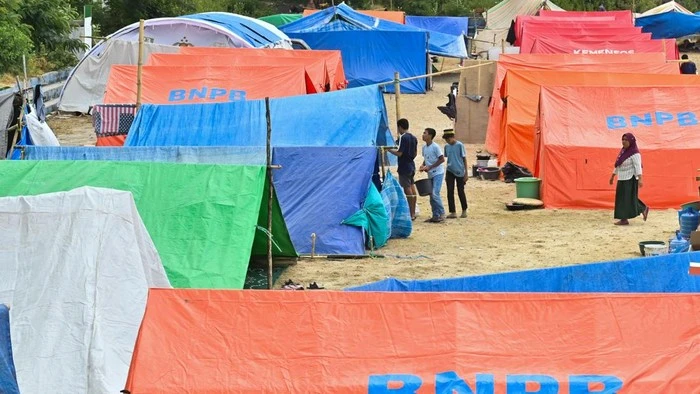
UNAIR NEWS – An alleged case of sexual violence against a child in the NTT post-earthquake evacuation site highlighted the importance of a protection system for vulnerable groups during emergencies. The lack of oversight and law enforcement mechanisms during emergency situations is a contributing factor to a sexual violence at evacuation sites.
An Anthropology Professor and Head of the Task Force for the Prevention and Handling of Violence in Higher Education (PPKPT) Universitas Airlangga (UNAIR), Prof Myrtati Dyah Artaria Dra MA PhD, responded directly by stating that the privacy of post-disaster victims is often overlooked by the government. She believed that in the overcrowded evacuation site, the loss of privacy and personal space can increase vulnerability of sexual violence.
“Therefore, children, the elderly, and people with disabilities face a higher vulnerability due to limitations in mobility, communication, and the ability to protect themselves during disaster,” she said.

Involving vulnerable groups in planning evacuation sites
The design of temporary housing or evacuation sites must take into consideration the placement and division of space between men and women. Including privacy in sleeping areas, as well as access and position of the toilets and bathrooms. Meanwhile, the pathways leading to the toilets must be well-lit, especially in several points such as water collection areas, kitchen and other facilities.
For Prof Artaria, layout planning also must consider the needs of specific groups, such as the accessibility for people with disabilities. The availability of safe spaces for children and women are also the key elements to create gender-sensitive evacuation sites. The involvement of women and vulnerable groups in determining the layout of evacuation sites is seen as accommodating the needs of safety, privacy, and accessibility from an early stage.
“Therefore, the involvement of women and vulnerable groups in determining the layout of evacuation sites is essential,” she said.
Gender-based protection becomes priority
Gender-based protection should be in place from the very beginning.This is because there is still a perception in the society regarding women and vulnerable groups are weaker or easier to control.
“This protection should be in place from the very beginning, potential perpetrators need to know that their actions will take them to consequences. Meanwhile, potential victims also need to know where to seek help if such a situation arises,” said the Indonesian facial reconstruction expert and professor of physical anthropology.
In this situation, the government must prioritize women and vulnerable groups in the evacuation sites. Gender-based protection will not exist if the government lacks a significant awareness of the need for such protection. Although protection efforts are our shared responsibility, the government plays a role in ensuring these efforts are implemented all the way down to the local level.
Protection must continue through the recovery phase by providing a safe space for victims to report incidents, legal assistance, and ongoing health and psychological services.
“Protection must continue through the recovery phase by involving women and vulnerable groups to the rehabilitation and reconstruction process,” she concluded.
Author: Amelia Farah Putri I.
Editor: Ragil Kukuh Imanto