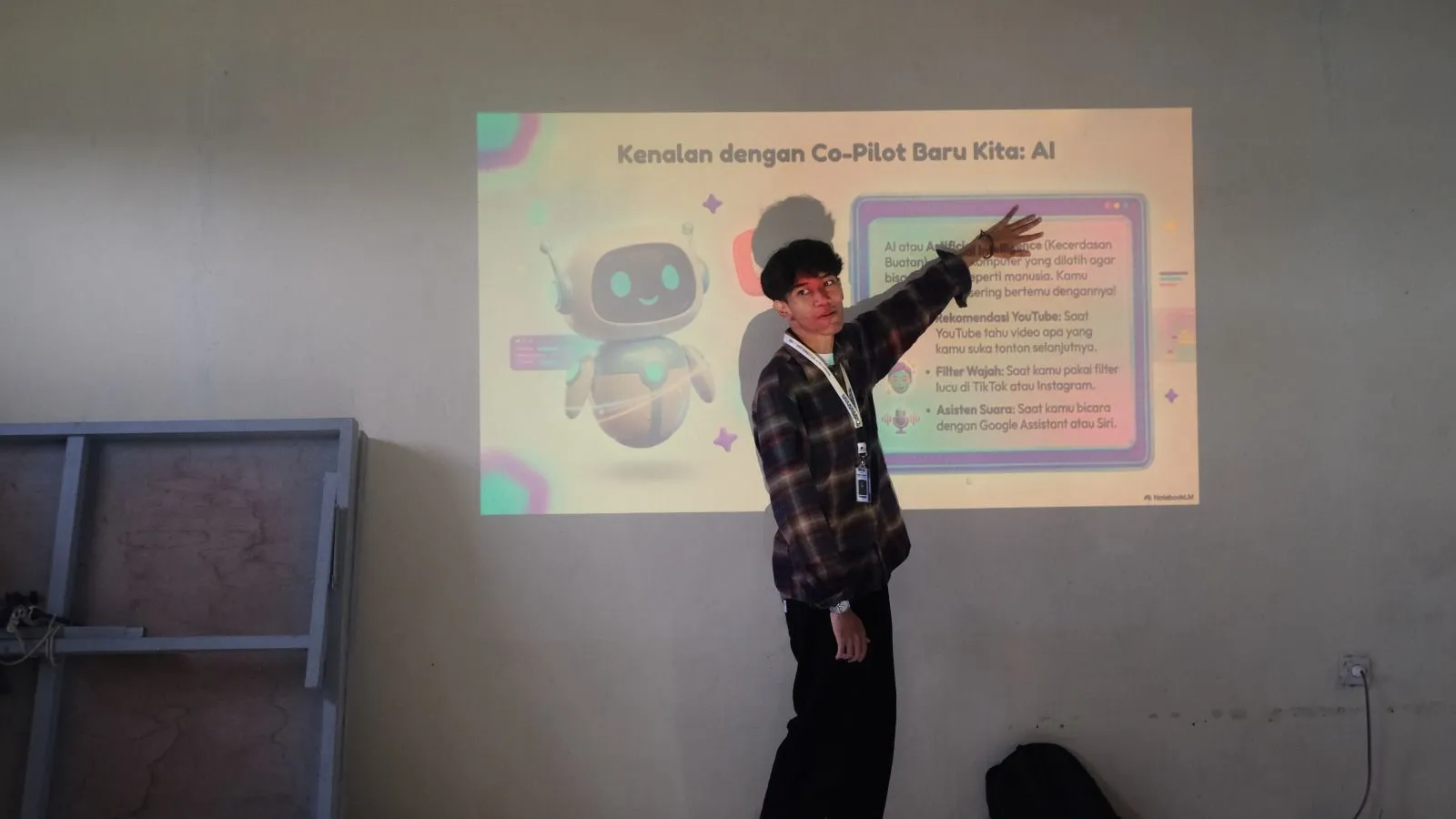
UNAIR NEWS – Students from the Belajar Bersama Komunitas (BBK) 7 program at Universitas Airlangga (UNAIR) in Deketagung Village, Lamongan Regency, organized a digital literacy workshop for fifth- and sixth-grade students of MI Hidayatul Ummah on Saturday (Jan. 17, 2026). Titled Digital Explorers, the program aimed to equip students with essential knowledge and ethical awareness for responsible use of digital technology.
The Digital Explorers initiative was designed to introduce a child-friendly digital environment through interactive and imaginative approaches. UNAIR students encouraged participants to see the internet as a broad space for exploration, while emphasizing the need for understanding, ethical behavior, and caution to ensure safe and positive use.
Understanding the role of Artificial Intelligence
During the sessions, BBK students introduced digital technology as a “gateway” that simplifies learning and communication. Participants compared traditional communication methods, such as letter writing, with the speed and convenience of instant messaging in the digital age. This approach helped them better understand technological developments in a practical context.
The team also introduced artificial intelligence (AI) as a learning support tool. Students were guided to use AI to enhance their understanding rather than simply obtain instant answers. They explored its use in solving math problems, practicing English, and generating ideas for writing tasks.
Indrayana Widhikartiko, the program coordinator for BBK UNAIR in Deketagung Village, said AI was explained in simple terms to ensure accessibility. “We want children to recognize technology as a positive learning tool, not something to fear or misuse,” he said.
Ethics and protection in the digital world
In addition to technical skills, the program highlighted the importance of digital ethics. Students were taught that standards of politeness and respect in real life also apply in online interactions, including social media. The facilitators emphasized avoiding cyberbullying and using respectful language.
Indrayana stressed that digital ethics was a key focus of the program. He noted that children need to understand appropriate boundaries in online communication from an early age. “We emphasize respecting others, maintaining proper language, and not sharing content without permission,” he said.
Students were also introduced to basic principles of personal data protection. They were advised to safeguard sensitive information such as home addresses, phone numbers, and passwords from strangers. In addition, they learned to identify misinformation by pausing, thinking critically, and consulting trusted adults.
At the end of the program, the BBK team reminded students to balance digital engagement with physical well-being. Participants were encouraged to limit excessive gadget use and make time for play, exercise, and rest. The session concluded with a shared commitment to becoming responsible, ethical, and informed digital users.
Author: Muhammad Afriza Atarizki
Editor: Yulia Rohmawati